
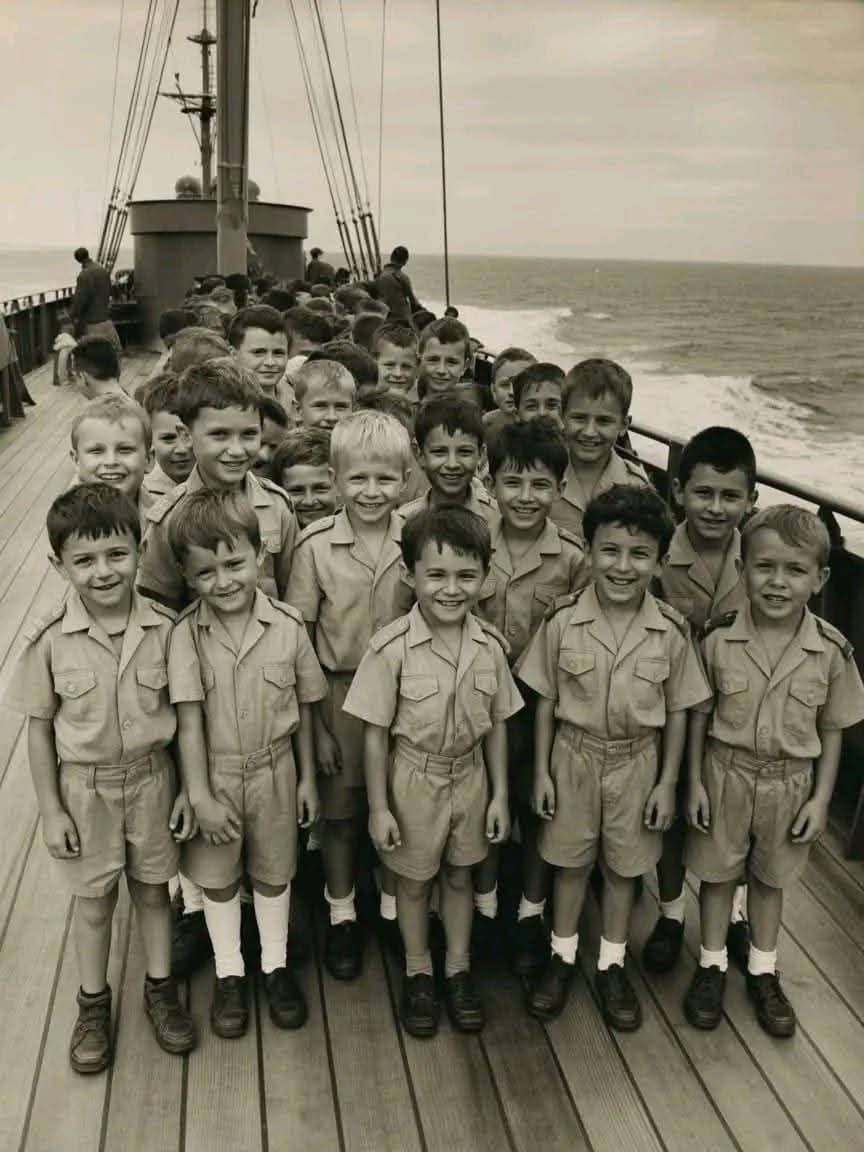
During the darkest years of World War II, hundreds of Polish children who had lost their families faced yet another heartbreaking ordeal. After surviving Soviet labor camps and escaping to Iran, around 740 orphaned children found themselves aboard a ship searching desperately for a safe place to call home. One by one, ports refused to let them land, leaving them stranded at sea with dwindling food, scarce medicine, and little hope for the future.
Among them were siblings forced to grow up far too quickly. Older children cared for younger ones, keeping promises made to parents they would never see again. As days passed, the uncertainty became almost unbearable, and it seemed the world had forgotten them.
Everything changed when news of their plight reached Maharaja Jam Sahib Digvijay Singhji of Nawanagar in western India. Although his authority was limited under British rule, he refused to ignore the suffering of innocent children. After learning about their situation, he made a simple but life-changing decision: they would be welcomed into his state.
When the ship finally arrived in August 1942, the exhausted children were greeted with kindness instead of rejection. The Maharaja reportedly welcomed them warmly and assured them they would be treated as his own children. Temporary shelters were established, and later a dedicated settlement at Balachadi was created, where the children received food, medical care, education, and, for the first time in years, a chance to live in safety.
See more in the next page
