
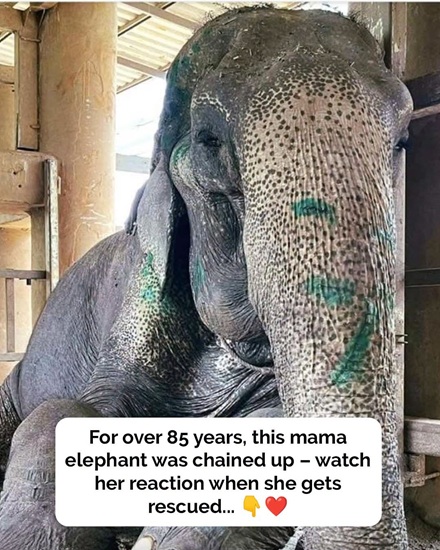
For decades, Somboon’s movements had largely been organized around human activities. After her transfer, caregivers were attempting to create an environment in which she could make more choices for herself. That might mean deciding when to walk, when to eat, when to enter mud or water, and when to rest. Choice is a basic component of animal welfare because it allows an animal greater control over its surroundings.
The concept of retirement for an elephant is obviously different from retirement for a person, but the comparison helps explain what changed. Somboon no longer had a work schedule. She did not need to carry visitors. She was not expected to move heavy material. She could spend her remaining years receiving care appropriate to her age.
Because she was so old when she arrived, caregivers also had to accept that some medical problems could not simply be reversed. Missing teeth do not grow back. Age-related joint weakness can remain. Changes in vision or skin condition may require continued management. The objective was therefore not to transform Somboon into a perfectly healthy young elephant but to improve her comfort and quality of life.
Health
This is an important distinction in rescue stories. Social media sometimes presents rehabilitation as a dramatic before-and-after transformation in which an animal quickly becomes completely healthy. Real veterinary care is usually more complicated. Older animals may improve in some areas while continuing to experience chronic conditions. Progress can mean eating better, walking more comfortably or sleeping safely rather than achieving a complete cure.
Somboon’s difficulty standing after sleep provides a good example. The problem did not disappear simply because she had reached a sanctuary. Staff members sometimes needed to help her rise. Updates described mahouts and veterinary personnel working carefully with elderly elephants that required this assistance. That ongoing work is part of sanctuary care even when it is less visually dramatic than the rescue itself.
Her case also highlighted the specialized needs of aging elephants. Large body size places considerable pressure on legs and joints. Dental wear can affect nutrition. Reduced strength can make it harder to move between standing and lying positions. Older elephants therefore require environments designed with those limitations in mind.
Soft resting areas are one example. Accessible food and water are another. Veterinary observation becomes particularly important because small changes in movement or appetite can signal significant health problems. Experienced caregivers learn individual routines so that unusual behavior can be recognized quickly.
Somboon was not the only elderly elephant receiving this kind of assistance at Elephant Nature Park. Updates from the sanctuary have said that a large percentage of its population consists of older elephants with histories of work. Some struggle with walking, eating or sleeping and occasionally require physical assistance from caregivers. Somboon therefore became a visible example of a much broader challenge faced by elephant sanctuaries.
Pets & Animals
The sanctuary environment also allows rescued elephants to live near others of their species. Social relationships are important for elephants, although every rescued animal adjusts differently. Some elephants quickly form bonds, while others need substantial time because of age, previous isolation or stressful experiences. Caregivers generally allow relationships to develop gradually rather than forcing immediate interaction.
