
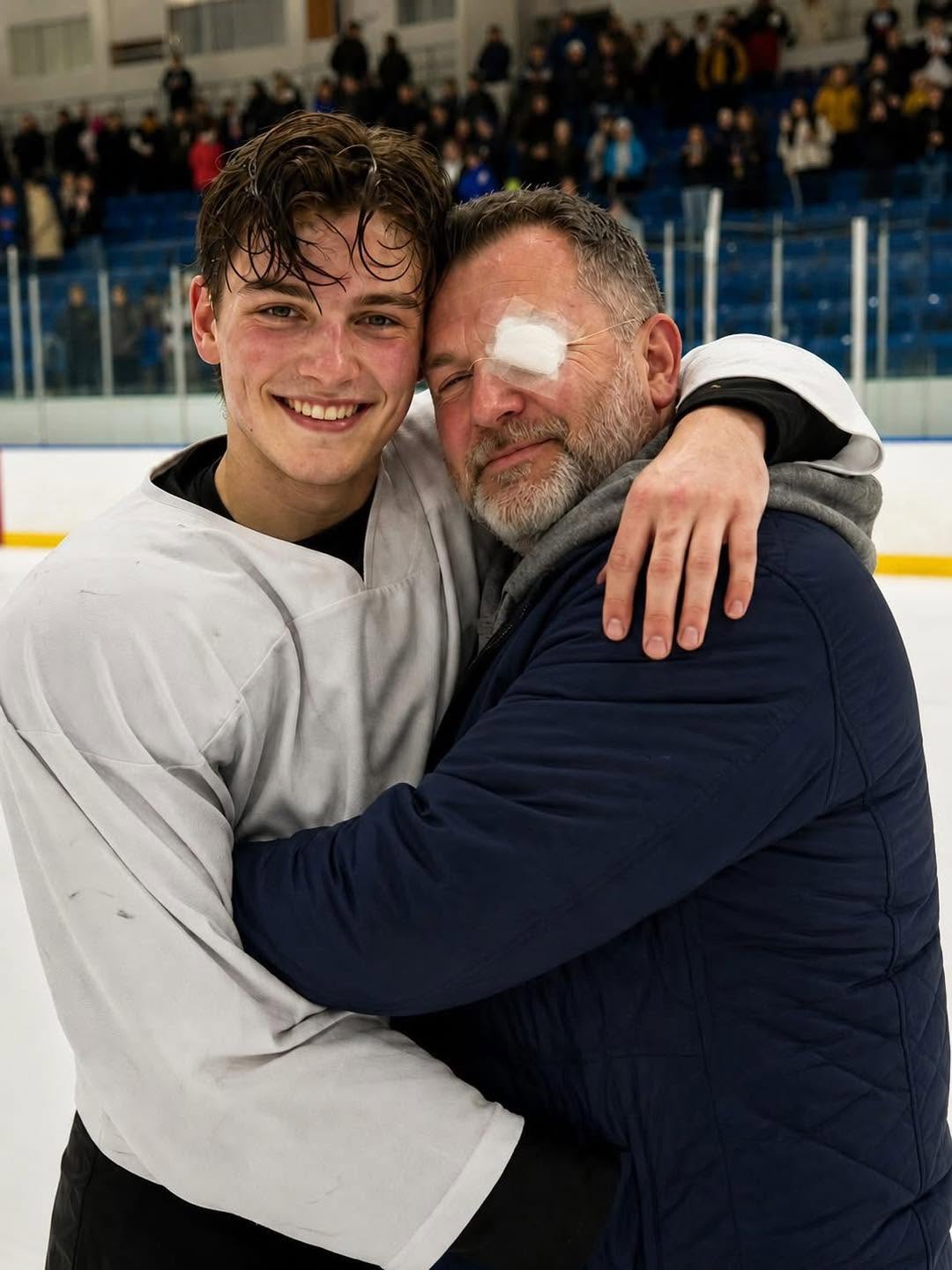
Not when Mason broke his arm playing youth soccer.
Not when he won his first middle school athletic award.
Nothing.
Fourteen years passed.
That scared four-year-old boy grew into a six-foot-two young man—fast on his feet, holding a lethal left foot on the soccer field that had begun attracting serious interest from Division I college recruiters.
His high school team made it to the state championship game. Mason was the varsity captain.
I had attended virtually every single match he had played since he was seven years old. But during the three months leading up to the championship, I noticed a subtle shift in his behavior.
Mason was constantly checking his phone.
When I walked into the living room, he’d flip the screen face-down.
He became unusually quiet.
I assumed he was talking to a girl.
Until the morning before the championship game, when he knocked gently on my bedroom door.
“Dad,” he said, taking a seat on the chair across from my bed. “I need to tell you something. But promise me you’ll let me finish first.”
My stomach tightened. “Go ahead, Mason.”
He rubbed his palms together, looking down. “I invited David to the game tomorrow.”
The room went dead silent.
My brain struggled to process the name. David’s name hadn’t been spoken inside our home in nearly a decade.
“Who?” I asked softly.
“My biological father,” Mason said. “He found me on Instagram three months ago. He messaged me.”
I sat up slowly. “You’ve been talking to him for three months?”
“Yeah.”
“And you didn’t tell me?”
“I tried to,” Mason murmured. “A dozen times.”
“It didn’t look like it.”
Mason lowered his head. “I was afraid.”
“Of what?”
He looked up, his eyes wide and vulnerable. “That you’d think I was choosing him over you.”
That sentence cut deeper than I cared to admit. I stayed silent, staring at the floorboards.
Mason swallowed hard. “He says he’s changed, Dad. He’s married now. He runs a successful commercial real estate firm in Chicago. He’s doing really well.”
I let out a dry, hollow laugh. “Good for him.”
“Dad…”
“Did he happen to mention how he changed after leaving a four-year-old alone in an empty house?”
“I know what he did.”
“No, Mason, you know the story,” my voice rose slightly before I could check it. “I was there. I walked into that house at seven in the morning and found you sitting on the floor eating dry cereal by yourself. Your mother was dead, and he was already gone.”
“I know, Dad.”
“Then you know what kind of man walks away from his own kid.”
Tears glistened in Mason’s eyes, but he didn’t pull back. “I’m not asking you to forgive him.”
“Then what do you want from me?”
“I want you to trust me.”
I stared at him. Every protective instinct in my body urged me to tell him that David had no right to show up after fourteen years of radio silence just to snap a picture at the biggest game of his high school career.
I wanted to forbid it.
I wanted to shield him.
Then I remembered the core principle I had lived by since the day I brought him home: being his father had never been about controlling his choices. It was about teaching him how to make them.
“Okay,” I said quietly.
Mason blinked, caught off guard. “What?”
“If you invited him, he can come.”
“Are you serious?”
“I won’t make a scene,” I promised.
Mason stood up, walked to the doorway, and turned back to look at me. “I love you, Dad.”
