
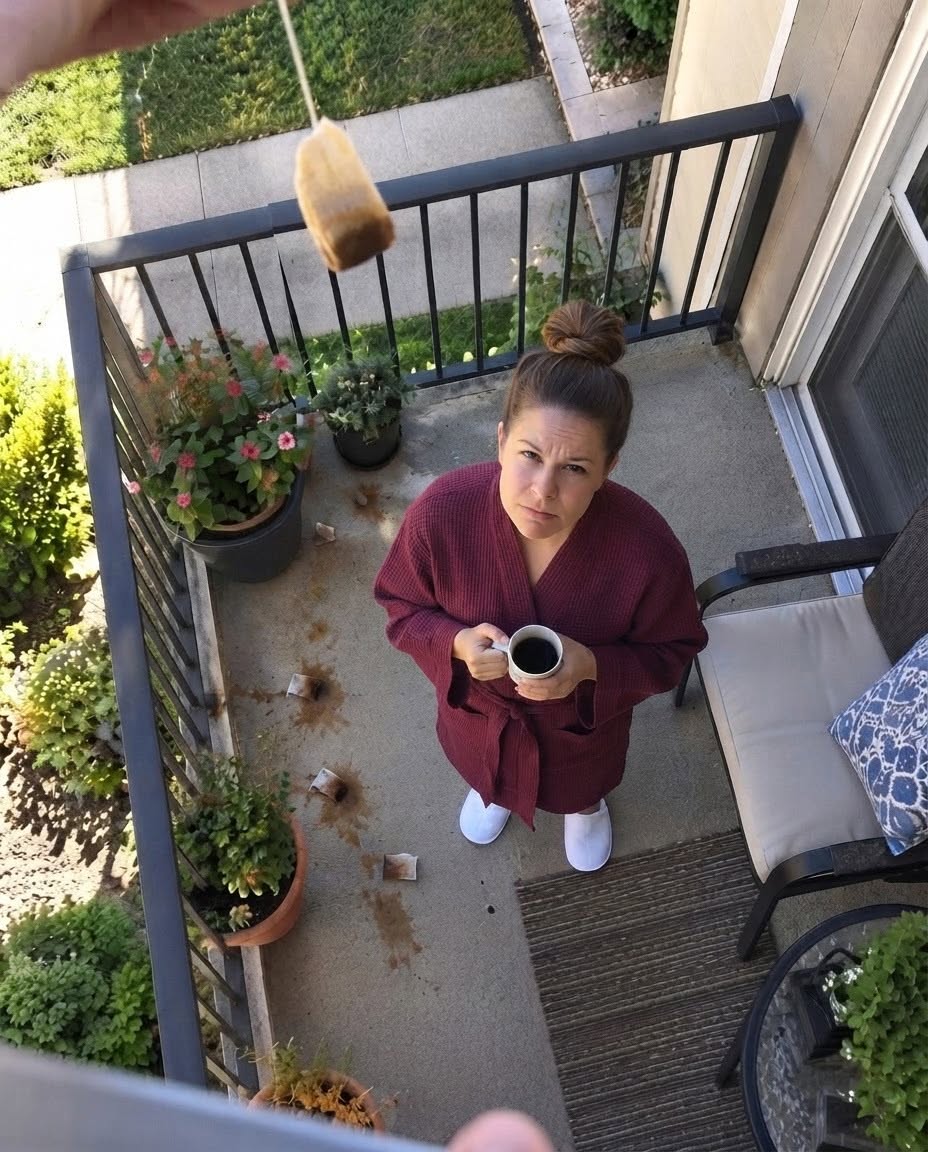
It was close enough.
His mother died in June.
Pregnancy & Maternity
He knocked on my door the morning after. Not because we had become close friends — we had not — but because Mrs. Okafor had already brought food and had mentioned, apparently, that I was someone he could knock on.
He looked exactly as a person looks the morning after they have lost the last parent they had.
I made tea.
He sat at my kitchen table — the same kitchen table where I had sat on that January morning and planned my response, maps and lease clauses and seven photographs spread across it — and he didn’t say much, just sat with the cup and with the particular silence of a person who has been keeping themselves together through an extended crisis and has now been informed by events that the keeping-together can be released.
He told me about her.
Not the illness — the person before the illness. The woman who had moved here thirty years ago from somewhere greener and smaller and had always intended to move back, who had made excellent tea from a specific brand she ordered from a specific place and refused to substitute, who had taught herself to play bridge by correspondence before the internet existed, who had called him every Sunday at noon for his entire adult life.
“She called me last Sunday,” he said. “She didn’t know who I was. But she asked if I was all right.”
I thought about that.
The woman who didn’t know her son but asked if he was all right.
“That was her,” I said. “That was still her.”
He held his cup.
“Yes,” he said. “I think so too.”
We sat for a while.
Eventually he said: “You didn’t have to let me in.”
“I lived in this building eleven years before you arrived,” I said. “I’m going to be here after you as well, probably. What happens between us in the middle matters.”He looked at his cup.
“I was awful about the tea bags,” he said. “I was careless to start with and then when you came up I was — I was in the middle of something I didn’t know how to explain and I took it out in the wrong direction.”
“Yes,” I said.
“You were completely right.”
“Yes.”
“And then you still brought the packages up.”
“Yes.”
He shook his head.
“Why?”
I thought about how to answer this.
“Because being right about the tea bags didn’t mean everything else had to stop,” I said. “Those are two separate things. You were wrong about the tea bags. You were also clearly struggling. The complaint was about the tea bags. The packages were about being a neighbor.” I paused. “They don’t have to be connected.”
“I was being thorough,” I said.
“You were being yourself,” she said, which she means as a compliment and I take as one.
She asked me what I would say to someone in a similar situation. How to handle a neighbor who won’t stop.
I thought about it.
“Document everything from the beginning,” I said. “Photograph things. Note the dates. Read your lease — actually read it. Know what the complaint process is before you need it.”
“And then?”
“Knock first. Always knock first. Give people the genuine chance to be reasonable, because most people are reasonable when approached reasonably.”
“And when they’re not?”
“Then you stop appealing to their reasonableness and you appeal to the structure instead. The process exists for exactly this situation. Use it without apology.”
Carol was quiet for a moment.
“And the whole — bringing him the packages, inviting him in when his mother died —”
Pregnancy & Maternity
“Separate,” I said. “The complaint was about the tea bags. The rest was about being a neighbor. Those don’t have to collapse into the same thing.”“Most people would have held the grudge.”
“Grudges are expensive,” I said. “They cost more than towels.”
Carol laughed again.
“You know what the lesson is,” she said. “Don’t mess with the woman in 3B.”
“The lesson,” I said, “is that being the woman who doesn’t complain doesn’t mean being the woman who accepts anything. There’s a version of reasonable that knows exactly what it will and won’t absorb. I am that version.”
I poured my tea.
“And keep your lease somewhere you can find it,” I said. “You never know when you’ll need to know what it says.”
The cushion cover still doesn’t quite match the chair.
I’ve decided I like it that way.
The towel he still owes me is, I suspect, never coming.
That’s all right.
Some things you write off.
The important things — the balcony, the mornings, the eleven years of a life built carefully in a building I chose and continue to choose — those I kept.
