
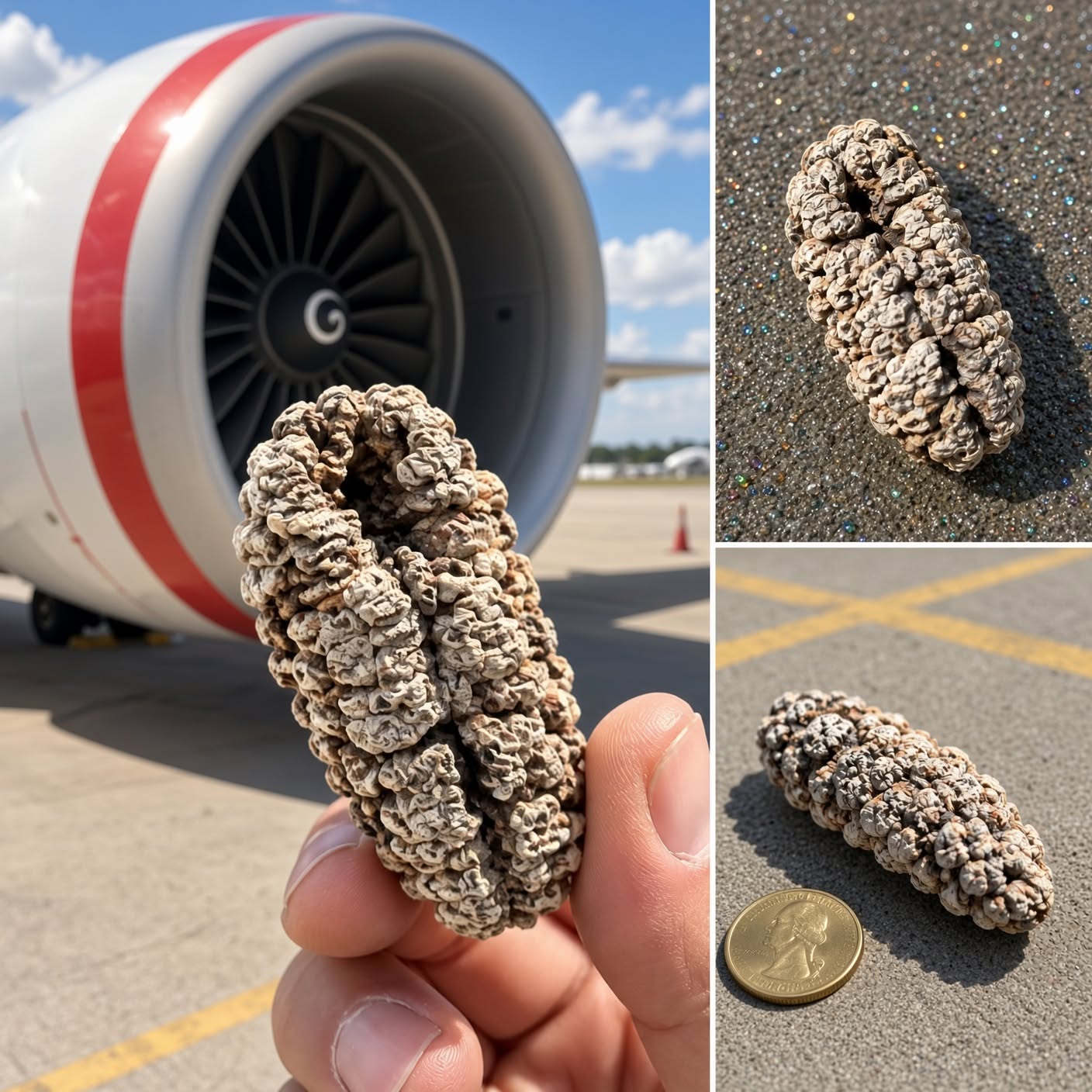
The internet loves an unsolved puzzle, and this image quickly picked up traction. Guesses poured in from all over the world. Gardeners argued it was an odd truffle or an ornamental seed husk. Rockhounds wondered if it was an unusually weathered geode or pumice stone. Aviation workers chimed in with structural parts, though none quite matched the biological, braided texture of the mystery object.
As the theories grew wilder, marine enthusiasts and culinary specialists finally stepped into the conversation. They pointed out the wrinkled crevices, the telltale longitudinal groove, and the chalky salt residue clinging to the surface. It was not aircraft insulation, nor was it a piece of ancient volcanic stone.
The bizarre pebble was an organism from the deep ocean floor: a thoroughly dehydrated, salted sea cucumber.
Identifying the object solved the physical puzzle, but it opened a far more puzzling question. Why would a dried sea creature be loose in an airliner’s cargo hold? And why would someone risk packing an item that looks so unremarkable, yet commands such an astonishing secret value?
To understand why a dried sea cucumber wound up in the belly of an international aircraft, one has to step away from airport runways and dive into high-end culinary traditions and global commodity markets. Known across East Asia by names like haishen or bêche-de-mer, the sea cucumber is far from an ordinary bottom-feeder. In many cultures, it is celebrated as an ultra-luxury delicacy, a centerpiece of celebratory feasts, and a revered pillar of traditional medicine.
