
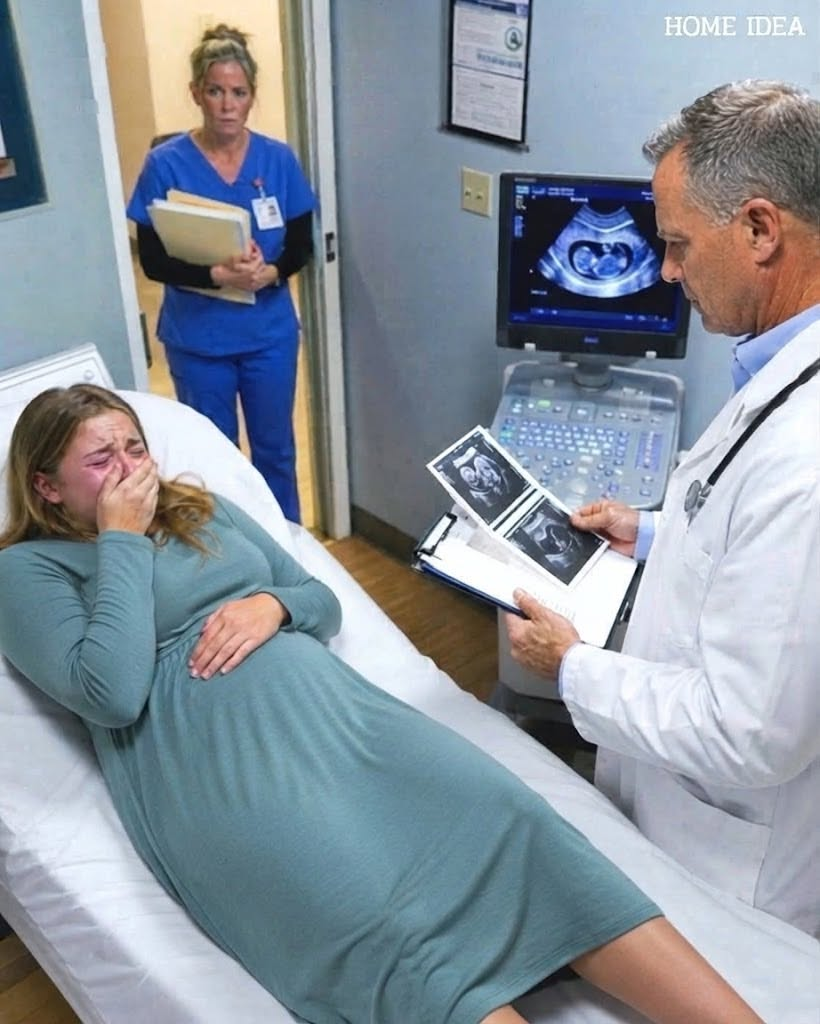
Maya was transferred for additional imaging.
I sat beside her, holding her hand.
She tried to stay calm.
“Mom?”
“Yes?”
“Are you scared?”
I looked at her.
I wanted to say no.
I wanted to tell her everything would be fine.
But she was fifteen, not five.
She deserved honesty.
“Yes,” I said quietly. “I’m scared.”
She squeezed my hand.
“Me too.”
That was the moment I realized something.
My daughter had been frightened for weeks.
And while we were arguing about whether her symptoms were real, she had been lying awake at night wondering what was happening inside her own body.
I felt guilty.
Not because I had ignored her.
I hadn’t.
But because I had spent too much time trying to convince Robert that something was wrong instead of simply acting sooner.
Waiting for an Answer
Waiting is one of the hardest parts of being a parent.
You can handle bad news.
You can handle difficult decisions.
But uncertainty is different.
It gives your imagination room to create thousands of possibilities.
I watched nurses walk through the hallway.
I watched doctors enter and leave rooms.
I watched the clock.
Every minute felt longer than the one before it.
Finally, Dr. Lawson returned.
He had additional information.
“We have a better idea of what we’re dealing with now,” he said.
Maya looked at him.
“So what is it?”
The doctor explained that the initial scan had identified an abnormal mass, but further evaluation was necessary before a definitive diagnosis could be made.
The important thing was that the frightening image was not itself a diagnosis.
There was still uncertainty.
But there was also a plan.
And for the first time that day, I felt a tiny amount of hope.
The Lesson I Wish I Had Learned Earlier
That night, while Maya rested, I sat beside her hospital bed and thought about everything that had happened.
I kept remembering Robert’s words.
“She’s faking it.”
“Don’t waste money.”
“She wants attention.”
What if I had listened?
What if I had waited another week?
Another month?
I didn’t know whether waiting would have changed the outcome.
But I knew one thing.
A child who repeatedly reports unexplained pain deserves to be taken seriously.
That doesn’t mean every stomachache is an emergency.
It doesn’t mean every symptom points to a serious disease.
And it certainly doesn’t mean parents should panic at every unusual sensation.
But persistent or severe symptoms deserve appropriate medical attention.
Especially when they are accompanied by other changes such as repeated vomiting, unexplained weight loss, severe pain, fainting, dehydration, blood in vomit or stool, fever, or significant weakness.
Robert Finally Came to the Hospital
Eventually, Robert arrived.
He walked into the room looking angry and worried at the same time.
His eyes went immediately to Maya.
Then he looked at me.
“You took her here without telling me.”
“Yes.”
He started to speak.
Then he stopped.
Maya was asleep.
She looked small beneath the hospital blanket.
Robert’s expression changed.
For perhaps the first time, he seemed to understand what I had been seeing.
He pulled a chair beside the bed.
