
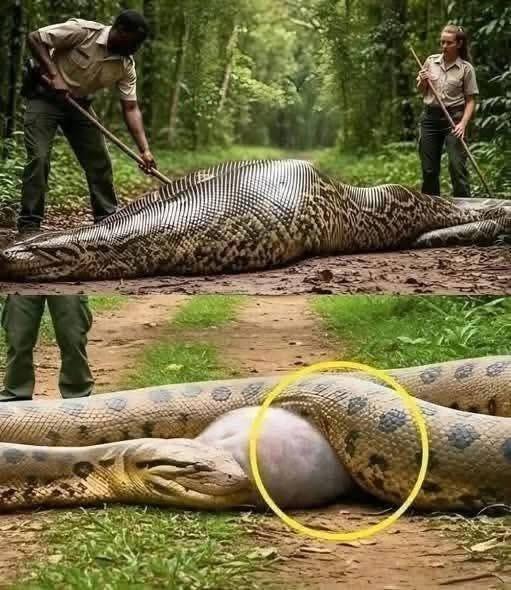
Diet and feeding habits
Environmental threats affecting wildlife
These examinations contribute to conservation efforts rather than sensational entertainment.
What Scientists Commonly Find
The contents of an anaconda's digestive system tell an important ecological story.
Researchers have documented prey including:
Large meals can take weeks or even months to digest completely. During this period, the snake's metabolism increases dramatically to process the enormous amount of food.
Finding prey inside an anaconda isn't unusual—it's an expected part of understanding how these predators survive.
Adapted for Remarkable Meals
Anacondas possess extraordinary anatomical adaptations that allow them to consume prey much larger than their heads.
Their jaws are not fused together like those of mammals. Instead, elastic ligaments let each side move independently. Powerful muscles gradually pull prey into the mouth while rows of backward-curving teeth prevent escape.
Their skin also stretches significantly, allowing the body to expand around large prey before slowly returning to its normal shape after digestion.
Life in the Wetlands
Green anacondas spend much of their lives in water, where their massive bodies become surprisingly agile.
