
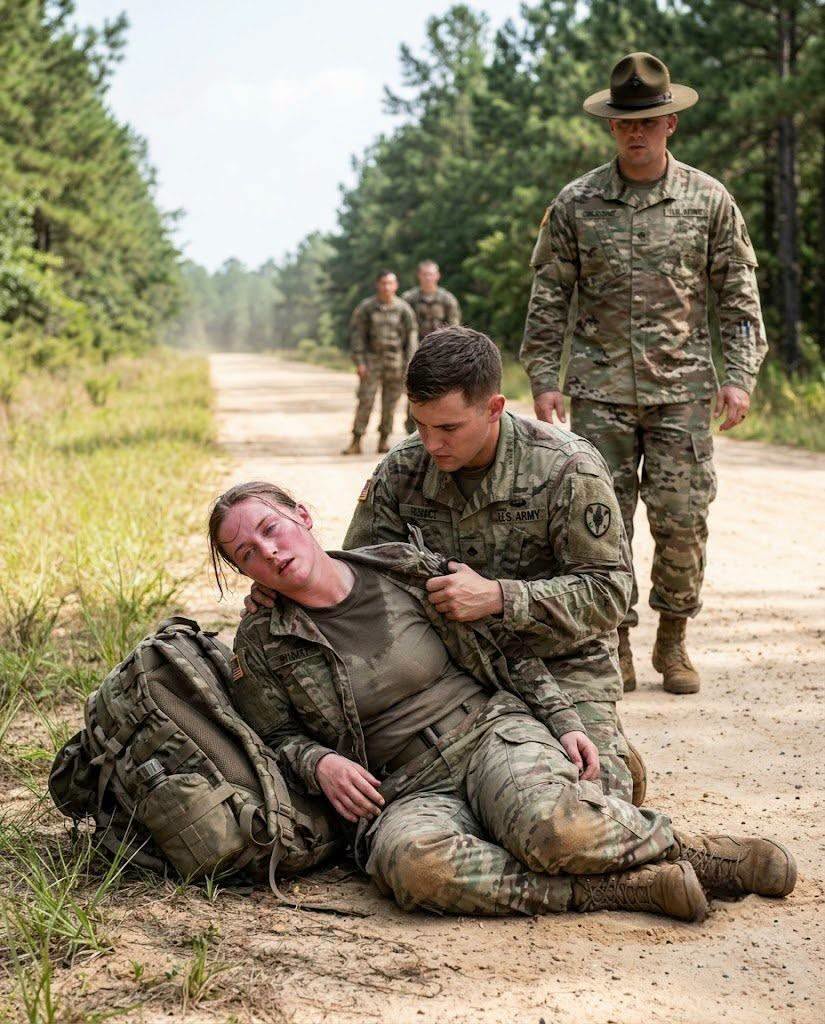
An hour later, Captain Laura Bennett entered with a medical officer and a folder tucked under one arm.
I recognized the folder immediately.
Same gray cover.
Same stamped corner.
The waiver packet I had slid across the intake counter weeks earlier.
Bennett took the chair beside my bed.
“Mercer, I need to ask you something directly. Did you conceal a disqualifying injury during processing?”
“No, ma’am.”
“Did you report the burn history?”
“Yes, ma’am. Before I arrived here. Surgical records, graft reports, physical therapy, all of it.”
The medical officer opened the folder.
“She’s correct.”
My lungs finally loosened.
He turned several pages toward Bennett.
“The injury was reviewed before accession. Grafts are mature. Range of motion normal. Strength testing normal. No active wound care. No current duty restriction. She received medical clearance after specialist review.”
Bennett looked at me.
“And when the intake clerk asked whether anything had changed?”
“Nothing had changed. That’s why I said no change.”
The medical officer nodded.
“That was the correct answer.”
For six weeks, Vega had treated my closed collar like evidence.
Now the actual evidence was lying open on Bennett’s knee.
And it said I belonged there.
But Bennett didn’t smile.
“Cleared doesn’t mean invulnerable,” she said. “Why didn’t you report the pain from the pack?”
That question hurt because it was fair.
I looked down at my hands.
“Because I could carry it.”
“That wasn’t my question.”
I swallowed.
“Because every time I slowed down, Sergeant Vega called it proof that I shouldn’t be here. I didn’t want to give him another reason.”
Nobody spoke for a moment.
Then Bennett asked, “How long has that been happening?”
“Since the second day.”
The medical officer closed the folder.
Bennett did not.
She asked for examples.
So I gave them.
Weapons drill.
Pack inspections.
Formation comments.
The jokes about apologizing to the enemy.
The comments about me hiding something.
I expected her to tell me that selection was supposed to be hard, that drill cadre raised their voices, that discomfort was part of the job.
Instead, she asked a different question.
“Did he ever refer his concerns to medical?”
“Not that I know of.”
“Did he ever ask another evaluator to assess you?”
“No, ma’am.”
“Did he ever tell you that you had failed a published standard?”
I thought about it.
That answer surprised even me.
“No, ma’am.”
Bennett shut the folder.
“All right.”
She stood.
“Rest.”
At the door, she stopped.
“And Mercer?”
