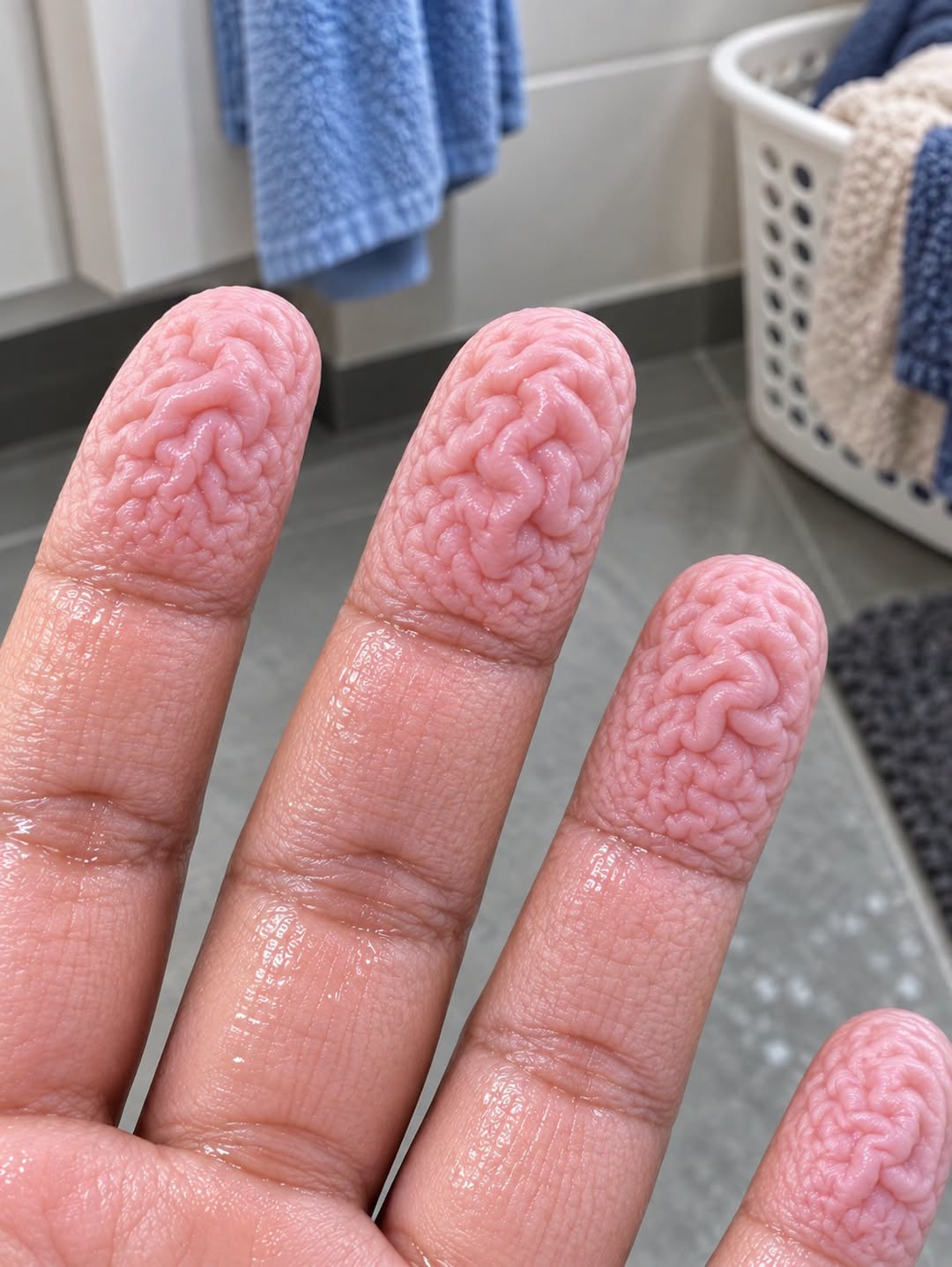
Wrinkled Fingers After Water Exposure: What Your Skin May Be Telling You

https://images.openai.com/static-rsc-4/dco-_Qs1usVcEvYhc-bgnpesykMJOf5ko3qfKLEZPQQB-xIKKxaazCYGsIOKP3uFoEnxdiN4riI8xwl0DESGm740-o_vxY2SSTo4zbKilOF3JGsO8DGdWhTpGHNYKaSvRcKaGYPIsDcZT4_xAINIHbDYQHtu4nnCi8eyhDbawTL5BXLRxxR6RzcPm9wqy3vK?purpose=fullsize
https://images.openai.com/static-rsc-4/e8y1q0BxUyWiZTJSYvbAcn35yQLBRfeSsdgG00MGsHxF5UAfSZ8FBjUMdMro353S0fvljfQuIjIa9rFtG3nbTv_eT4-GitAddc3zauWVQPUHAkr2qsr9lrLWHn-YQpHBKZOgJ5L-xNCzg4qs49bQkulvxYSv5N7NuDxCcyg-7E0_D8XVhRSeI8-bOouT8psT?purpose=fullsize

However, some people experience excessive wrinkling, even after brief water contact. In rare cases, this may be associated with conditions such as:

  • Aquagenic wrinkling of the palms, an uncommon skin disorder.
  • Cystic fibrosis or carriers of certain CF-related gene mutations.
  • Certain medications that alter salt balance in the skin.
  • Disorders affecting the autonomic nervous system.
  • Chronic eczema or damaged skin barriers.

Although these conditions are uncommon, persistent or unusually rapid wrinkling should be discussed with a healthcare professional, especially if accompanied by pain, itching, excessive sweating, or skin peeling.

Leave a Reply

Your email address will not be published. Required fields are marked *