
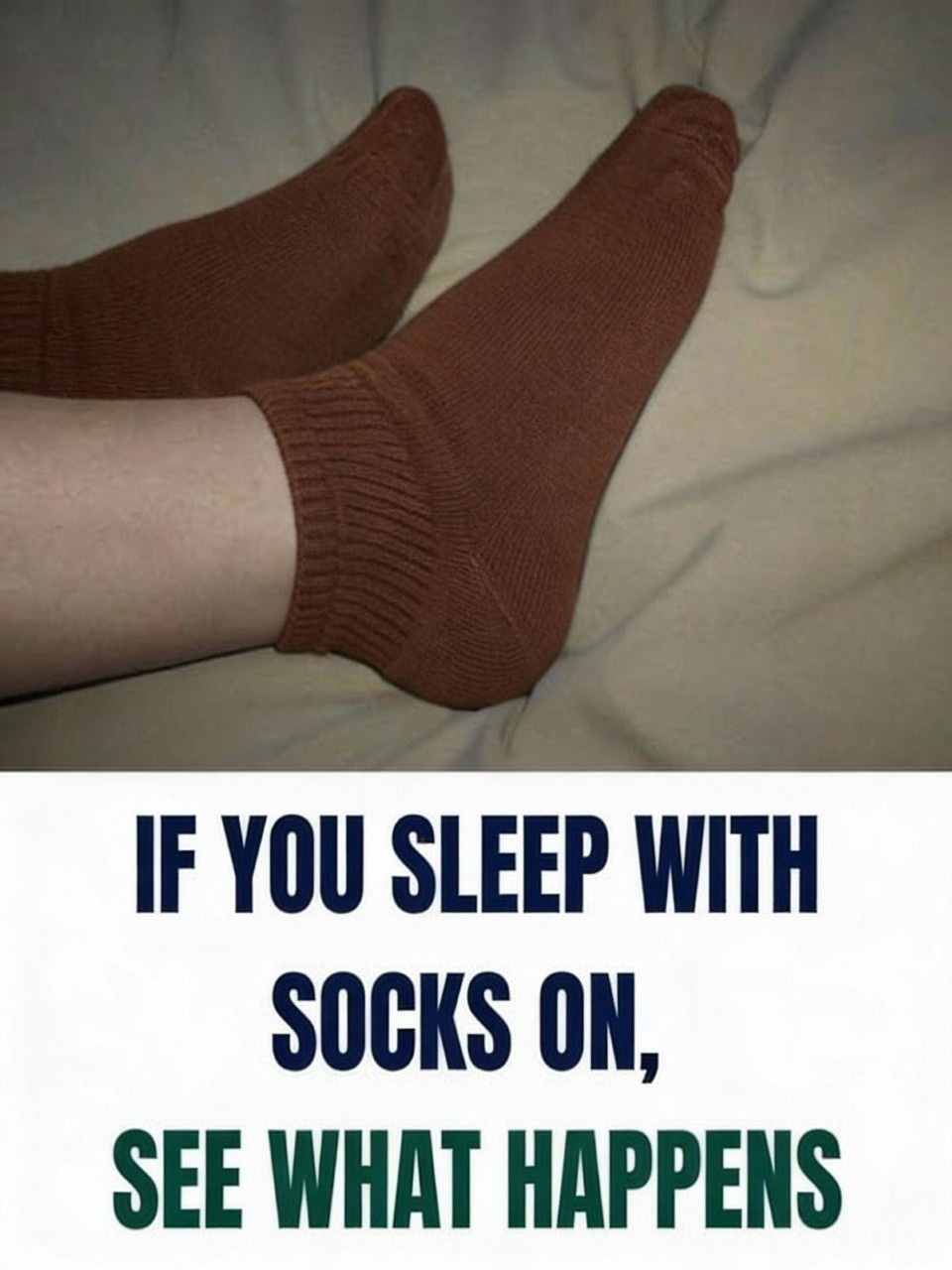
You either love it or can’t imagine it: slipping on a pair of soft socks before bed.
For some, it’s cozy heaven. For others, it feels like suffocation.
But beyond personal preference, sleep science reveals that wearing socks to bed triggers real, measurable changes in your body—many of them beneficial for rest, circulation, and even fertility.
So is this habit helping you—or harming you?
Let’s break down what doctors, neurologists, and sleep researchers say about sleeping in socks—and how to do it right.
🔬 The Science Behind Warm Feet & Sleep
Your body naturally lowers its core temperature by 1–2°F (0.5–1°C) to initiate sleep. One key way it does this? Dilating blood vessels in your extremities—especially your hands and feet—to release heat.
When you wear socks:
- Warm feet = faster vasodilation
- Faster core cooling = quicker sleep onset
- Deeper, more stable sleep cycles
Study insight: A landmark study in Nature found that people who wore socks to bed fell asleep 15 minutes faster and woke up 30% less often during the night.
✅ 5 Proven Benefits of Sleeping in Socks
- Fall Asleep Faster
As shown in multiple studies, warm feet signal the brain that it’s time to sleep—cutting down on frustrating “toss-and-turn” time. - Improve Sleep Quality
Warmer extremities support longer periods of slow-wave (deep) sleep—the stage critical for physical repair and memory consolidation. - Reduce Nighttime Leg Cramps
Improved circulation from warm feet may prevent painful calf spasms—common in older adults, pregnant women, and athletes. - Support Raynaud’s Syndrome & Poor Circulation
For those with chronically cold feet, socks offer drug-free comfort and better overnight rest. - Boost Fertility (Yes, Really!)
A small but notable study in Human Reproduction found that men who slept with socks had higher sperm counts—likely due to improved scrotal temperature regulation via better overall circulation.
