
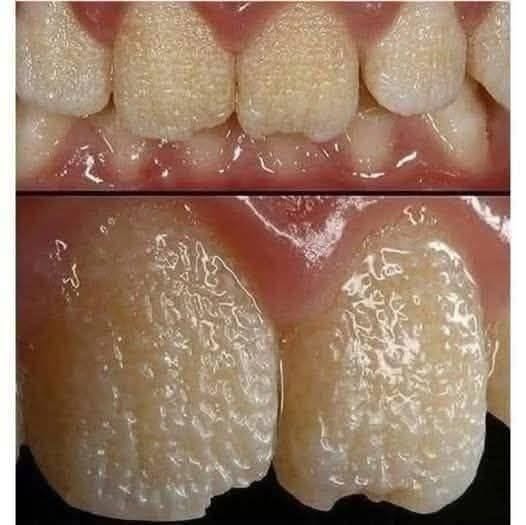
Most people brush their teeth, rinse their mouth, and think they’re doing enough to protect their smile. But what many don’t realize is that the real damage doesn’t happen in the bathroom—it happens at the table, in the kitchen, at the café, and during everyday snacks we barely even think about.
Your teeth are exposed to everything you eat and drink. And while they may look strong and solid, they are actually under constant attack from acids, sugars, and hidden ingredients in modern diets.
The scary part? The damage is usually silent… until it becomes visible.
In this article, you’ll discover what actually happens to your teeth over time when exposed to certain eating habits, what signs to watch out for, and how small daily choices can completely change the future of your smile.
 The Truth About What Happens Inside Your Mouth Every Day
Every time you eat, a chain reaction begins inside your mouth.
Your saliva, bacteria, food particles, and enamel all interact in a delicate balance. When you eat something, especially food high in sugar or starch, bacteria in your mouth begin feeding on those particles.
As they feed, they produce acids.
And those acids start attacking your enamel—the thin, protective outer layer of your teeth.
At first, nothing feels wrong. There is no pain. No warning signs. No visible change.
But underneath the surface, erosion begins.
And enamel, once damaged, does not grow back.
That’s the part most people don’t realize until it’s too late.
 What Your Teeth Slowly Become Over Time
If unhealthy eating habits continue for months or years, the changes in your teeth become more noticeable. Dentists often see these patterns developing gradually.
1. Loss of Natural White Color
One of the first visible signs is discoloration. Teeth that were once bright begin to look dull, yellow, or stained. This happens because enamel slowly wears down, revealing the darker layer underneath called dentin.
Coffee, tea, soda, and heavily processed foods speed up this process, especially when consumed daily.
2. Increased Sensitivity
Have you ever felt a sharp pain when drinking cold water or eating ice cream?
That sensitivity often means enamel has become thinner. When protective enamel weakens, the nerves inside your teeth become more exposed to temperature changes.
What used to feel normal suddenly becomes uncomfortable.
