
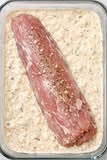
Skillet Method (Best): Reheat slices in a skillet with a splash of broth, water, or olive oil over low-medium heat. Cover and warm gently for 2–3 minutes per side.
Oven Method: Place pork in a baking dish with a little liquid, cover with foil, and warm at 325°F for 10–15 minutes.
Microwave (Quick but Risky): Use 50% power in 30-second bursts, covering with a damp paper towel to add moisture. Avoid high power, as this can make the meat rubbery.
Meal Prep Idea:
Slice the cooled pork and portion it into containers with roasted vegetables and quinoa for easy, high-protein lunches throughout the week.
Frequently Asked Questions
Q: Can I use pork loin instead of tenderloin?
A: No, these are two different cuts. Pork loin is much thicker, wider, and has a different fat distribution. It requires a lower temperature (around 375°F) and a much longer cooking time (often 45–60 minutes). Using this high-heat, quick-cook recipe for pork loin will result in an undercooked center or a dried-out exterior.
Q: Is it okay if the pork is slightly pink?
A: Yes, absolutely! Modern pork safety guidelines state that 145°F followed by a 3-minute rest is perfectly safe. At this temperature, the center will remain slightly pink. This indicates the meat is juicy and properly cooked, not undercooked.
Q: Can I marinate the pork beforehand?
A: Absolutely. While this recipe is designed for speed, you can marinate the pork in the oil, garlic, salt, and pepper mixture (plus any additional herbs or acids like lemon juice) for 2–4 hours in the fridge before roasting for deeper flavor penetration. Avoid marinating longer than 4 hours with acidic ingredients, as it can start to break down the tender texture.
Q: How do I know when it's done without a thermometer?
A: While a thermometer is highly recommended for accuracy, you can use the touch test: press the thickest part of the pork. It should feel firm but still have a little give, similar to the fleshy part of your palm below your thumb when your hand is relaxed. However, this method is less reliable than using a thermometer.
Q: Can I double this recipe?
A: Yes, you can roast two tenderloins at once. Just make sure they are not crowded on the baking sheet—use two sheets or a large roasting pan to allow air circulation. Cooking time should remain roughly the same, but always rely on internal temperature rather than time alone.
Why This Recipe Works
This recipe succeeds because it respects the nature of pork tenderloin: a lean, tender cut that benefits from high heat and minimal handling. The olive oil creates a barrier that helps the seasoning stick and promotes browning. The high oven temperature quickly develops flavor on the exterior while the interior gently cooks to a juicy finish. Finally, the resting period is non-negotiable—it is the secret step that transforms good pork into great pork.
