
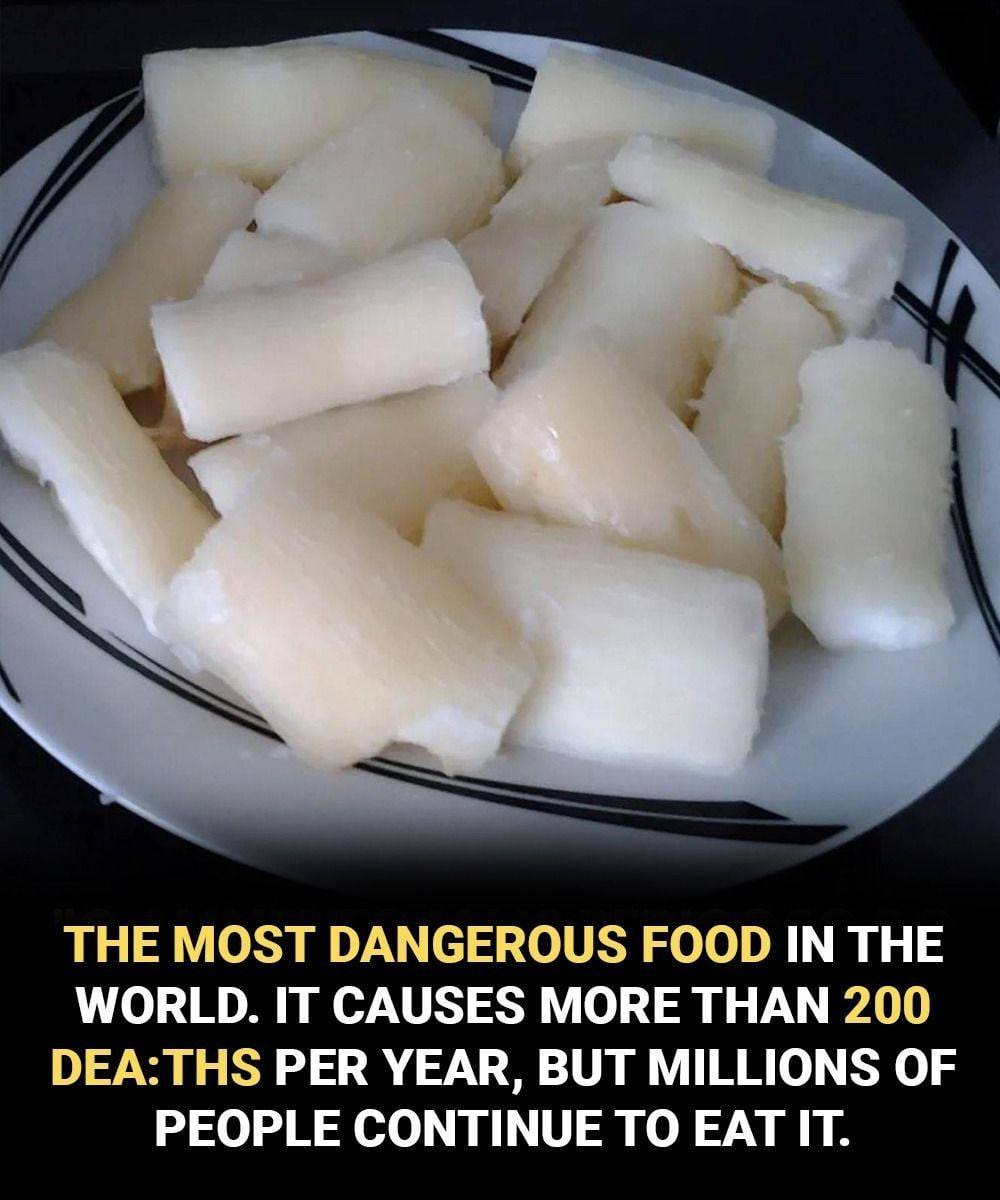
Cassava is a beloved staple enjoyed across continents—from the vibrant kitchens of Brazil to the bustling street markets of Vietnam. Its versatility and rich, comforting flavor make it a favorite in countless traditional dishes. Yet, behind its humble appearance lies a surprising truth: when improperly prepared, cassava can release cyanide, a toxic compound that poses serious health risks.
The reassuring news? With proper preparation techniques, cassava becomes completely safe to eat—allowing you to enjoy its delicious taste without concern.
Cassava: A Global Staple with a Hidden Risk
Not all cassava is the same. The so-called “bitter” variety naturally contains compounds known as cyanogenic glycosides. When the root is cut, grated, or chewed, these compounds break down and release cyanide—the same fast-acting toxin often associated with poison in fiction.
If cassava is eaten raw or inadequately processed, these toxic substances remain active and can be harmful.
Why Do Poisoning Cases Still Happen?
Despite widespread knowledge in many cultures, cassava poisoning still occurs—mainly due to difficult living conditions or lack of awareness. Common causes include:
