
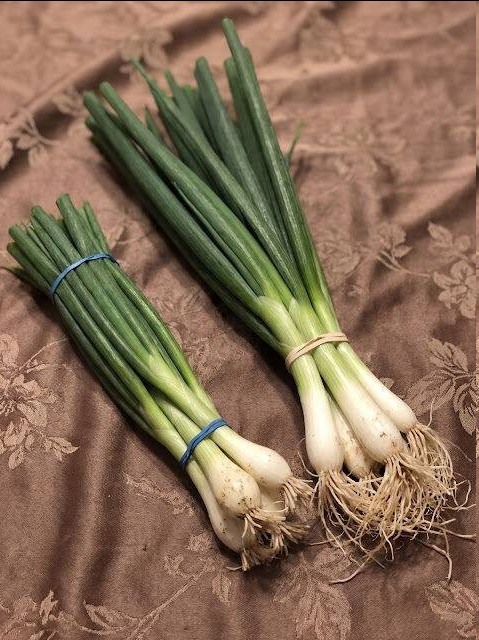
Very thin, solid, grass-like stems
No bulb or white base
Flavor: Soft, subtle onion flavor—much milder than onions or scallions.
Best uses:
Always raw or added at the very end
Garnish soups, dips, deviled eggs, and baked potatoes
Snip with scissors to avoid bruising
Varieties:
Common chives: Mild onion flavor
Garlic chives: Flat leaves with a garlicky taste (popular in Asian cuisine)
✅ Key takeaway: Chives are a finishing herb, not meant for cooking.
🥣 Quick Comparison Guide
Type Bulb? Hollow Stems? Flavor Strength Best Use
Scallions / Green Onions No Yes Mild Raw or lightly cooked
Spring Onions Yes (small) Yes Medium-sweet Grilled, roasted, sautéed
Chives No No (solid) Very mild Raw garnish only
❤️ Helpful Cooking Tips
Don’t replace scallions with chives in cooked dishes—they lose their flavor.
Choose spring onions when you want a stronger onion presence.
Store scallions upright in a jar of water to keep them crisp longer.
Freeze chopped scallions for cooking (texture softens, flavor stays).
🌟 The Bottom Line
Even though they look similar, each has its own role:
Scallions/green onions: Everyday, versatile staple
Spring onions: Extra onion flavor with a tender bulb
Chives: Light, fresh finishing touch—like edible green confetti
Good cooking isn’t about complicated ingredients—it’s about choosing the right one at the right moment. 🌱✨
