- Polycystic Ovary Syndrome (PCOS)
Most common cause of excess facial hair in women under 50.
Caused by elevated androgens (male hormones).
Other signs: Irregular periods, acne, scalp hair thinning, weight gain, insulin resistance.
Affects ~1 in 10 women—often undiagnosed. - Adrenal or Ovarian Disorders
Rare tumors or conditions (like congenital adrenal hyperplasia) can overproduce androgens.
Usually accompanied by rapid hair growth, deepening voice, or clitoral enlargement. - Medication Side Effects
Certain drugs (minoxidil, steroids, some antidepressants) can trigger unwanted hair growth. - Idiopathic Hirsutism
Excess hair with no identifiable cause—common in Mediterranean, Middle Eastern, or South Asian women.
🩺 When to See a Doctor
Consult a healthcare provider if you notice:
Sudden, rapid growth of dark, coarse chin/jawline hair
Hair spreading to chest, back, or abdomen
Missed periods, severe acne, or hair loss on the scalp
Deepening voice, increased muscle mass, or other masculinizing changes
🔍 A simple blood test can check hormone levels (testosterone, DHEA-S, LH/FSH) and rule out PCOS or other conditions.
❤️ The Bottom Line
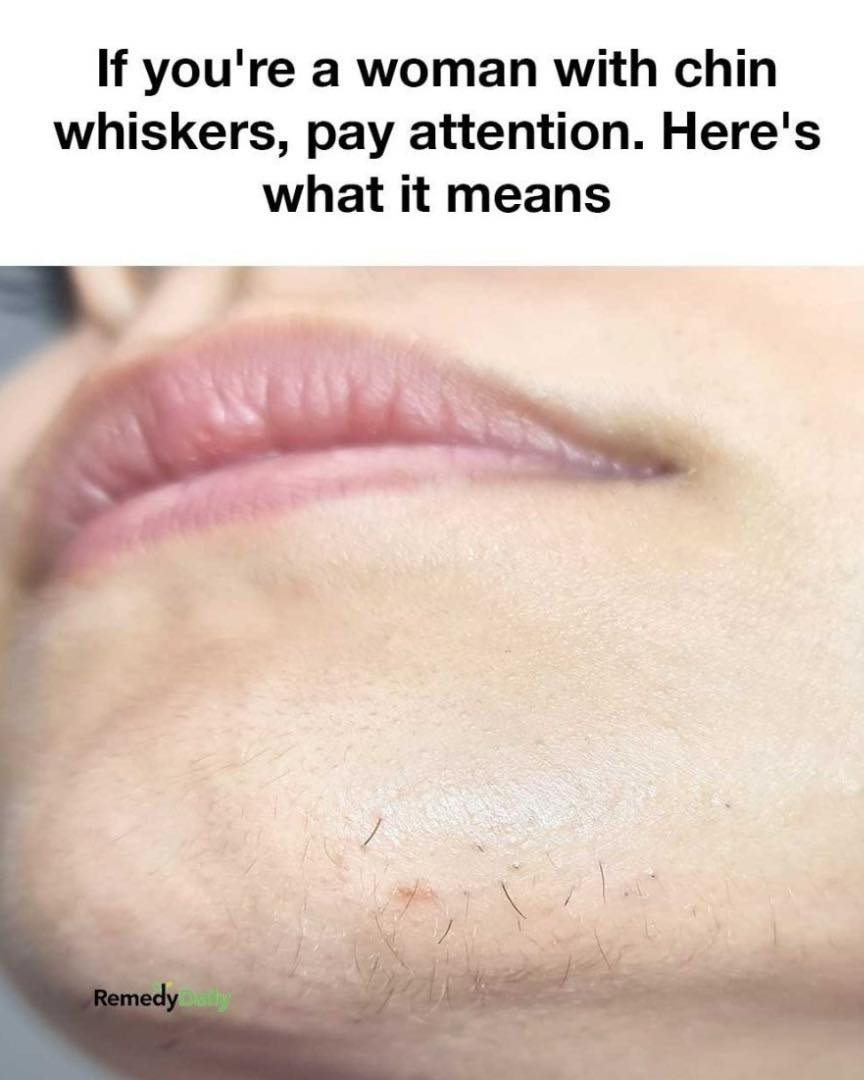
A single chin whisker? Totally normal.
But if you’re plucking daily or seeing dramatic changes, it’s worth investigating—not because it’s dangerous, but because treatable conditions like PCOS affect long-term health (fertility, diabetes risk, heart health).
Your body speaks in whispers before it shouts. Listen kindly.
And remember: whether it’s genetics or hormones, facial hair doesn’t define your femininity or worth. But understanding its cause empowers you to care for your whole health—inside and out. 💛
What Chin Whiskers Could Be Telling You About Your Health