
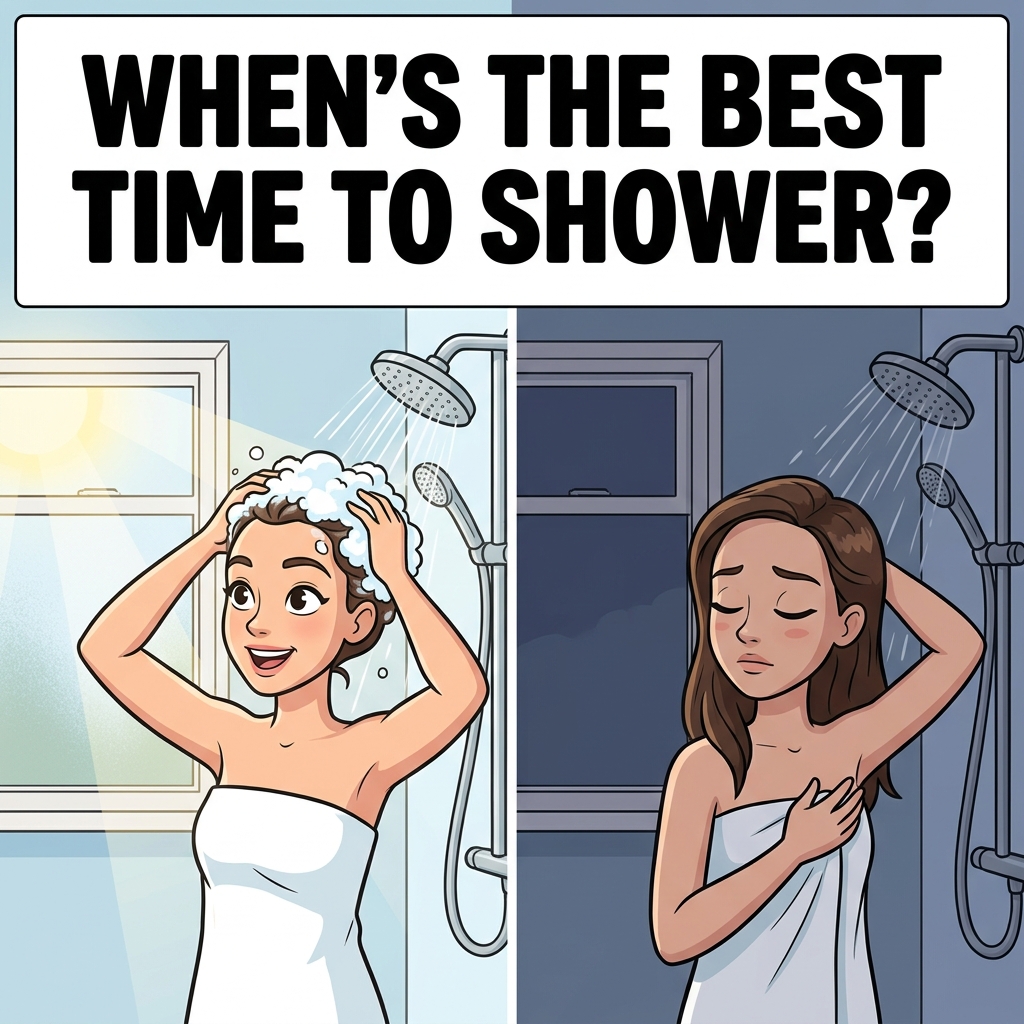
It is one of those everyday questions that generates surprisingly strong opinions. Morning shower people cannot imagine starting their day any other way — the shower is what wakes them up, organizes their thinking, and gets them ready to face the world. Night shower people feel equally certain — why would you take the day's accumulated sweat, pollution, and grime to bed with you? Both positions have genuine logic behind them. Both have scientific support. And the honest answer from dermatologists, sleep researchers, and microbiologists is that there is no universal best time — but there is likely a better time for you specifically, depending on your skin type, sleep patterns, activity level, and what you are trying to optimize.
Here is what the science and the experts actually say about both options, and how to figure out which makes more sense for your particular situation.
The Case for Showering at Night
It May Help You Fall Asleep Faster
This is the most well-supported scientific argument for the evening shower. Research — including work published by Harvard Medical School instructor Shahab Haghayegh and colleagues — has found that taking a warm shower one to two hours before bedtime can help people fall asleep approximately 10 minutes faster and improve overall sleep quality. The mechanism is counterintuitive but physiologically sound. Every night, the body needs to lower its core temperature to initiate sleep. A warm shower heats the skin and draws warm blood from the body's core out toward the surface. When you step out of the shower into cooler air, that warm blood at the skin surface radiates heat away quickly, which produces a rapid drop in core body temperature. This drop signals to the brain that it is time to sleep, effectively aligning your body temperature with your natural circadian rhythm. The timing matters — the benefit appears most pronounced when the shower is taken 60 to 90 minutes before bed rather than immediately before it.
It Removes the Day's Accumulated Pollutants
Over the course of a typical day, the skin accumulates sweat, dirt, airborne pollutants, allergens, sunscreen, makeup, and the oils produced naturally by the body. A night shower removes all of this before it has eight hours of contact with your bedding. For people who live in cities, commute on public transport, or work in environments with high levels of exposure to particulates and airborne contaminants, a nightly cleanse has real hygiene value. Without it, all of that material gets transferred to pillow cases and sheets, where it accumulates over nights and weeks and then gets transferred back to the skin during subsequent sleep. Regularly laundering bed linen matters regardless of when you shower — but a night shower makes clean bedding more effective.
