
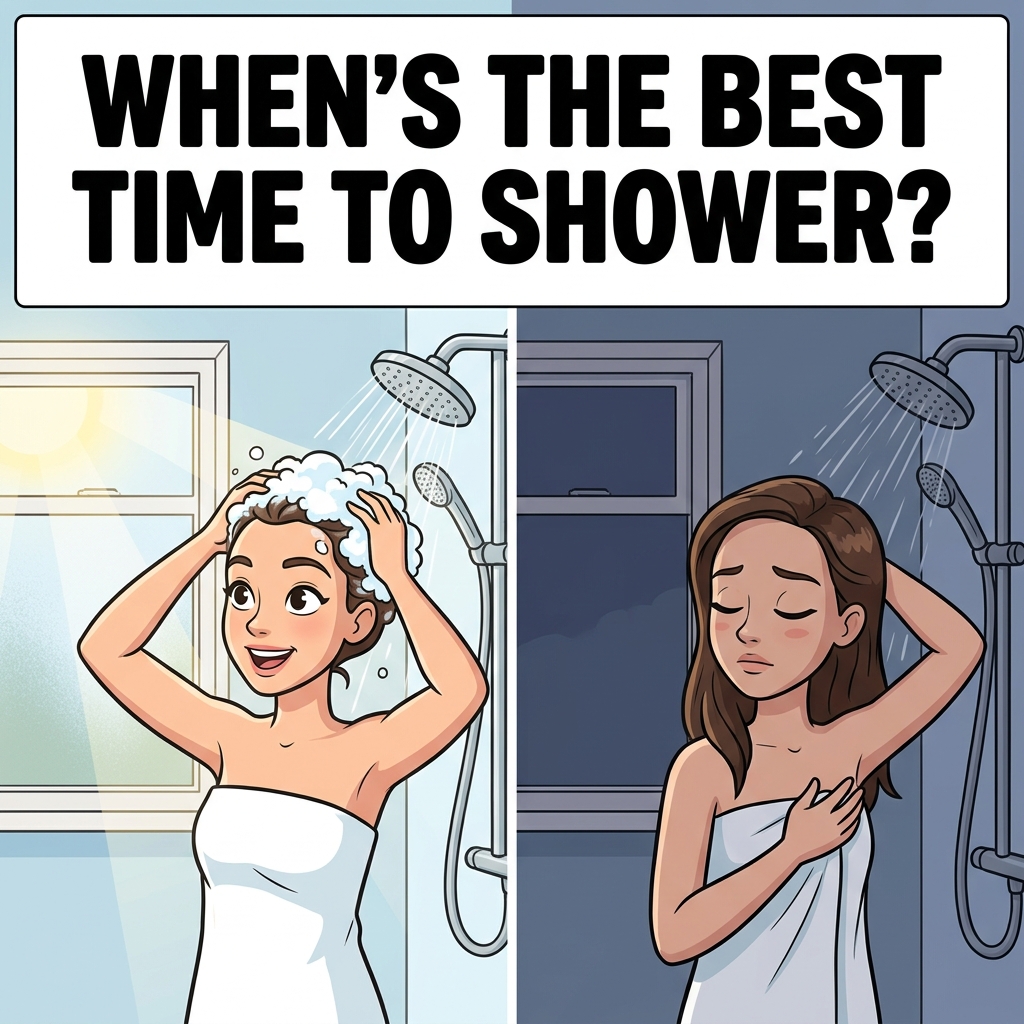
If you have naturally oily skin, showering at night makes particular sense. The skin's sebaceous glands continue producing sebum throughout the day, and by evening that oil has mixed with sweat, dead skin cells, and environmental residue into a layer that, left overnight, can contribute to clogged pores and breakouts. A nighttime shower gives oily skin a clean surface to begin the overnight skin repair and regeneration process, which is significantly more active during sleep than during waking hours. It also gives any overnight skincare products — serums, retinols, or prescription treatments — a clean, freshly cleansed surface to work on rather than one covered in the day's accumulation.
The Case for Showering in the Morning
It Wakes You Up and Sharpens Alertness
The physical sensation of showering — particularly the contrast between warm water and cool air when stepping out, or a brief cold rinse at the end — triggers a genuine physiological response. When the skin temperature drops quickly, the sympathetic nervous system activates in response, producing a kind of thermo-sensory shock that increases alertness and mental clarity. Many people report that their sharpest thinking of the day happens in the shower or immediately after it; the combination of increased blood flow, mild thermal stress, and the quiet space for uninterrupted thought creates conditions that genuinely support creative and problem-solving thinking. For people who struggle with morning grogginess or operate in cognitively demanding jobs where morning clarity matters, a morning shower is a practical performance enhancer.
It Washes Away Dead Skin Cells From the Night
The body sheds approximately 200 million skin cells per hour, and this process accelerates during sleep. By morning, a significant amount of dead skin cell material has accumulated on the body's surface and transferred to bedding. A morning shower removes this material, leaving the skin fresher and more receptive to daytime skincare products like sunscreen and moisturizer. For people who sweat at night due to temperature fluctuations, hormonal changes, or medical conditions, a morning shower also removes overnight sweat and the metabolic byproducts that accumulate on the skin during sleep.
It Solves the Bedhead Problem
The scalp produces sebum throughout the day — natural oils that keep hair shiny and manageable. During sleep, however, the combination of those oils and hours of contact with a pillow can compress, mat, and reshape hair in ways that are difficult to manage without washing. For people whose hair is difficult to style without washing, or who have hairstyles that are significantly affected by overnight positioning, a morning shower is simply more practical. The bedhead problem is entirely manageable with a morning shower in a way it is not without one.
