
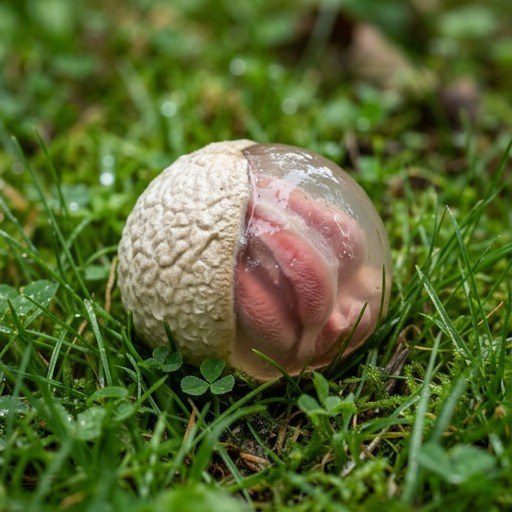
Eventually I forced myself to take a few steps closer. I could not bring myself to touch it. I pulled out my phone with shaking hands and took a photograph, then stepped back quickly and held my breath against the smell. I searched online for anything that matched what I was seeing — red slimy creature in garden, red fleshy fungus, red claw-shaped thing in flower bed — and scrolled through the results with the kind of urgent desperation of someone who very much needs an explanation right now. The images that came up made my skin crawl in an entirely new way. Not because they showed something more horrifying than what I had found. But because they showed exactly what I had found. Over and over again. In gardens and yards all around the world. And the name attached to every single one of them was something I had never heard before in my life: Anthurus archeri. The Devil's Fingers.
What Is the Devil's Fingers Fungus?
I blinked at the screen for a long moment, reading the same words twice to make sure I was understanding them correctly. It was not a creature. It was not an animal. It was not the aftermath of something terrible. It was a mushroom. A fungus. Anthurus archeri — commonly known as the Devil's Fingers, or the Octopus Stinkhorn — is a species of fungus that originated in Australia and Tasmania but has spread over the past century to Europe, North America, Asia, and other parts of the world, presumably through the movement of contaminated soil and plant material. And it is, by virtually any standard of visual assessment, one of the most genuinely disturbing-looking things that nature has ever produced.
The life cycle of this fungus begins innocuously enough. It starts as a pale, egg-shaped structure partially buried in the soil — soft and white and entirely unremarkable, the kind of thing you might walk past without noticing. But as it matures, the egg splits open and reveals what is hidden inside: long, bright red tentacle-like arms that extend outward and upward from the base, reaching into the air like the fingers of a hand opening from underground. Or, as countless people who have encountered it for the first time have described it, like something clawing its way out of the earth. The arms can reach up to ten centimeters or more in length, and their surface is covered in a dark, gelatinous slime called gleba — a substance that carries the fungus's spores and is the source of that overwhelming, unmistakable smell of rotting meat.
