
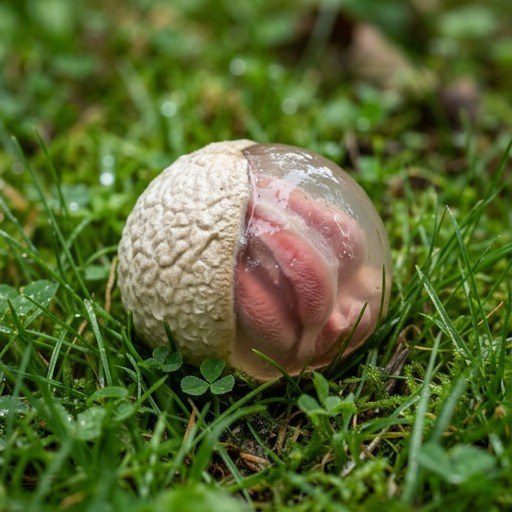
Why Does It Smell Like Rotting Flesh?
The smell is not accidental and it is not a coincidence or an unfortunate side effect of the fungus's biology. It is an evolutionary strategy of extraordinary effectiveness. The Devil's Fingers fungus belongs to a group called the stinkhorns — fungi that have evolved to mimic the scent of decomposing organic matter specifically to attract flies and other carrion-feeding insects. Flies, responding to what they believe is the smell of dead flesh, land on the surface of the fungus in large numbers. As they crawl across the slimy, spore-laden surface, the spores attach to their bodies and legs. When the flies move on — to the next apparent food source, to another location entirely — they carry those spores with them, effectively acting as the fungus's dispersal mechanism. The fungus has essentially hijacked the fly's instincts, using the most effective possible signal — the smell of death — to ensure its spores travel as widely as possible.
This strategy is remarkably common among the stinkhorn family, and the Devil's Fingers is simply the most dramatic practitioner of it. The smell is produced by chemical compounds that closely replicate the volatile organic compounds released by decomposing tissue — compounds that flies can detect at extremely low concentrations and from significant distances. By the time a fly has found the fungus and realized its mistake, the spores are already attached. The fungus has accomplished exactly what it needed to accomplish. The fly leaves, slightly confused, and the spores travel on. The cycle continues.
