
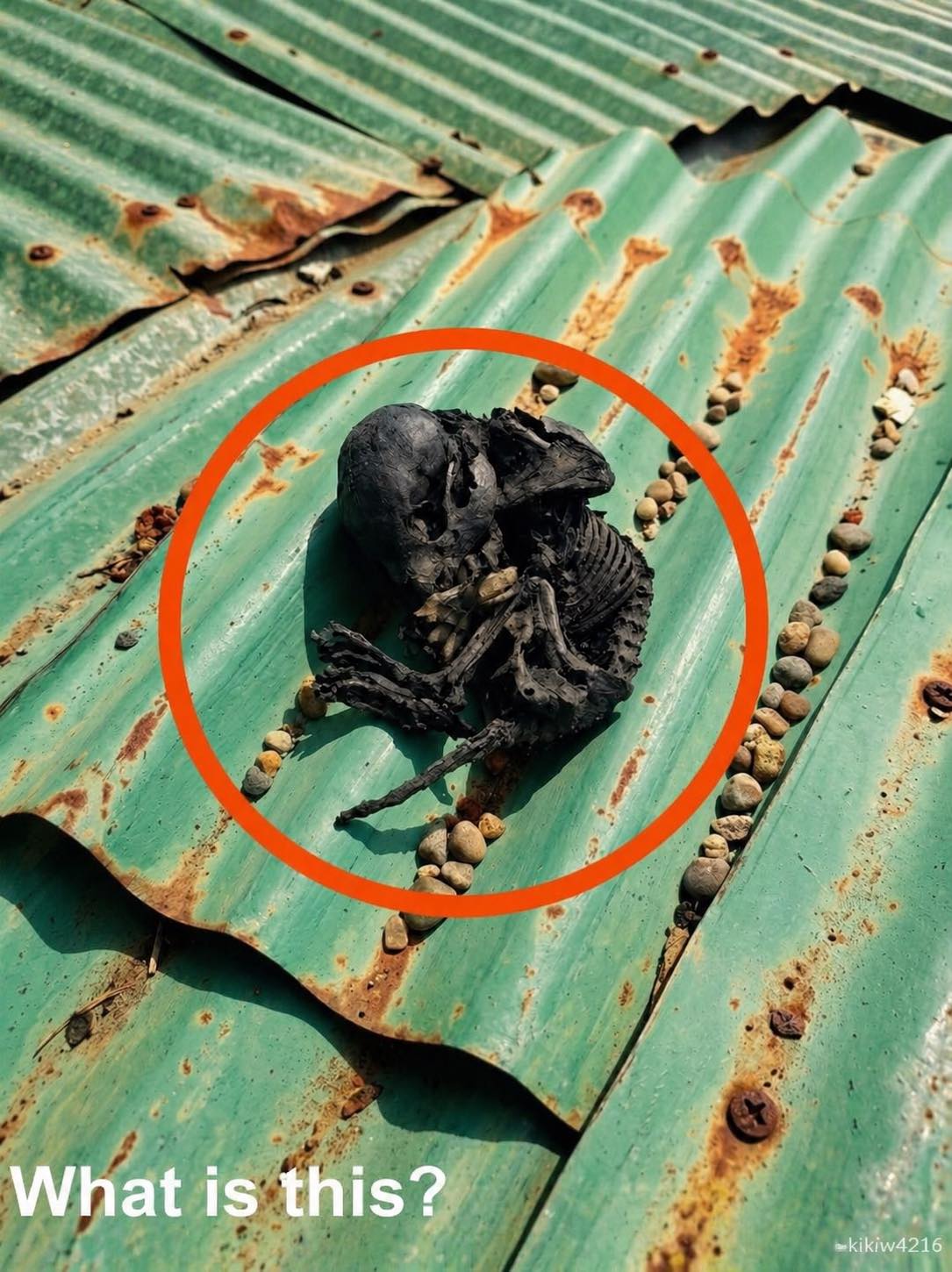
The emotional reaction to discovering something like this should not be underestimated. Fear, confusion, and even a sense of unease are completely natural responses. Encountering death—especially in an unexpected and visually unfamiliar form—can trigger deep, instinctive reactions. However, understanding the science behind what you’re seeing can help transform that fear into curiosity. Instead of something ominous, the object becomes an example of natural processes at work: decay, preservation, and the resilience of biological structures. It also serves as a reminder of how different environments can shape what happens to living organisms after death. What might decompose rapidly in one setting can remain preserved for years in another, creating these unusual and sometimes striking remnants.
Ultimately, what began as a frightening and confusing discovery becomes a fascinating glimpse into the natural world. The small mummified figure on the roof is not a mystery beyond explanation, but rather a convergence of biology and environment. It tells a quiet story—of a small creature’s final moments, of the sun and air that preserved it, and of the human tendency to seek meaning in the unfamiliar. While the initial shock may linger, the knowledge gained from understanding it brings a sense of resolution. And perhaps, the next time something unusual appears in an everyday setting, it will be met not just with fear, but with a deeper curiosity about the hidden processes that shape the world around us
