
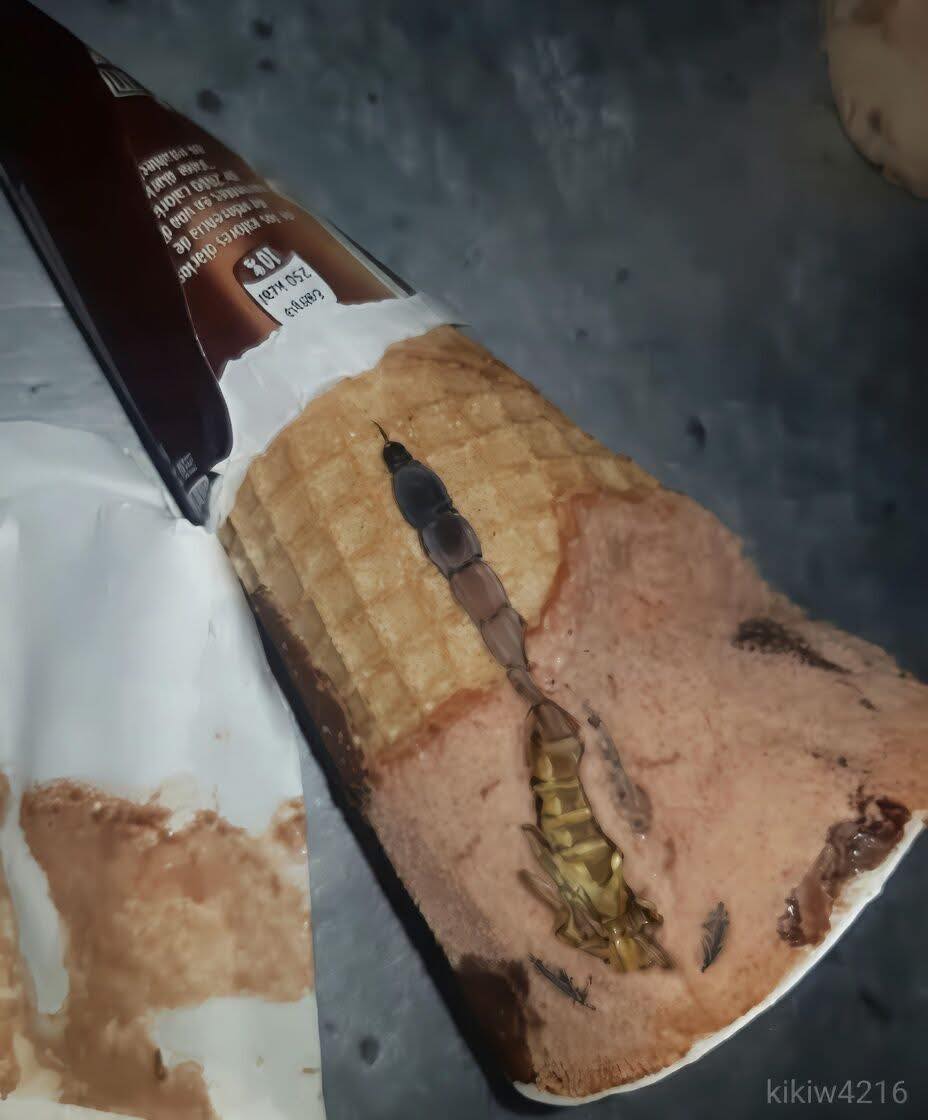
With evidence securely preserved and her daughter somewhat calmed by a distracting cartoon on television, Sarah dialed the customer service hotline of the prominent ice cream brand, her fingers steady despite the adrenaline still coursing through her veins. The representative who answered was polite and professional, expressing immediate concern upon hearing the details of the discovery and requesting specific information to initiate a formal complaint. Sarah provided the exact purchase location, date, time, store name, and most importantly, the full batch code and lot number printed clearly on the side of the packaging. She described the object in meticulous detail, mentioning its scorpion-like appearance, size, and texture, and offered to email the photographs she had taken along with a copy of the receipt. The customer service agent listened attentively, apologizing profusely for the distressing experience and assuring Sarah that the matter would be escalated urgently to the company’s quality assurance and safety investigation team. They explained the standard protocol, which included tracing the product back through the manufacturing process, reviewing surveillance footage from the production facility, and conducting laboratory tests on the foreign object if it was shipped to them for analysis. Sarah felt a glimmer of hope that the company would take this seriously and provide answers quickly, perhaps even offering compensation or a full product recall if similar issues were found in other batches. However, as the call concluded with promises of follow-up within 48 hours, she couldn’t shake the lingering doubt: how thorough were these internal investigations really, and what if the scorpion-like intruder was not an isolated incident but a symptom of deeper systemic problems in food processing and packaging? That evening, after tucking Emily into bed and reading her an extra-long story to help ease her fears, Sarah spent hours researching food safety regulations, FDA guidelines on foreign contaminants, and consumer rights in cases of product defects. She discovered that manufacturers were legally obligated to maintain stringent hazard analysis and critical control points (HACCP) systems designed precisely to prevent such contaminations, yet lapses still occurred due to human error, equipment malfunctions, or supply chain vulnerabilities. The emotional toll on her family was already evident; Emily woke up twice during the night with nightmares, crying out about bugs in her food, and Sarah herself found sleep elusive as she replayed the horrifying moment of discovery over and over in her mind.
The days following the incident unfolded with a mixture of anticipation and growing frustration as Sarah awaited the promised response from the ice cream company. True to their word, a senior quality control manager contacted her the next afternoon via email, thanking her for the detailed documentation and photographs while requesting that she ship the sealed evidence to their corporate laboratory for expert examination at the company’s expense. Sarah complied promptly, using overnight shipping to ensure the sample arrived fresh and uncontaminated, all while documenting the entire process with additional photos and tracking numbers for her records. In the meantime, she decided to notify the local health department and the grocery store where the ice cream had been purchased, providing them with copies of her evidence to alert them to a potential public health concern. The health inspector who visited their home was sympathetic and thorough, taking his own notes and samples of the remaining packaging while assuring Sarah that they would coordinate with the manufacturer and state authorities if necessary. Word of the incident began to spread subtly within their close-knit community as Sarah confided in a few trusted friends and neighbors, some of whom recalled hearing vague rumors of similar oddities in packaged foods but nothing quite as alarming as a scorpion in ice cream. Emily’s school performance started to suffer subtly; she became withdrawn during lunch periods, refusing desserts offered by classmates and avoiding any conversations about snacks or treats. The psychological impact deepened with each passing day, transforming what should have been carefree childhood moments into sources of anxiety and avoidance. Sarah noticed her daughter checking every food item with exaggerated caution, asking repeated questions about where it came from and who made it, a level of vigilance unnatural for an eight-year-old. The mother herself developed a newfound paranoia toward grocery shopping, meticulously inspecting seals, expiration dates, and ingredient lists on every product, often returning items that showed even the slightest irregularity. This hyper-awareness, while protective, also brought exhaustion and a sense of lost innocence; the simple act of feeding her family now carried an undercurrent of suspicion that had never existed before. As weeks turned into a month, the company’s investigation report finally arrived, stating that their laboratory analysis determined the object was not a real scorpion but a strangely formed piece of hardened chocolate or caramel that had somehow clumped during the molding process and taken on an arachnid-like shape due to a rare equipment anomaly in one specific production run. While this explanation provided some technical closure, it did little to alleviate the emotional scars, as the visual similarity had been too convincing and traumatic for both mother and daughter to dismiss lightly.
Beyond the immediate family, the incident sparked broader conversations within their social circles and even online forums where parents shared stories of food-related scares, highlighting a growing collective unease about the reliability of modern food production systems. Sarah joined several consumer advocacy groups focused on transparency and stricter regulations, using her experience as a catalyst to advocate for better labeling practices, more frequent independent audits of manufacturing facilities, and enhanced consumer education on what to do when foreign objects are discovered in packaged goods. She wrote detailed accounts of the event on parenting blogs and local community pages, carefully omitting identifying details to protect her daughter’s privacy while emphasizing the importance of vigilance without succumbing to outright fear. These efforts connected her with other families who had endured similar traumas, from finding insects in cereal to discovering metal fragments in canned foods, revealing that while such events were statistically rare, their psychological repercussions could be profound and long-lasting. Emily gradually began to heal through gentle counseling sessions arranged by Sarah, where a child psychologist helped her process the fear using age-appropriate techniques like drawing her feelings and practicing positive associations with safe foods. Over time, the girl started experimenting with homemade ice cream recipes under her mother’s supervision, slowly rebuilding trust in the kitchen, though store-bought cones remained strictly off-limits. The mother-daughter bond strengthened through these shared challenges, turning a moment of terror into an opportunity for resilience and open communication about safety, trust, and the complexities of the world. Sarah often reflected on how one small, unexpected discovery had rippled outward, affecting not just their daily habits but also their perspectives on consumerism, corporate responsibility, and the unseen vulnerabilities hidden within everyday conveniences. Community discussions prompted by the story led to a local school presentation on food safety awareness, where parents and teachers collaborated to teach children practical skills for spotting potential issues without instilling unnecessary panic. The experience underscored the delicate balance between enjoying life’s simple pleasures and maintaining informed caution in an age where global supply chains made complete oversight challenging yet essential.
