
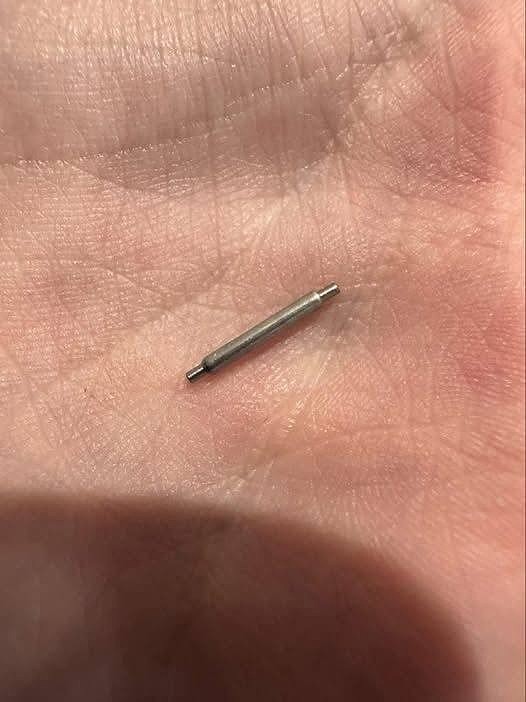
Every now and then, we come across an object so small and unassuming that it seems almost invisible to the world around it. It might be a tiny piece of metal resting on a desk, tucked inside a drawer, or discovered on the floor without any clue as to how it got there. It has no buttons, no markings, no obvious features to explain its purpose. At first glance, it appears ordinary—perhaps even insignificant. Yet the more you look at it, the more intriguing it becomes.
What is it? Where did it come from? What does it do?
Chances are, most people would not immediately recognize its purpose. And that is precisely what makes such objects fascinating. Behind even the smallest metal component lies a carefully designed function, a story of engineering, and a role within a larger system that may be far more complex than it appears.
The Beauty of Hidden Complexity
Modern design often celebrates simplicity. From consumer electronics to household tools, many products are created with clean lines and minimal surfaces. Their inner workings are concealed beneath smooth exteriors. As a result, what appears to be a random piece of metal could actually serve an essential and highly specialized purpose.
That mysterious object might be:
- A custom-machined part from a larger mechanical assembly
- A fastening component designed to secure moving elements
- A connector that ensures electrical continuity
- A structural bracket providing reinforcement
- A precisely cut alignment pin that keeps systems calibrated
- A grounding clip that protects sensitive circuitry
- A locking plate that ensures safety and stability
Without context, it can be nearly impossible to determine its function. That is because many components are designed with incredible specificity. Engineers and manufacturers rely on exact measurements, tight tolerances, and carefully selected materials to ensure reliability and performance.
Even a difference of a fraction of a millimeter can determine whether a machine operates smoothly or fails entirely. That small piece of metal might be made from stainless steel for corrosion resistance, copper for conductivity, aluminum for lightweight strength, or hardened alloy for durability. Each design choice reflects thoughtful engineering decisions.
Engineering in Plain Sight
We often admire finished products—cars, smartphones, appliances, bicycles, or tools—without considering the thousands of tiny components that make them work. Inside every machine are parts that rarely receive attention but are absolutely essential.
A single pin might hold multiple sections together.
A small bracket could support significant weight.
A miniature clip might prevent electrical interference.
A metal plate might regulate motion or secure a locking system.
These parts are not decorative. They are purposeful. They are designed to solve very specific problems.
Good engineering is not always visible. In fact, the best designs often disappear into the background. They do their job quietly and efficiently without demanding recognition. That is part of their brilliance.
Precision and Purpose
Manufacturing small metal components is far from random. Modern production methods use advanced techniques such as:
- CNC machining
- Laser cutting
- Precision stamping
- Die casting
- Injection molding for metal alloys
- Surface finishing and heat treatment
Each step ensures that the final piece meets exact specifications. Some components must withstand extreme temperatures. Others must resist vibration, moisture, or constant friction. Some are built to carry electrical current safely, while others are designed purely for mechanical strength.
What might look like a simple shape—a bent strip, a curved plate, a threaded rod—could have required extensive prototyping, testing, and refinement before reaching its final form.
In many industries, including automotive manufacturing, aerospace, consumer electronics, construction, and medical equipment, these seemingly minor components are indispensable. Without them, larger systems would not function safely or reliably.
Why It’s Hard to Guess
The reason most people cannot immediately identify such objects is not due to a lack of intelligence. It is because specialization has become a defining feature of modern technology.
Many parts are designed for niche applications. Some are unique to a specific model of device. Others are used only within professional environments. Unless someone works directly with that equipment or has encountered the part before, guessing its purpose can feel like solving a puzzle without clues.
Context matters. A metal piece placed next to the machine it belongs to might make sense. Alone on a table, it becomes mysterious.
And that mystery sparks curiosity.
The Joy of Curiosity
When people encounter an unfamiliar object, something interesting happens. Conversations begin.
“It looks like part of a bicycle.”
“Maybe it came from a phone.”
“Could it be a tool?”
“Is it something mechanical?”
Each guess reflects imagination at work. People try to connect shapes to experiences they recognize. A curved edge might remind someone of plumbing hardware. A small hole could suggest mounting equipment. A flat plate with slots might resemble something from furniture assembly.
