
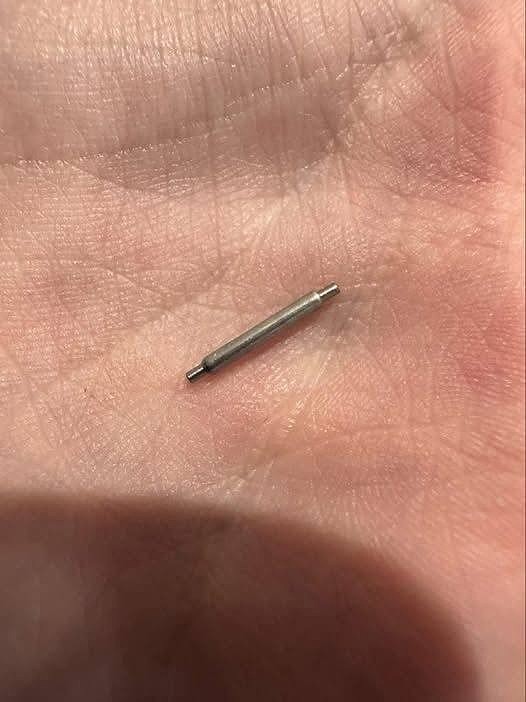
Even incorrect guesses are part of the fun. The process of wondering encourages observation and creative thinking.
In a world where so much information is instantly accessible, there is something refreshing about not knowing. Mystery invites engagement.
Small Parts, Big Impact
It is easy to underestimate the value of small components. However, history and modern industry show that minor details can have major consequences.
A loose fastener can compromise structural stability.
A missing clip can interrupt electrical grounding.
An improperly aligned pin can cause mechanical wear.
A damaged bracket can lead to system imbalance.
Conversely, a well-designed component can enhance safety, extend product lifespan, and improve efficiency.
This principle applies across industries. In transportation, tiny components contribute to vehicle safety. In electronics, small connectors ensure reliable data transfer. In construction, metal fasteners maintain structural integrity. In medical devices, precision parts enable life-saving equipment to operate accurately.
The size of a component does not determine its importance.
Craftsmanship in Everyday Objects
The more we pay attention to ordinary objects, the more we appreciate the craftsmanship behind them. Even simple tools often contain thoughtful design decisions.
Edges may be rounded to reduce stress points.
Surfaces may be treated to resist corrosion.
Holes may be positioned to distribute weight evenly.
Thickness may be calibrated to balance strength and flexibility.
These details reflect engineering knowledge accumulated over decades, sometimes centuries. They are the result of trial, error, innovation, and continuous improvement.
The tiny metal object in question may represent a small piece of that ongoing story.
The Invisible World of Components
Walk through your home and consider how many metal components are quietly performing tasks:
Door hinges allow smooth motion.
Cabinet brackets support weight.
Appliance screws secure internal systems.
Electrical grounding clips maintain safety.
Furniture fasteners hold frames together.
In most cases, these parts go unnoticed. They are not meant to attract attention. Their success lies in reliability.
We tend to notice components only when they fail. A squeaking hinge, a loose handle, or a misaligned drawer suddenly reminds us that small parts matter.
A Lesson in Design Philosophy
There is a broader lesson hidden within the mystery of small objects. Thoughtful design often prioritizes function over flashiness. Minimalism in appearance can conceal complexity beneath the surface.
Many modern devices follow this philosophy. Sleek designs hide intricate internal structures. Clean exteriors mask networks of circuits, connectors, and mechanical supports.
This approach encourages efficiency and durability. It reduces unnecessary clutter and focuses on performance.
The unassuming metal object becomes a symbol of this principle: simplicity outside, sophistication inside.
Why Mystery Matters
Curiosity drives innovation. When we encounter something we do not understand, we are motivated to explore. Engineers ask questions. Designers test ideas. Manufacturers refine processes.
Even outside professional fields, curiosity enriches everyday life. Wondering about how things work fosters appreciation for craftsmanship and problem-solving.
The mysterious object may never reveal its purpose immediately. Perhaps someone nearby recognizes it. Perhaps research uncovers its origin. Or perhaps it remains unidentified.
Regardless, the act of wondering is valuable.
Imagination at Work
Speculating about unknown objects encourages imagination. It allows people to think beyond surface appearances.
Could it be part of a locking mechanism?
Is it a connector within an electronic system?
Does it stabilize rotating parts?
Is it a tool designed for a specialized task?
