
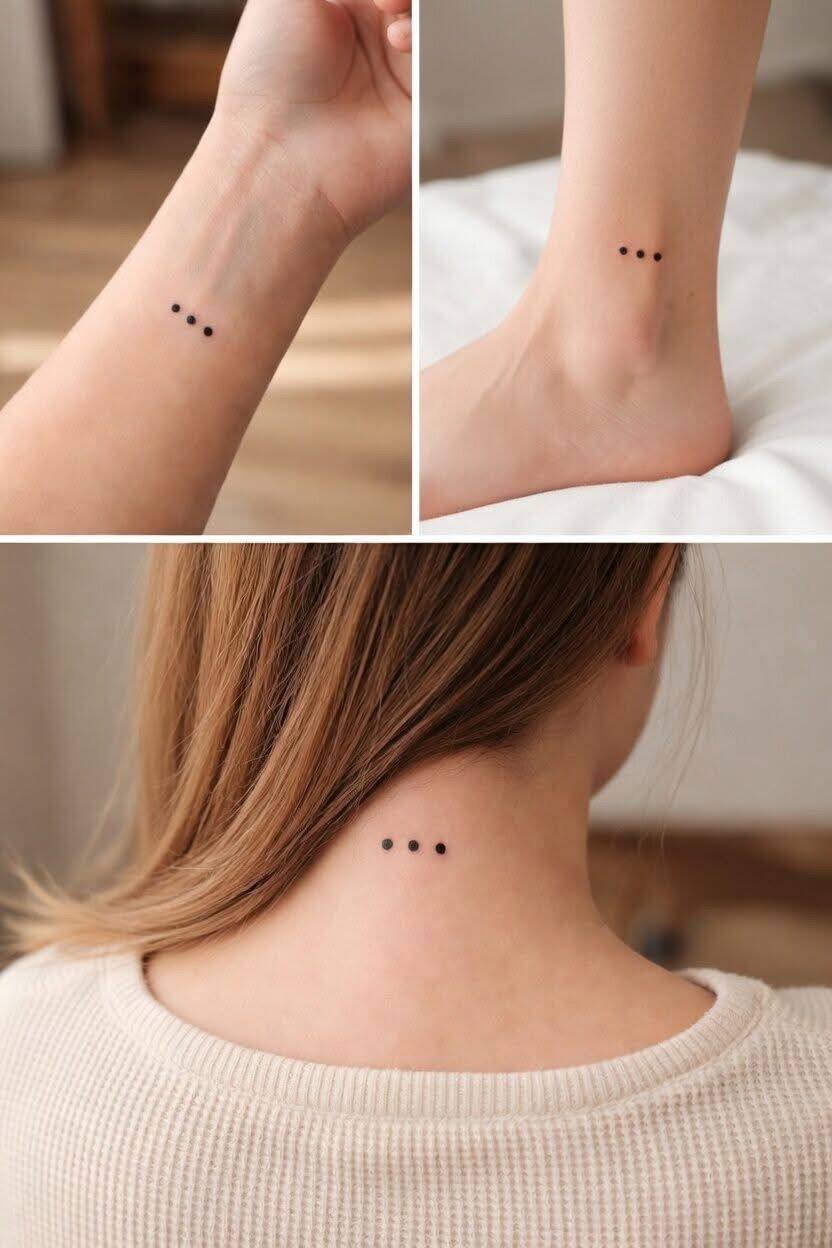
The three-dot tattoo may appear simple at first glance, but behind its minimal design lies a layered and often misunderstood meaning shaped by culture, environment, and personal experience. Usually placed on the hand—often between the thumb and forefinger or along the knuckles—it is small enough to go unnoticed by some, yet recognizable to those who understand its symbolism. For many, it represents the idea commonly tied to the “Three Wise Monkeys”: see no evil, hear no evil, speak no evil. But this interpretation only scratches the surface. In more intense environments, particularly within prison systems and street cultures, those three dots carry a deeper message—one tied to silence, loyalty, and a strict code of conduct that defines how a person survives and interacts within those worlds.
In prison culture, the three-dot tattoo often signals adherence to an unwritten rule: do not speak, do not betray, and do not cooperate with authorities. It becomes a quiet declaration of how someone chooses to live within a system where trust is fragile and consequences are serious. In these settings, words can carry weight, and silence can be a form of protection. The tattoo, though small, communicates this philosophy instantly to others who recognize it. It is not meant for decoration; it is meant for understanding. It tells a story without explanation, identifying someone who follows a certain mindset where discretion and loyalty are valued above everything else.
Beyond silence, the tattoo also represents brotherhood and connection. In environments where individuals rely on each other for survival, symbols become a way to recognize shared values. The three dots can act as a sign of belonging, showing that the wearer is part of a group or understands the same unspoken rules. This sense of unity is important in spaces where isolation can be dangerous. The tattoo becomes more than a mark—it becomes a signal that the person carrying it understands loyalty, respects boundaries, and operates within a certain code. In this way, it functions almost like a language, understood without needing to be spoken.
