
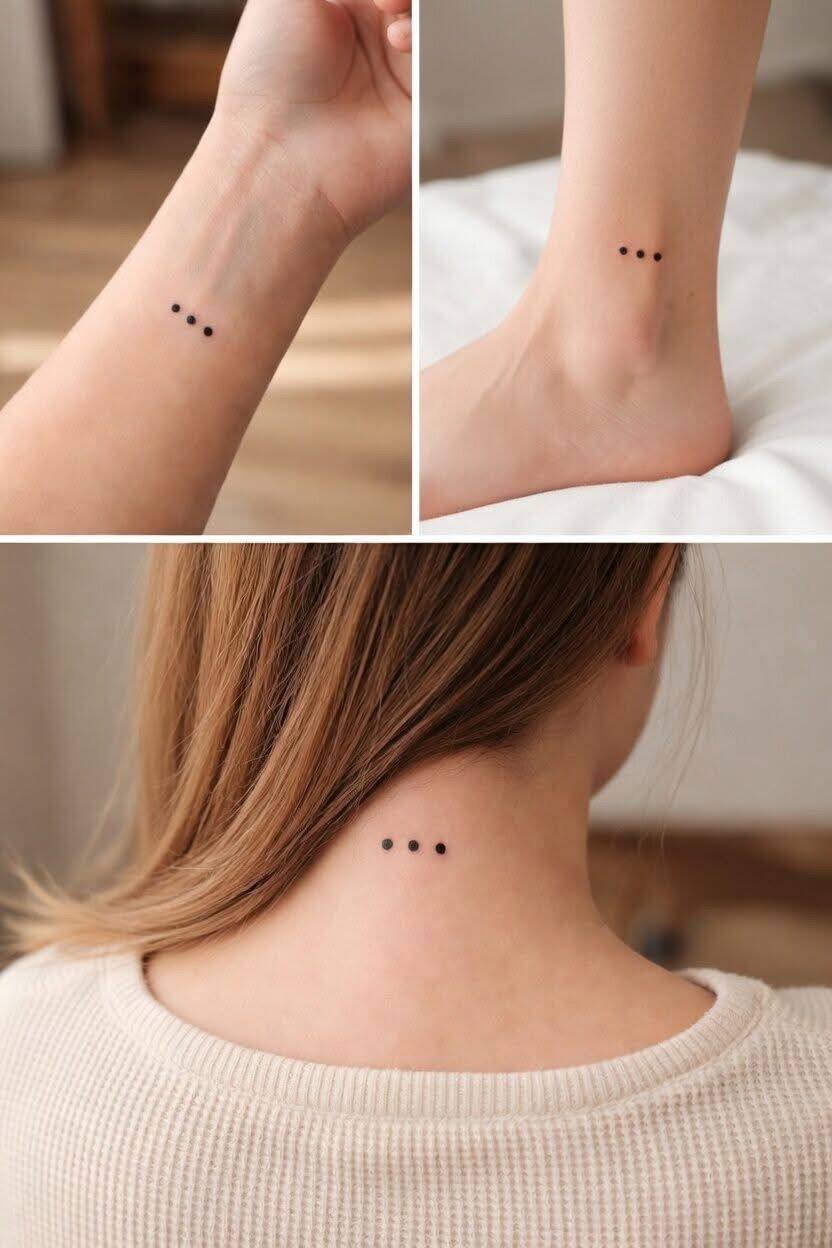
In some cases, the meaning becomes even more personal. Additional dots or variations can represent time served, experiences endured, or milestones within a person’s life. What may look like a simple pattern can actually hold years of history, marking periods of hardship or transformation. For the person wearing it, the tattoo becomes a permanent record—a reminder of where they have been and what they have lived through. Unlike written records that can be erased or forgotten, this mark stays visible, carrying its meaning forward regardless of time or circumstance.
While the tattoo is often associated with prison systems, its presence extends far beyond a single region or culture. In Latin American communities, for example, the three-dot tattoo is widely linked to the phrase “Mi Vida Loca,” which translates to “My Crazy Life.” In this context, it represents a lifestyle defined by unpredictability, risk, and defiance. It reflects a way of living that rejects conventional paths, embracing instead a more chaotic and unfiltered existence. Though the cultural context changes, the underlying idea remains consistent—the tattoo represents identity, shaped by choices and experiences that set the wearer apart from the ordinary.
At the same time, the tattoo carries a level of risk outside the environments where it originated. Because of its associations with criminal or gang-related culture, it can lead to judgment or misunderstanding. People who see the tattoo may make assumptions about the wearer’s past, character, or intentions, even if those assumptions are not accurate. This can affect opportunities, relationships, and how someone is perceived in everyday life. For individuals who have moved on from the experiences that led them to get the tattoo, it can become a reminder not just of their past, but of how difficult it can be to leave that past behind.
Despite these challenges, the meaning of the three-dot tattoo is not fixed. Over time, some people have reinterpreted it, giving it new significance that reflects personal growth or different values. What once symbolized silence or survival can evolve into something else—resilience, change, or even a reminder of lessons learned. Tattoos, like people, are not static. They carry the meaning assigned to them, and that meaning can shift as life moves forward. For some, the three dots remain tied to their origins. For others, they become part of a larger story that continues to develop.
The simplicity of the design is part of what makes it so powerful. Unlike larger, more detailed tattoos, the three dots do not rely on complexity to communicate their message. Their meaning comes from context, from the environment in which they are understood, and from the experiences of the person wearing them. This minimalism allows the tattoo to exist in multiple interpretations at once, adapting to different cultures and personal narratives while maintaining its core identity.
