
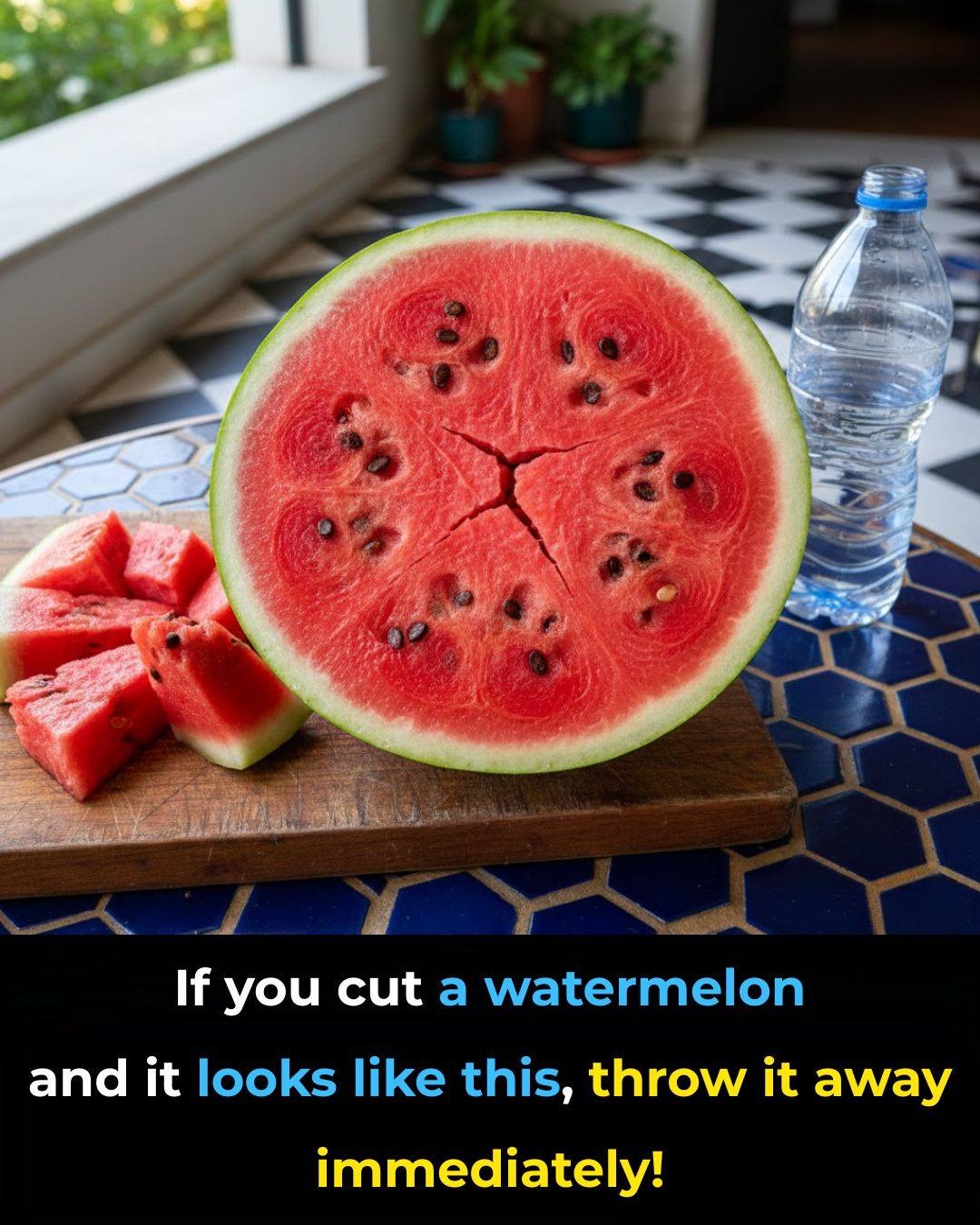
This is a particularly dramatic warning sign and one that should never be ignored. If you see liquid bubbling, fizzing, or oozing from cracks or breaks in the outer skin of a watermelon, the interior has fermented. Because watermelon is more than 90 percent water, its interior juices can sour and ferment over time — particularly in high heat conditions — producing gases that build up inside the fruit. A watermelon in this state can actually burst with little warning. Do not attempt to cut or eat a watermelon that shows any signs of active fermentation on the exterior.
5. A Fermented or Sour Smell from the Rind
A whole watermelon does not have a strong exterior smell under normal circumstances, but you can assess its condition by sniffing the stem end — the area where the stem attached to the vine. A fresh watermelon has a faint, clean, slightly sweet smell or no discernible smell at all. If you detect a sour, fermented, or dank odor from the stem end, the interior has begun to turn. This smell test is a reliable quick check before purchasing a watermelon or before cutting into one that has been stored for an extended period.
Warning Signs on the Inside — After Cutting
6. Mushy, Slimy, or Mealy Texture
Fresh watermelon flesh is crisp, firm, and juicy — it holds its shape when cut and has a satisfying snap when bitten into. As watermelon begins to overripen, it first becomes mealy or gritty rather than crisp. In this stage, it is still edible but the quality has diminished significantly. Once it progresses further into spoilage, the flesh becomes mushy or slimy. Mushy or slimy watermelon flesh indicates significant bacterial growth and should not be eaten. If cut watermelon that has been stored in the refrigerator feels slippery or appears to have developed a sheen or coating on the surface, discard it immediately.
7. Visible Mold Inside the Flesh
White, gray, black, or brown fuzzy growth anywhere on the cut flesh of a watermelon means the entire fruit must be discarded. There is no safe way to cut around visible internal mold — the mycotoxins that molds produce can spread through the surrounding fruit tissue even where mold is not visibly present. This is particularly important to note because of a common misconception: while you can safely cut away mold from hard cheeses or firm vegetables (because mold spreads slowly through dense tissue), the high moisture content of watermelon allows mold and its associated toxins to spread rapidly throughout the flesh.
