
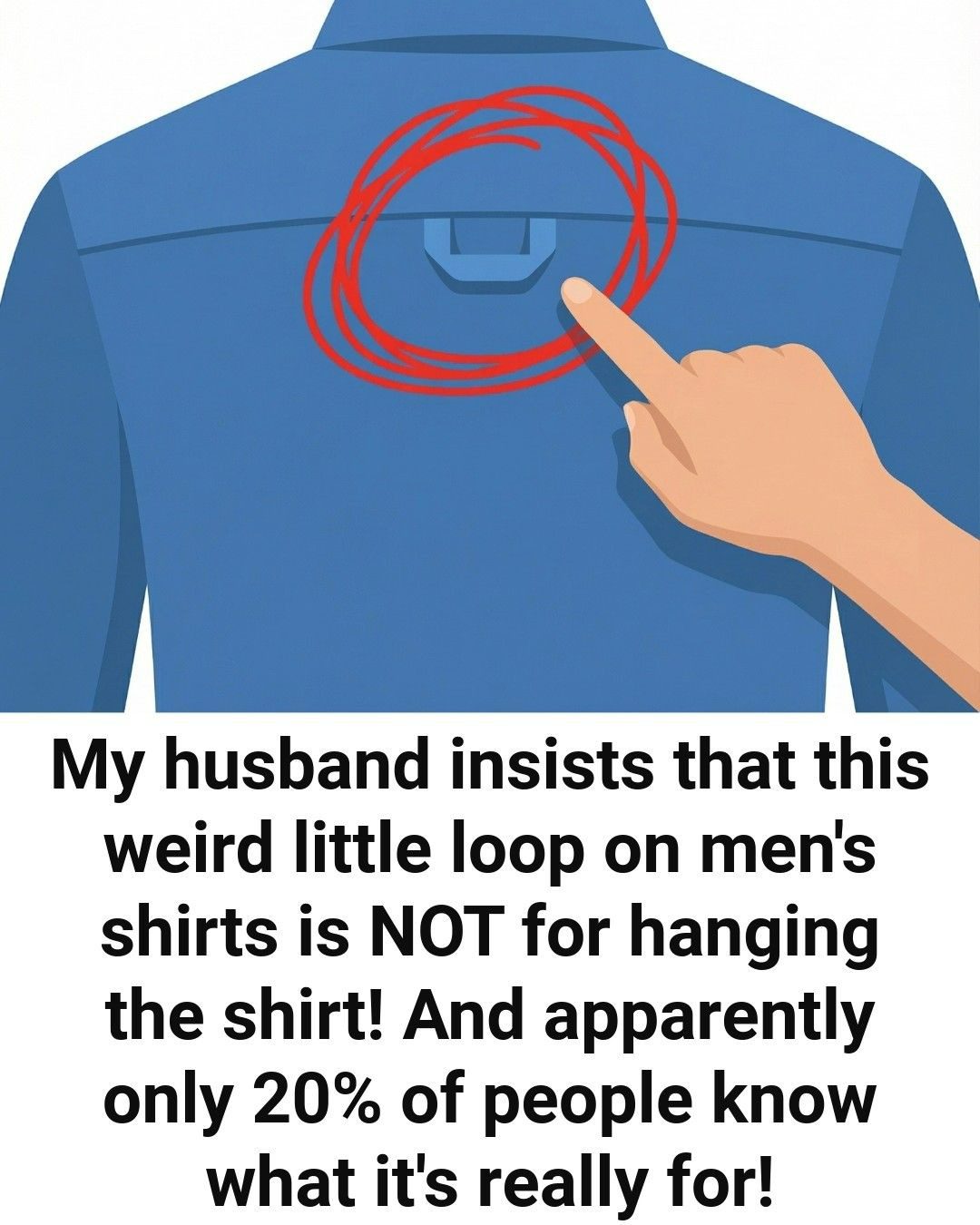
If you own a classic button-down shirt, you have almost certainly seen it: a small loop of fabric stitched just below the collar on the back, or sometimes positioned at the center of the yoke — the horizontal panel of fabric that spans from shoulder to shoulder across the upper back. Most people notice it at some point, assume it is decorative or a leftover from manufacturing, and then promptly forget about it. But this modest little piece of fabric carries a history that is considerably more interesting than its size suggests, stretching from the cramped quarters of naval ships to the ivy-covered quads of American universities, and even serving briefly as an unofficial language of romance on college campuses in the 1960s.
The loop goes by several names — locker loop, hang loop, and backstay loop among them — but its origin story begins in the same place: the United States Navy. Sailors living aboard ships faced a consistent and frustrating problem. Space was extremely limited, and the narrow lockers available for storing personal items were not wide enough to accommodate a standard clothing hanger. Shirts piled or folded in a locker would inevitably emerge wrinkled, which was a problem when maintaining a presentable uniform mattered. The solution was elegantly simple: sew a small loop of fabric onto the back of the shirt, just below the collar, so that the shirt could be hung directly on a hook inside the locker. No hanger required. The shirt stayed off the floor, remained relatively smooth, and occupied almost no additional space.
From Ships to Campus — How GANT Made the Loop Famous
The locker loop remained primarily a naval feature for years, a practical solution to a practical problem with little broader appeal. That changed in the 1950s, when the American clothing manufacturer GANT — a brand that had become closely associated with the Ivy League style emerging from East Coast universities — incorporated the loop into their oxford cloth button-down shirts. GANT had an exclusive relationship with Yale University's campus store and was producing shirts that had become genuine fashion statements among students and faculty.
The rationale for adding the locker loop to civilian shirts was nearly identical to the naval one: Ivy League students, who played sports and changed clothes regularly in athletic facilities, needed a way to keep their button-down shirts neat and wrinkle-free in locker rooms that were often fitted with hooks rather than hanging space for hangers. The loop solved the problem perfectly. GANT's version of the feature named it the "locker loop" explicitly — a name that acknowledged its function and stuck. Other clothing brands of the era that catered to the Ivy League market, including Sero, Wren, Creighton, and Eagle, soon adopted their own versions of the locker loop, and the detail spread throughout the preppy menswear that defined a particular strain of American style in the mid-twentieth century.
