
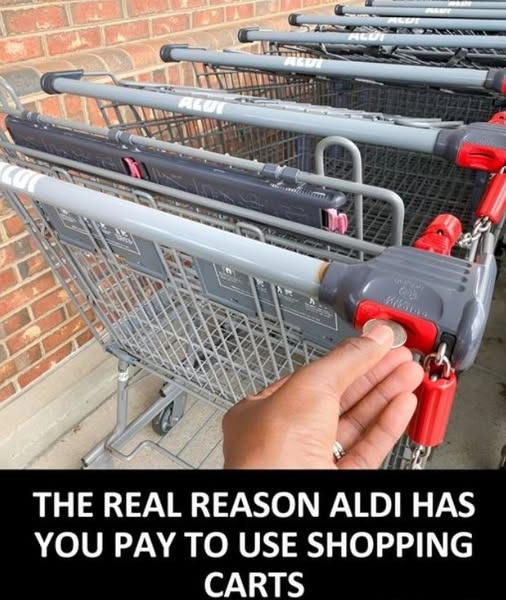
The Financial Reason: Protecting the Carts Themselves
Shopping carts are considerably more expensive than most people realize. A standard grocery store cart typically costs between 75 and 250 dollars each to purchase, depending on the size and type. When carts are left scattered across parking lots without a system to ensure their return, they get lost, damaged, stolen, or simply left in locations where they are never recovered. The Food Marketing Institute has estimated that retailers around the world lose approximately 800 million dollars annually from the theft and loss of around two million carts every year. For a discount grocery chain whose entire business model depends on keeping costs ruthlessly controlled, this kind of loss would be incompatible with maintaining the low prices that define the brand.
The deposit system significantly reduces cart damage and loss. Carts that are promptly returned to corrals are not drifting into other vehicles, not being left in places where they get rained on or wind-damaged for extended periods, and not being taken off the premises by people with no intention of returning them. The result is that the carts Aldi does own last considerably longer and need to be replaced less frequently, which is another meaningful cost saving that gets passed along in the form of lower grocery prices.
