
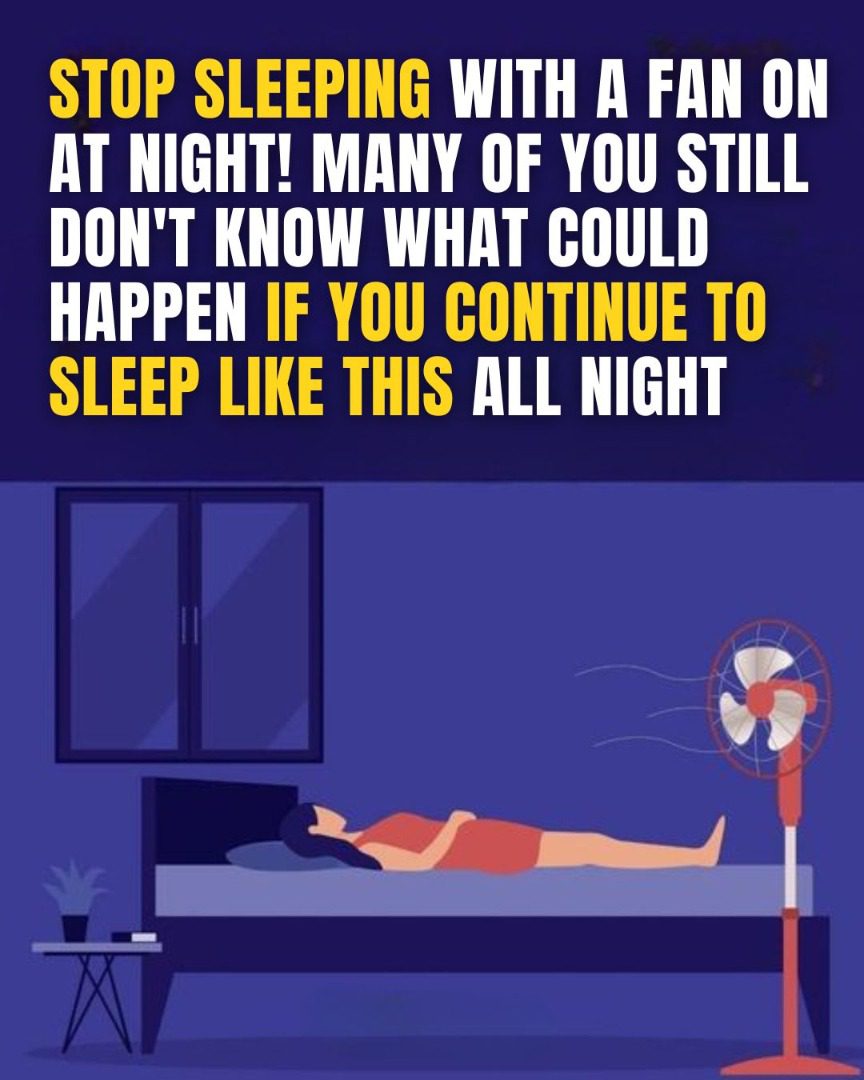
On hot summer nights, reaching for the fan switch feels like an obvious and entirely sensible decision. The gentle hum, the moving air, the immediate sensation of coolness — for millions of people, sleeping with a fan running is such a deeply established habit that they would not consider sleeping without one. But what if that nightly fan is quietly working against you? What if the very thing that helps you drift off to sleep is making your mornings more difficult, your sinuses more congested, your muscles stiffer, and your allergies worse? New research and medical insights have revealed a number of surprising and significant downsides to sleeping with a fan blowing on you all night — and they are worth understanding before you switch it on again tonight.
The first and perhaps most important thing to understand about sleeping with a fan is what it actually does and does not do. Studies consistently show that the optimal bedroom temperature for deep, restorative sleep is between 60 and 68 degrees Fahrenheit (15 to 20 degrees Celsius). Your body needs to lower its core temperature slightly in order to enter and maintain the deeper stages of sleep, and a cool sleeping environment supports this natural process. Here is the critical point: a fan does not lower the temperature of a room. It moves the existing warm air around and creates a wind-chill effect that makes your skin feel cooler, but the actual air temperature in the room remains unchanged. If you are sleeping in a 78-degree room with a fan running, the room is still 78 degrees — and the wind-chill effect that helps you feel cooler while you are awake can actually backfire during sleep by drying out your mucous membranes and disrupting your body's natural temperature regulation.
1. Fans Worsen Allergies and Asthma
One of the most significant and frequently overlooked problems with running a fan through the night is what it does to the air quality in your bedroom. Fans do not filter air — they move it. And as they move it, they stir up whatever is sitting on the fan blades, on nearby surfaces, and in the general environment of your bedroom: dust, dust mites, pollen, pet dander, mold spores, and other airborne allergens that have settled during the day. Once the fan is running, all of these particles are put back into circulation in the air you are breathing throughout the night.
For people who suffer from allergies, hay fever, or asthma, this is a serious concern. Inhaling circulating allergens during several hours of sleep can trigger congestion, sneezing, itchy and watery eyes, sore throat, breathing difficulties, and significantly disrupted sleep quality. Ceiling fans are particularly notorious for accumulating thick layers of dust on their blades, and a ceiling fan that has not been cleaned recently can essentially deliver a concentrated dose of allergens directly downward onto the person sleeping below it. Even people who do not typically identify as allergy sufferers can find that prolonged exposure to fan-circulated air produces noticeable congestion and irritation by morning.
