
Use Breathable, Temperature-Appropriate Bedding and Sleepwear
What you sleep in and under makes an enormous difference in how cool you feel throughout the night. Natural fibers like cotton, linen, and bamboo are significantly more breathable than synthetic materials like polyester and fleece, and they allow body heat to dissipate rather than trapping it. Lightweight cotton or linen sheets in warm weather can eliminate much of the discomfort that drives people to reach for the fan in the first place. Keeping a glass of water on your bedside table ensures you can rehydrate quickly if you wake feeling dry.
Use Blackout Curtains to Keep the Room Cooler During the Day
One of the most effective and frequently overlooked strategies for sleeping cool is preventing the bedroom from getting hot in the first place. Blackout curtains or heavy drapes that block direct sunlight from entering the bedroom during the hottest part of the day can keep a room dramatically cooler by nightfall than a room that has been absorbing solar heat through uncovered windows all afternoon. A room that starts the night at a comfortable temperature requires far less mechanical cooling to maintain it.
If You Must Use a Fan, Use It Smarter
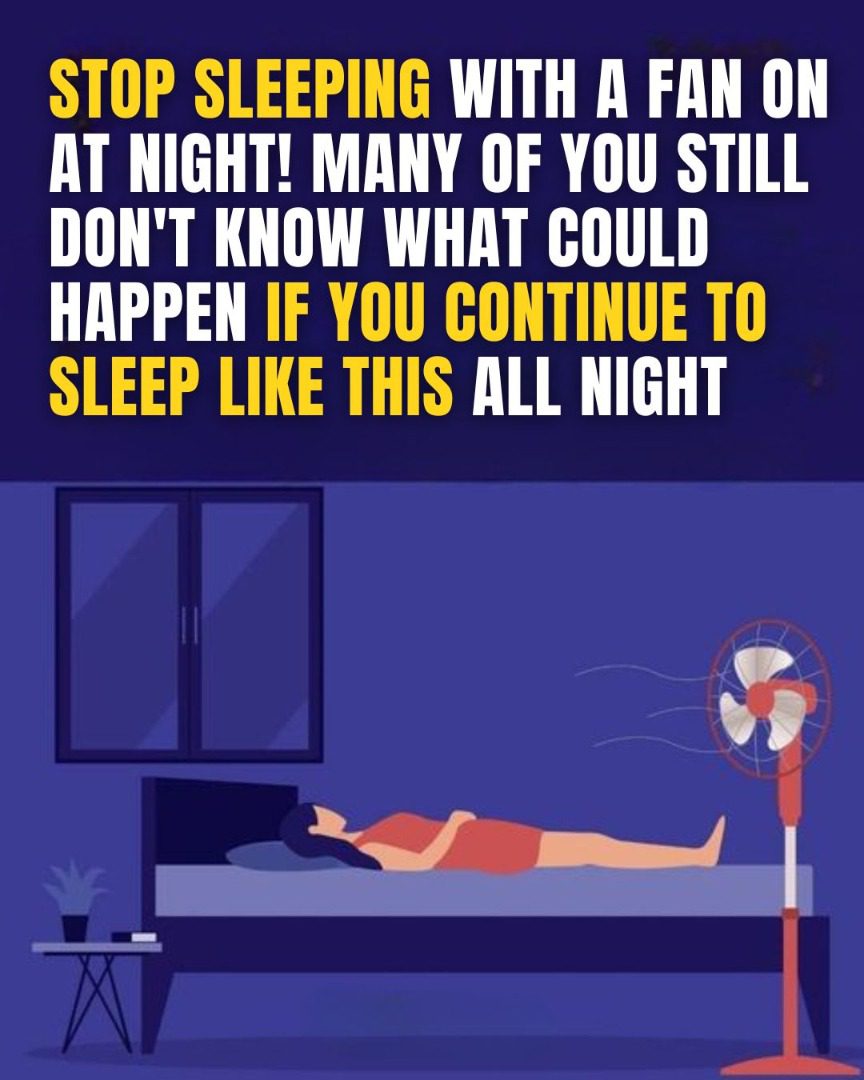
If you genuinely cannot sleep without the sound or airflow of a fan, there are several practical adjustments that can significantly reduce the negative effects. Set the fan on a timer so it runs only for the first hour or two after you go to sleep — long enough to help you fall asleep in a cooler environment, but not long enough to dry out your sinuses and eyes throughout the entire night. Point the fan toward the wall or ceiling rather than directly at your face and upper body. Choose an oscillating fan rather than a stationary one so that no single area receives constant concentrated airflow. Clean the blades at least weekly. And keep the fan at a greater distance from your body rather than positioning it at close range directly beside the bed. These adjustments preserve much of what makes a fan useful while substantially reducing the health downsides that come with running one all night pointed directly at a sleeping person.
