
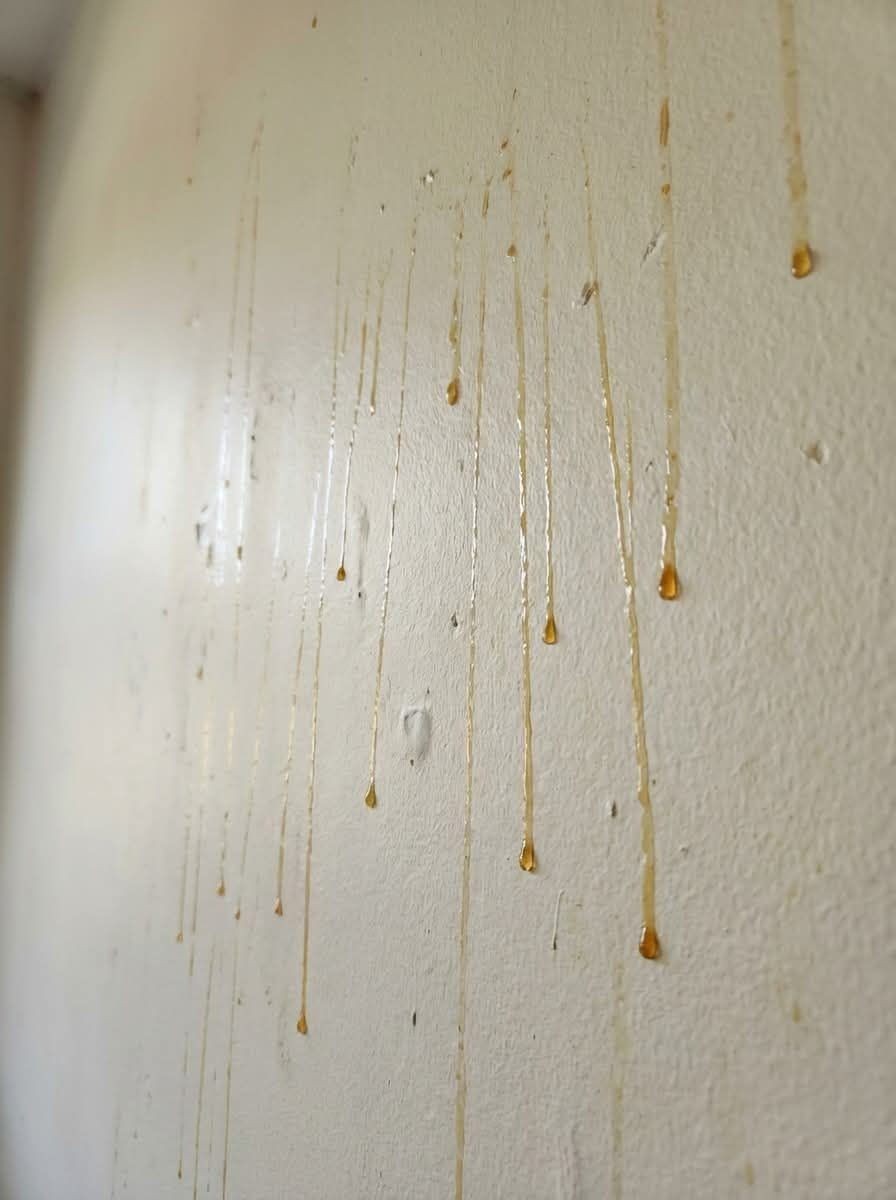
You step out of the shower, glance at the wall, and notice it: a thin, yellowish streak running down from somewhere near the ceiling, shiny and slightly sticky, looking like something that definitely should not be there. If this has happened in your bathroom, you are far from alone — yellow drips on bathroom walls are one of the most commonly reported and most misunderstood household problems. The good news is that in the vast majority of cases, what you are looking at is not a plumbing disaster, not a health emergency, and not an expensive repair job. It is almost always the result of one of a handful of very ordinary causes, and once you understand what is producing those streaks, cleaning them up and preventing them from coming back becomes straightforward.
The phenomenon of yellow drips forming on bathroom walls after showering is well documented and has several distinct causes that can occur independently or in combination. The most important thing to understand is that steam — the warm, moisture-laden air that fills your bathroom during and after a hot shower — is almost always involved. Steam interacts with whatever is on your walls, whether that is paint, mineral residue, mold, or cleaning product residue, and as it condenses and runs down the surface, it carries those substances with it, leaving behind the visible yellow streaks you see when the bathroom cools and dries.
The Most Common Causes of Yellow Drips on Bathroom Walls
1. Surfactant Leaching From Paint
This is the single most frequent cause of yellow drips in bathrooms, and it has a specific name: surfactant leaching. Latex-based paints — which are the most common type used in homes — contain surfactants, which are chemical compounds that help the paint spread evenly during application and dry to a smooth, uniform finish. Under normal circumstances, these surfactants are locked inside the dried paint film and you never notice them. However, when steam repeatedly condenses on painted walls and the moisture has nowhere to go — either because the bathroom is poorly ventilated or because the paint was applied recently and had not fully cured — the water can pull surfactants out of the paint and carry them to the surface. As the water runs down the wall and dries, it deposits those surfactants in yellowish or brownish streaks.
Surfactant leaching is particularly common in newly painted bathrooms during the first several weeks after painting, before the paint has fully cured and hardened. It is also more likely to occur if the paint was applied in cool or damp conditions, or if the bathroom was used for hot showers shortly after painting before the paint had adequate time to dry. The yellow streaks from surfactant leaching are typically shiny, slightly sticky when fresh, and appear to run in lines from the upper portions of the wall downward. They are completely harmless and relatively easy to clean.
