
2. Mineral Deposits From Hard Water
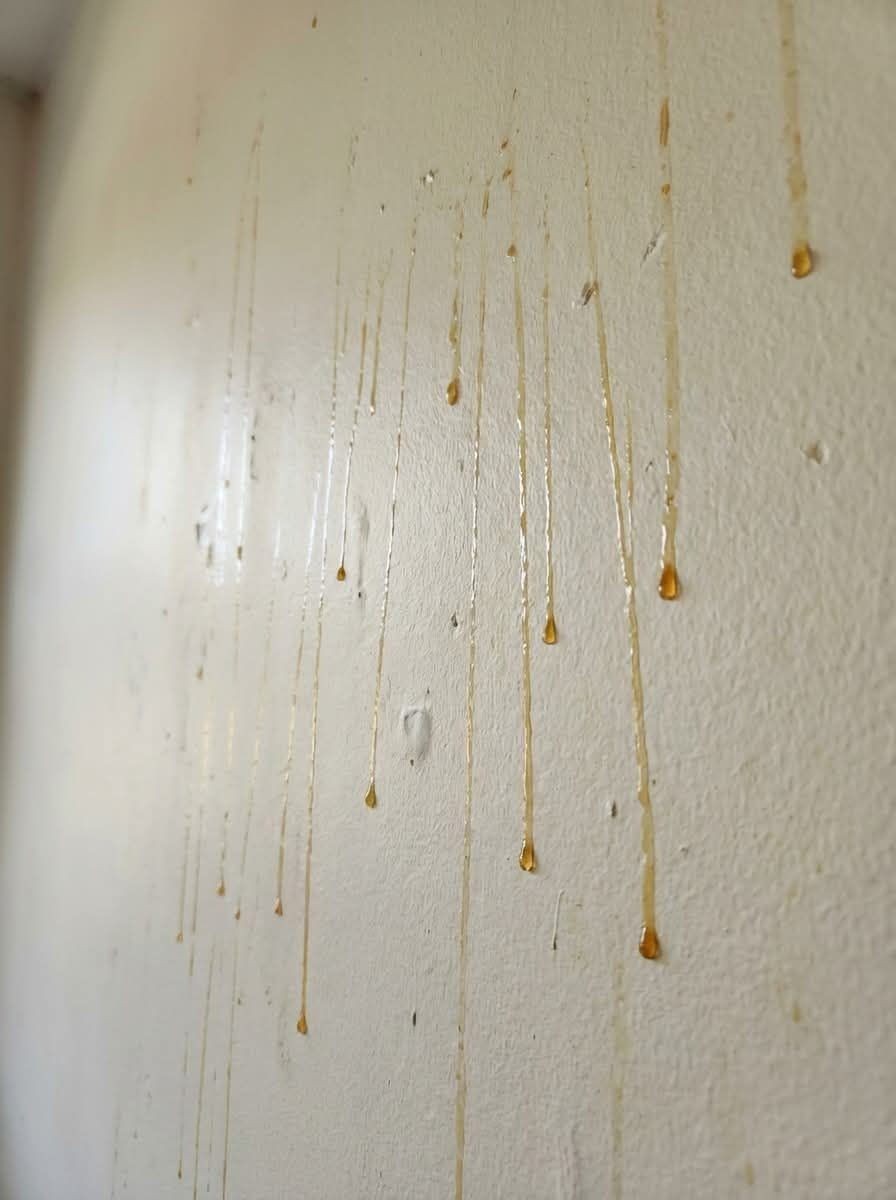
Most tap water — whether from a municipal supply or a private well — contains dissolved minerals including calcium, magnesium, sodium, and iron in varying concentrations. When water evaporates from a surface, it leaves those minerals behind. In bathrooms, steam condenses on walls and then runs downward, carrying minerals with it. As the water evaporates, the minerals are deposited on the wall surface in concentrated streaks. Over time, these mineral deposits build up into visible yellowing or white-to-yellow scale that follows the paths water takes as it drips down the wall.
Hard water — water with a particularly high mineral content — produces this effect more quickly and more visibly than soft water. If you live in an area with hard water and notice that your faucets, showerheads, and tile grout also develop white crusty buildup over time, mineral deposits are a likely contributor to the yellow streaks on your walls as well.
3. Mold and Mildew Growth
Bathrooms are among the most hospitable environments in any home for mold and mildew growth — they provide the warm temperatures, persistent moisture, and organic material that mold needs to thrive. While mold is most commonly associated with black or green discoloration, certain types of mold and mildew appear yellow in their early stages or produce yellow-colored metabolic byproducts as they grow. If your yellow drips have a fuzzy or powdery texture rather than a smooth, shiny appearance, mold is the more likely culprit than surfactant leaching.
Mold-related yellow staining is most likely to appear in the corners of the bathroom, along the grout lines between tiles, at the base of walls near the floor where water accumulates, and anywhere the wall surface stays damp for extended periods. Unlike surfactant leaching, mold does need to be addressed promptly — it can spread, worsen air quality, and cause structural damage to walls over time if the underlying moisture problem is not resolved.
