
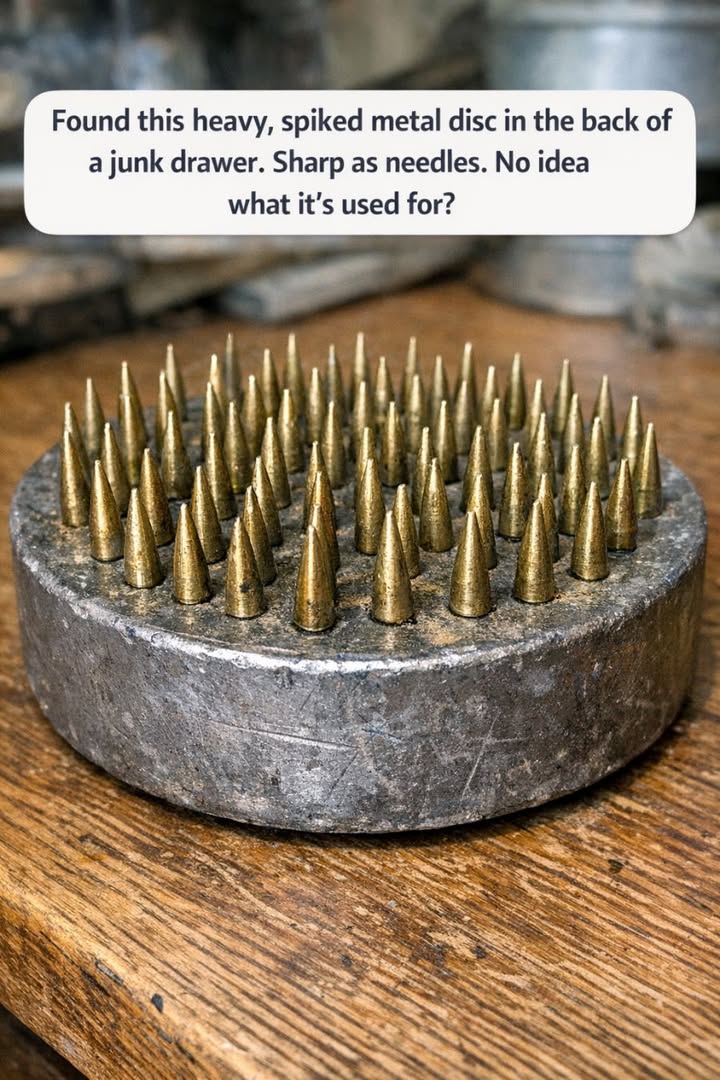
What you have encountered is likely a kenzan, also known colloquially as a ‘flower frog.’ This tool is essential in the traditional Japanese art of flower arranging, known as Ikebana. The kenzan is designed to hold floral stems in place, allowing the arranger to create delicate and balanced compositions.
Often made from brass or lead, a kenzan provides a stable base for floral arrangements, ensuring that each stem remains exactly where it is placed. The spikes are carefully positioned to grip the stems without causing damage, allowing for both aesthetic precision and practical stability in floral displays.
3. How This Spiked Disc Is Used in Japanese Ikebana
In Ikebana, the kenzan plays a crucial role by anchoring plant materials in a vase or shallow dish. The arranger can place stems at various angles, creating dynamic and asymmetrically balanced designs that are characteristic of this art form. The kenzan’s weight keeps it stable, preventing top-heavy arrangements from tipping over.
By securing the base of each stem, the kenzan allows for greater creative freedom, enabling the arranger to manipulate the shape and flow of the composition. This flexibility is essential in Ikebana, where the placement and orientation of each element are carefully considered to reflect harmony and natural beauty.
4. Why the Spikes Are So Sharp (And How They Hold Stems Upright)
The sharpness of the kenzan’s spikes is intentional; they are designed to penetrate the base of plant stems easily, providing a firm grip without crushing or splitting them. The precise alignment and tapered shape of the spikes ensure that even delicate stems can be securely lodged without damage.
