
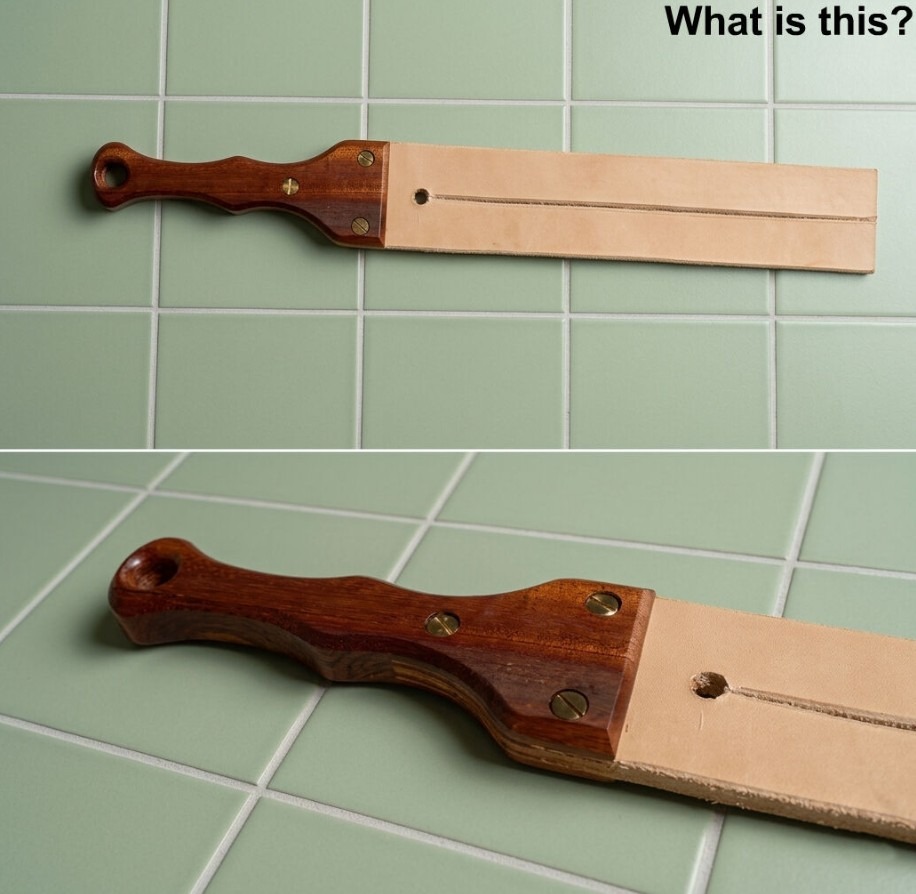
The blade is drawn along the surface of the leather, typically away from the cutting edge rather than into it. This motion helps realign the microscopic teeth of the blade and polish the metal surface.
Many traditional strops also include a fine abrasive compound applied to the leather. This enhances the polishing effect, making the edge even finer and sharper.
It’s not about force. It’s about consistency.
A few controlled passes can dramatically improve a blade’s performance, especially if it’s maintained regularly.
Why Leather?
At first, the choice of leather might seem odd. But it’s actually ideal for this purpose.
Leather has just the right amount of natural resistance. It is soft enough not to damage the blade, yet firm enough to create friction. Over time, it also develops a smooth, slightly polished surface that becomes even more effective with use.
Different types of leather can produce different results:
Softer leather provides a finer finish
Firmer leather offers more resistance for heavier stropping
Treated leather with compounds can enhance sharpening performance
In many traditional workshops, a strop was as essential as the blade itself. It wasn’t optional—it was part of daily maintenance.
A Lost Everyday Practice
What struck me most wasn’t just what the tool was, but how normal it once was.
