
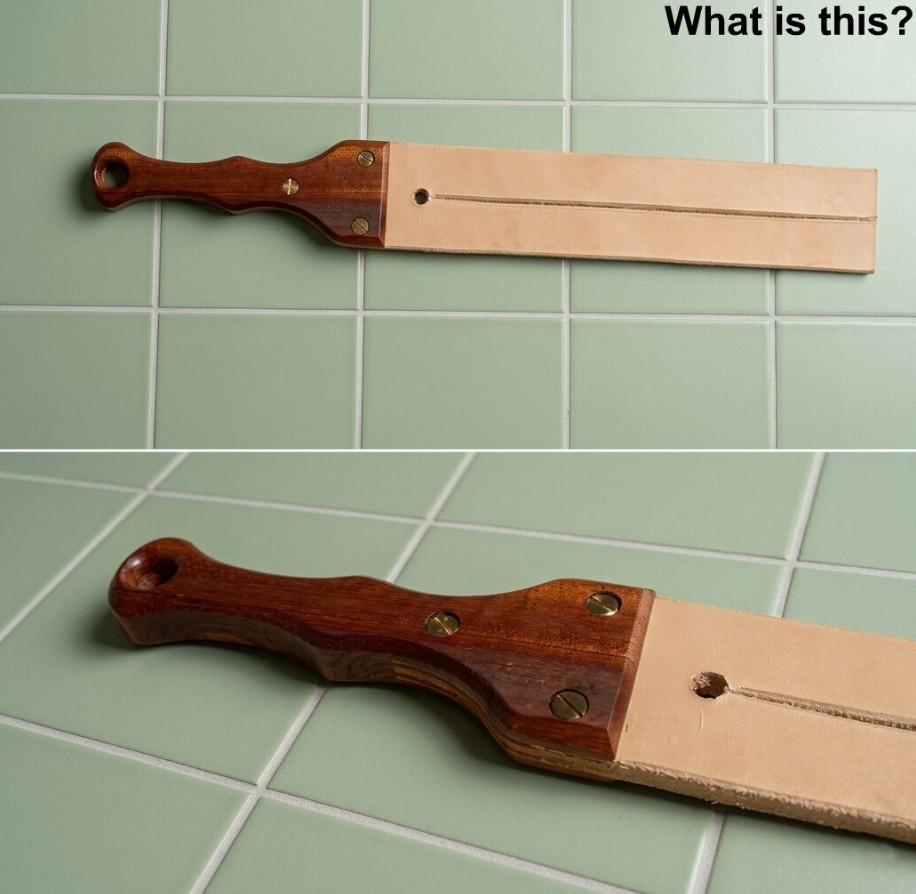
A few controlled passes can dramatically improve a blade’s performance, especially if it’s maintained regularly.
Why Leather?
At first, the choice of leather might seem odd. But it’s actually ideal for this purpose.
Leather has just the right amount of natural resistance. It is soft enough not to damage the blade, yet firm enough to create friction. Over time, it also develops a smooth, slightly polished surface that becomes even more effective with use.
Different types of leather can produce different results:
Softer leather provides a finer finish
Firmer leather offers more resistance for heavier stropping
Treated leather with compounds can enhance sharpening performance
In many traditional workshops, a strop was as essential as the blade itself. It wasn’t optional—it was part of daily maintenance.
A Lost Everyday Practice
What struck me most wasn’t just what the tool was, but how normal it once was.
There was a time when people didn’t simply replace dull blades—they maintained them. Tools were cared for, preserved, and kept in working condition for years, sometimes decades. A leather strop wasn’t a specialty item. It was a common part of everyday life for craftsmen, barbers, cooks, and tradesmen.
Today, most people have never even seen one.
The moment I understood what it was, the object in my hands changed completely. It wasn’t just a piece of leather attached to wood anymore—it was a reminder of a slower, more deliberate relationship with tools and craftsmanship.
Final Thought
It’s funny how something so simple can carry so much history.
What looked like a meaningless object at first turned out to be a quiet symbol of skill, maintenance, and patience. A leather strop doesn’t create sharpness out of nothing—it preserves it. It extends the life of something already valuable.
And maybe that’s why it felt so out of place in a modern box of forgotten things.
Not because it was useless—but because it belonged to a time when things were meant to last.
