
Rust Happens—Especially Where You’re Not Looking
This one surprises people.
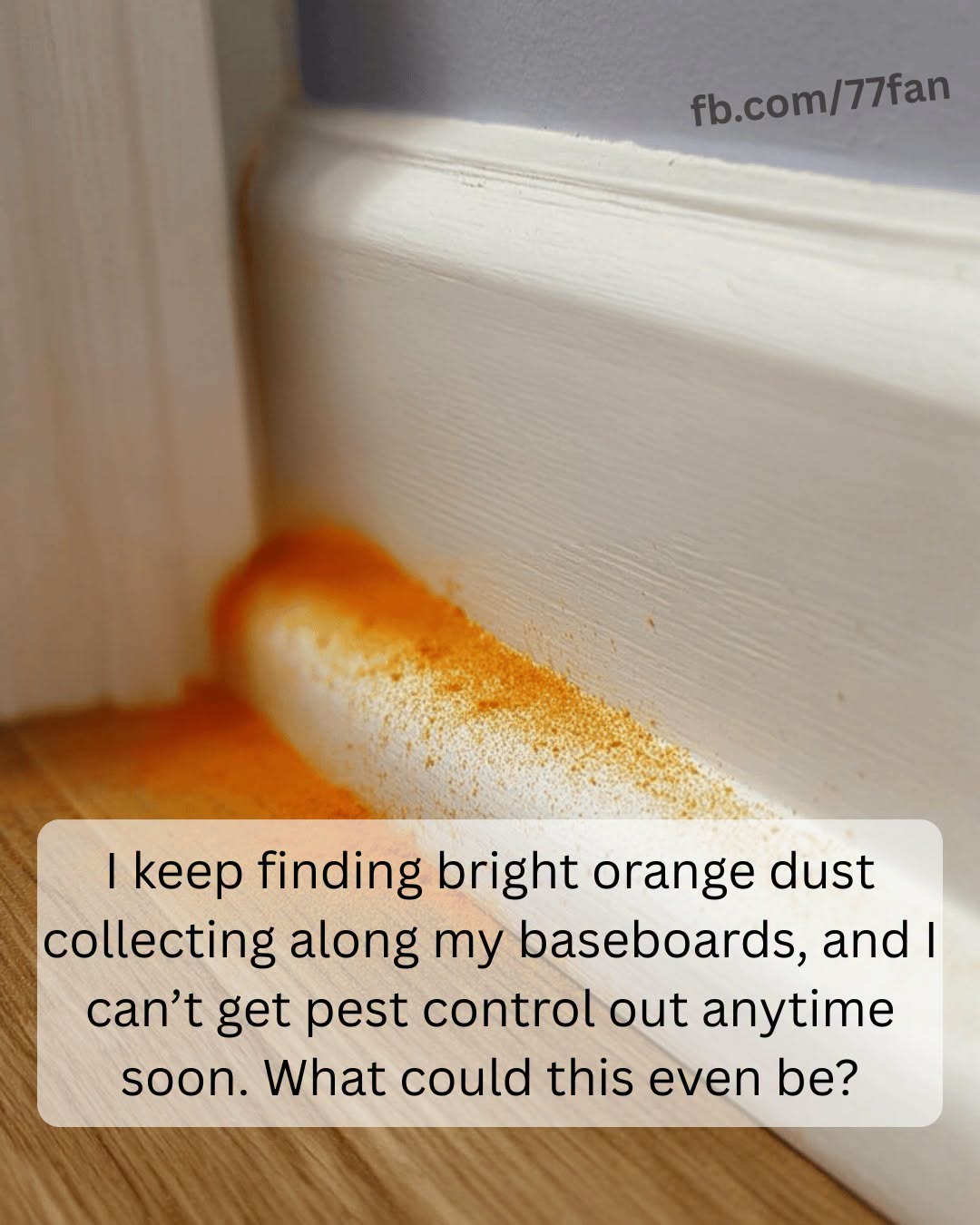
Nails, screws, brackets, and metal corner beads behind drywall can rust over time, particularly in humid homes or near exterior walls. As rust flakes off, it turns into fine orange powder that drops along baseboards.
Tell-tale signs:
- Orange staining near nail pops
- Dust directly under trim joints
- Higher humidity rooms showing more buildup
Sometimes it’s not pests—it’s physics.
When Wood Rubs Wood (And Slowly Turns to Dust)
Doors that scrape. Floors that flex. Furniture that shifts just enough.
Friction creates dust, and over months or years, that dust collects where gravity wins—along baseboards. Depending on the finish or stain, it can lean orange or amber.
A little wax or adjustment can stop years of slow wear. Boring fix. Very effective.
Paint, Stain, and Drywall Don’t Age Gracefully
Paint pigments break down. Drywall chalks. Stains oxidize.
When humidity swings or sunlight hits certain finishes just right, microscopic flakes release and drift downward. This is common in older homes or rooms with big temperature shifts.
