
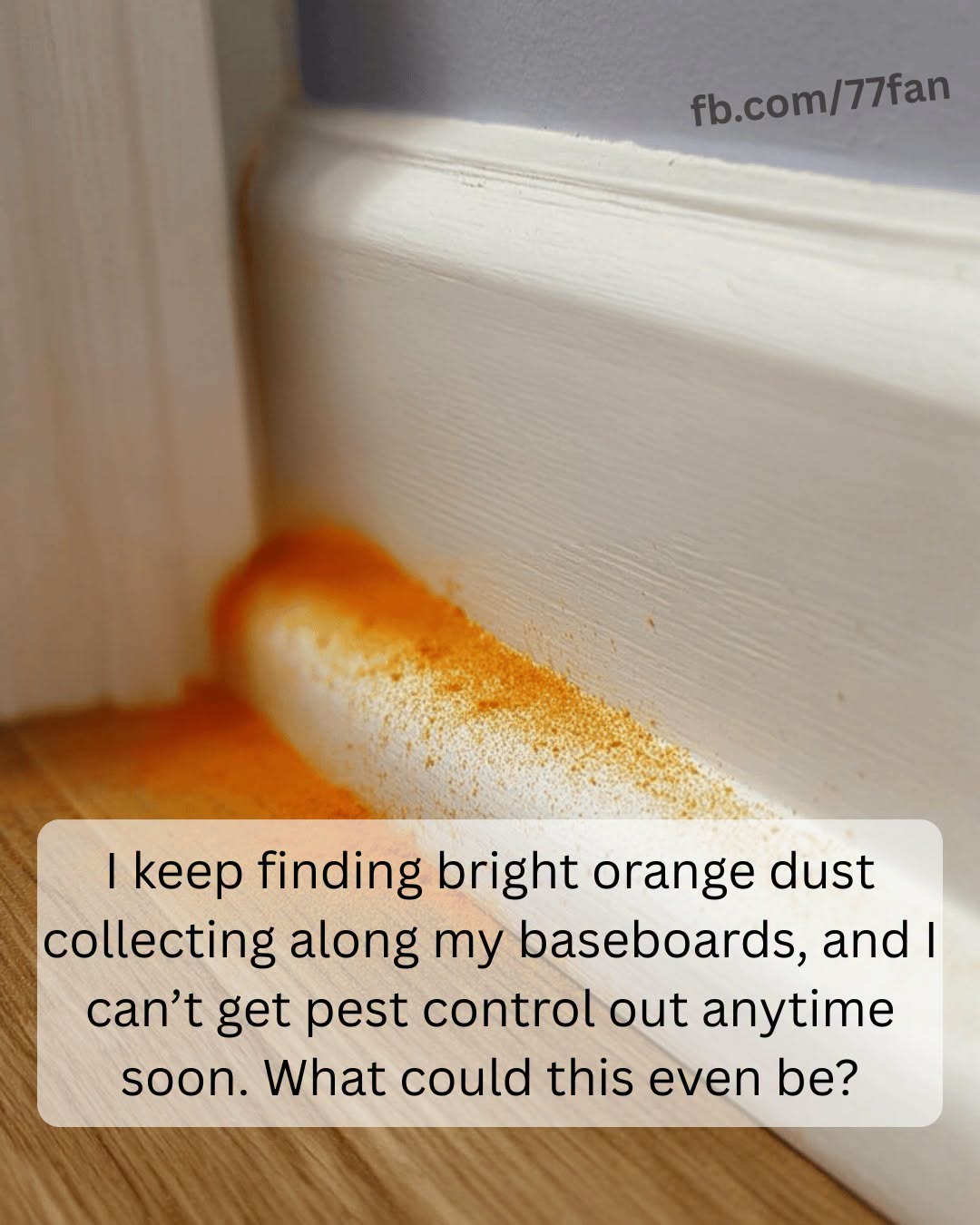
Peeling, cracking, or fading nearby? That’s your clue.
Brick, Tile, and Concrete Can Shed Too
If your baseboards meet masonry—brick walls, tile floors, concrete slabs—fine mineral dust can form as materials wear or grout erodes.
It often goes unnoticed until the color contrasts with white trim. Sealants and minor repairs usually solve it.
Sometimes It’s Just the Outdoors Hitching a Ride Inside
Clay-heavy soil, pollen, and road dust can be orange. Shoes track it in. Air pressure pulls it through tiny gaps. Pets help distribute it like enthusiastic interns.
If the dust appears near doors, Windows, or high-traffic paths, outside sources deserve a look.
Mold and Mildew (Yes, Some Look Rust-Colored)
Not all mold is Black or green. Some fungi release spores that are orange, rusty, or brownish.
If the dust appears in damp areas and smells earthy or musty, moisture is the real issue—not the dust itself. Ventilation and humidity control matter more than scrubbing.
The Wild Card: Household Items Falling Apart Quietly
Cheap rubber, aging foam, old pet toys, decorative baskets—these things break down. Slowly. Invisibly. Until they don’t.
