
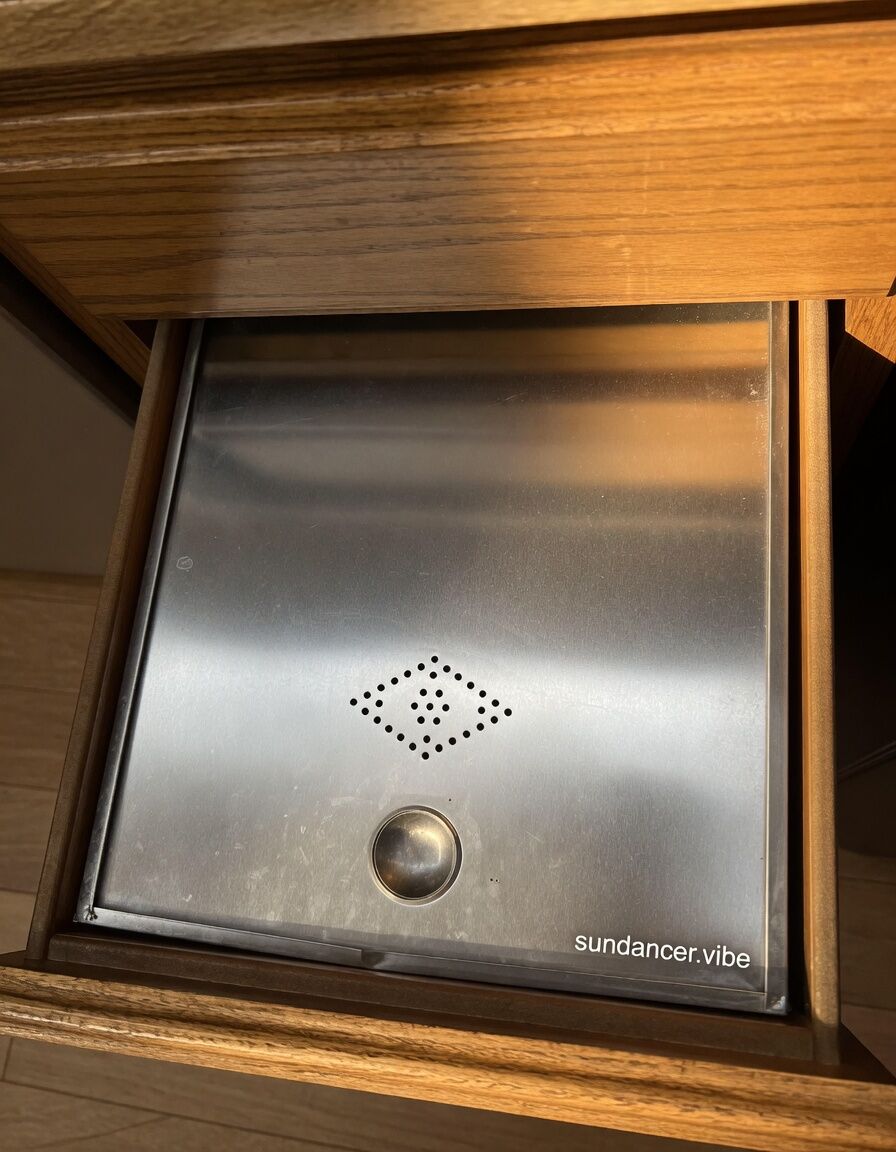
But what makes the breadbox so emotionally powerful today is not just its function—it’s what it represents. When people remember it, they rarely describe its shape or material first. Instead, they describe moments. A grandmother slicing warm bread on a wooden board. A child sneaking an extra piece before dinner. The smell of fresh toast filling a small kitchen on a cold morning. These memories are not about the object itself, but about the life surrounding it. The breadbox becomes a doorway into a slower world, where kitchens were not just spaces for efficiency, but spaces for connection. Families gathered there without distraction. Conversations happened over counters instead of screens. Meals were not rushed. Even something as simple as storing bread carried a sense of care. It was part of a daily rhythm that asked people to be present, even in the smallest actions.
As decades passed and technology reshaped the home, the breadbox slowly disappeared. Refrigeration became more advanced. Plastic bags sealed in freshness. Supermarkets began selling bread designed to last weeks instead of days. Kitchens transformed into sleek, modern spaces filled with appliances designed for speed and convenience. The breadbox, once essential, began to feel unnecessary. It was pushed into storage, donated, or left behind in older homes. By the 1990s, it had largely vanished from everyday use. Yet its disappearance was not just about changing food storage—it reflected a broader shift in how people lived. Time became more compressed. Meals became faster. Homes became more about efficiency than ritual. And in that shift, something subtle was lost: the everyday intimacy of small, repeated domestic acts that once anchored family life.
And yet, the breadbox never truly disappeared. It simply waited. In recent years, something interesting has happened. As people began to slow down again—especially during periods when home life regained importance—old traditions started to resurface. Baking bread at home became a widespread trend once more. People rediscovered the satisfaction of kneading dough, waiting for it to rise, and pulling a fresh loaf from the oven. And with that return came a renewed appreciation for the simple tools of the past. Breadboxes began appearing again, not as outdated relics, but as nostalgic and practical kitchen additions. Modern versions now exist in stainless steel, bamboo, and minimalist designs, blending old function with new aesthetics. But their purpose remains the same: to preserve something simple, something real, something human.
What is most striking about this quiet return is how emotional it feels. People are not just buying breadboxes because they are useful. They are buying them because they represent a slower, more intentional way of living. In a world filled with constant notifications, instant deliveries, and digital overload, the breadbox offers something rare: stillness. It does not beep, flash, or update. It simply sits, holding something familiar inside. And that simplicity feels almost radical today. For some, it is a way of reconnecting with childhood memories. For others, it is an attempt to recreate a sense of warmth in kitchens that have become too polished, too perfect, too distant. The breadbox reminds us that home is not defined by technology or design trends, but by the small rituals that make a space feel lived in.
