
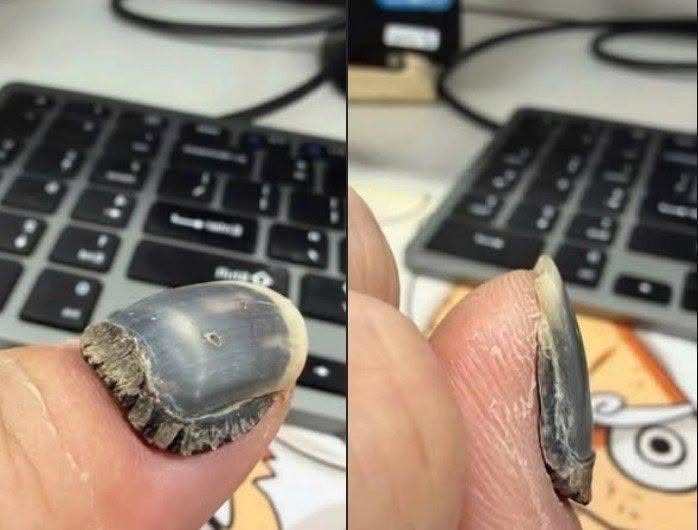
Fungal Nail Infections
Another possible cause of nail discoloration is a fungal infection.
Fungal infections may cause nails to become:
- Yellow
- Brown
- White
- Greenish
- Thickened
- Brittle
- Crumbly
Unlike simple staining, fungal infections usually do not disappear simply by removing the polish.
Proper treatment may be needed.
Nails May Become Dry
Frequent use of nail polish remover—especially those containing acetone—can dry the nail plate.
Dry nails are more likely to:
- Peel
- Split
- Crack
- Break
Using moisturizing hand creams and cuticle oils may help restore moisture.
Gel Polish Can Increase Stress on Nails
Gel manicures are popular because they last longer than traditional polish.
However, repeated application and removal may place additional stress on the nail surface.
Aggressive scraping or peeling off gel polish can damage the outer layers of the nail.
Professional removal is generally gentler than peeling the polish off yourself.
Artificial Nails Require Proper Care
Acrylic and other artificial nail systems can look beautiful, but they require careful maintenance.
If moisture becomes trapped beneath artificial nails, bacteria or fungi may have an opportunity to grow.
Keeping artificial nails clean and replacing damaged enhancements promptly helps reduce this risk.
Give Your Nails Time to Recover
Just like skin benefits from occasional makeup-free days, nails can benefit from short breaks between manicures.
Allowing your nails to remain polish-free for several days every few weeks lets you monitor their natural condition.
It also provides an opportunity to moisturize and trim them properly.
Don’t Ignore Persistent Color Changes
While temporary staining is common, some nail color changes deserve medical attention.
Consider consulting a healthcare professional if your nails become:
- Blue without obvious staining
- Green for several days
- Thick and painful
- Dark with a new black streak
- Swollen around the nail
- Loose from the nail bed
These changes may have causes unrelated to cosmetic products.
