
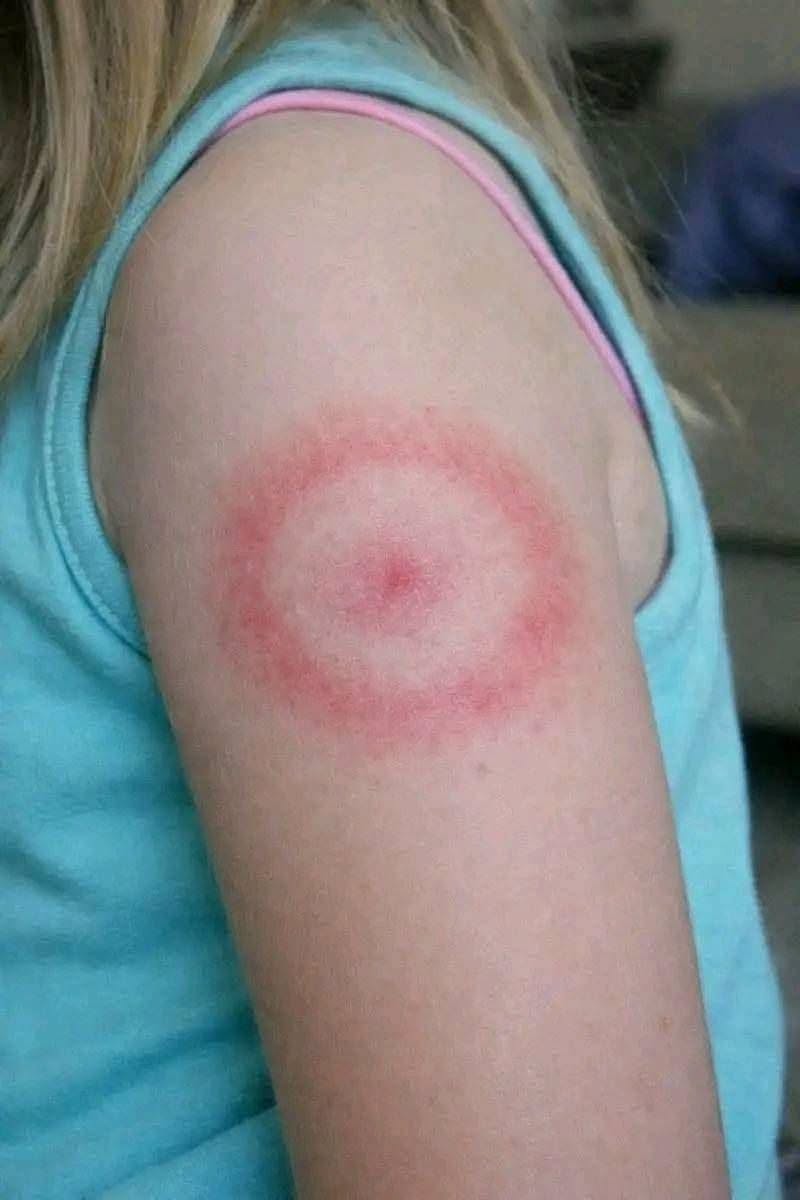
It usually begins as a small red area at the site of a tick bite and gradually expands over several days. As it grows outward, the center may clear up and appear lighter, creating the classic “bullseye” or target-like appearance.
Characteristics of a Lyme Disease Rash
Gradual Expansion
A Lyme disease rash often starts as a small red spot and slowly expands over several days, frequently growing larger than 2 inches (5 cm) in diameter.
Sensation
The rash is usually not painful and often isn’t very itchy, although some people may notice mild itching or discomfort.
Skin Temperature
The affected skin may feel slightly warm to the touch, but it typically isn’t intensely hot or swollen.
Recent Outdoor Exposure
A Lyme rash is more likely if there has been recent exposure to:
Wooded or forested areas
Tall grass or brush
Camping or hiking
A known or suspected tick bite
Important Note
Not everyone with Lyme disease develops the classic “bull’s-eye” rash, and not every ring-shaped rash is caused by Lyme disease. If your child develops an expanding rash—especially after spending time outdoors in an area where ticks are common—it’s important to contact your pediatrician or healthcare provider promptly. Early diagnosis and treatment with antibiotics are highly effective and can help prevent more serious complications.
3. Other Common Culprits (The “Not-So-Scary” List)
If it doesn’t look like Lyme disease, what else could it be? Several very common, highly treatable conditions cause ring-shaped rashes in children.
