
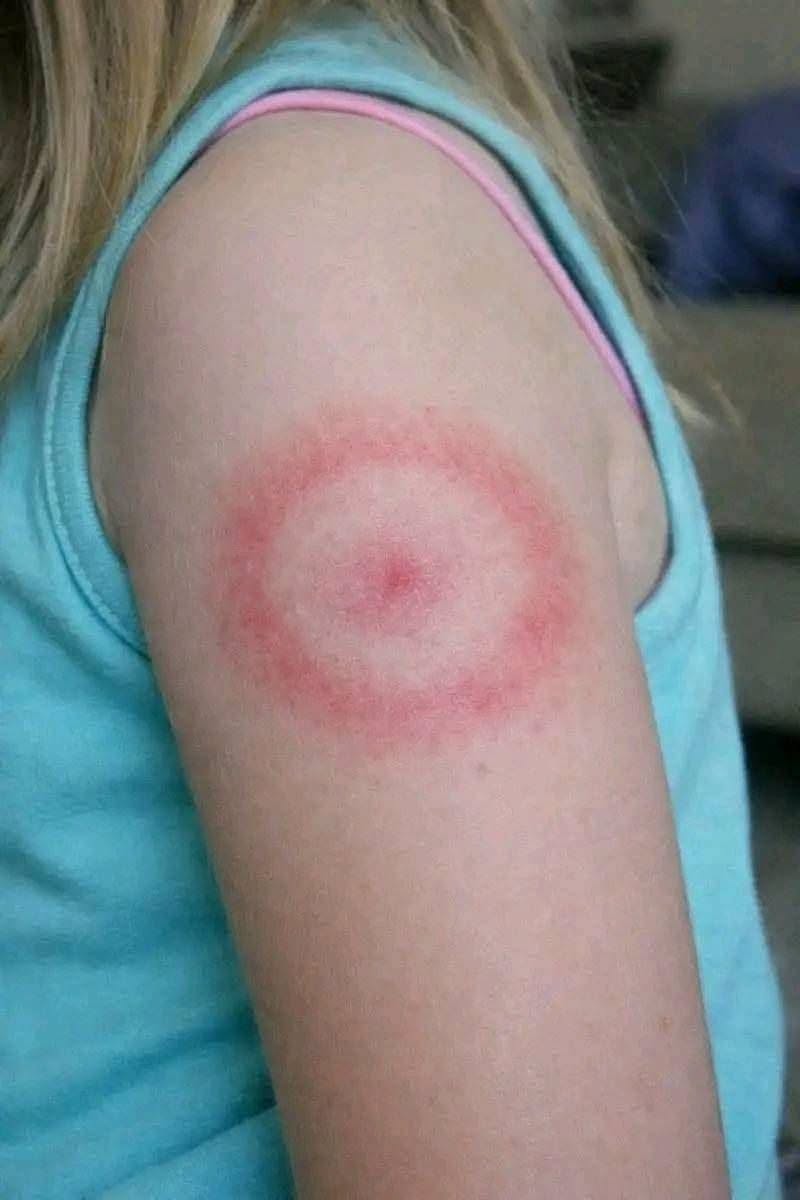
Ringworm (Tinea Corporis)
Despite the scary name, ringworm is not caused by a worm! It is a very common, superficial fungal infection.
What it looks like: A red, scaly circle with a raised, active border and a clearer center.
The difference: Unlike Lyme disease, ringworm is usually very itchy and has a scaly, flaky texture. It is easily treated with over-the-counter or prescription antifungal creams.
Pityriasis Rosea
This is a harmless, common skin condition that often starts with a single, larger patch known as a “herald patch” (which can look like a ring), followed by a scattering of smaller spots on the torso.
What it looks like: A large oval or ring-like patch, often with a “collarette” of scale just inside the border.
The difference: It is completely harmless, often follows a mild viral illness, and usually resolves on its own within 6 to 8 weeks.
Insect Bites and Allergic Reactions
Some spider or insect bites can create a localized circular area of redness that resembles a ring as the body reacts to the saliva or venom. These reactions are usually temporary, slightly raised, and improve with time and basic first aid.
Contact Dermatitis
Did your child lean against a new plant, wear a new bracelet, or rest their arm on a freshly cleaned counter? Soaps, plants (like poison ivy, which can sometimes form linear or circular blisters), detergents, or new clothing materials can irritate sensitive skin and create unusual, localized rashes.
4. Red Flags: When to Rush to the ER
Although most ring rashes are not dangerous, some symptoms indicate a systemic emergency. Seek emergency medical care immediately if your child develops the rash alongside any of the following:
Difficulty breathing, wheezing, or shortness of breath
Swelling of the lips, tongue, face, or throat
A sudden, very high fever
Severe, unmanageable pain
A rash that is spreading rapidly (by the minute) or looks like dark purple bruises
Confusion, extreme lethargy, or unusual behavior
