
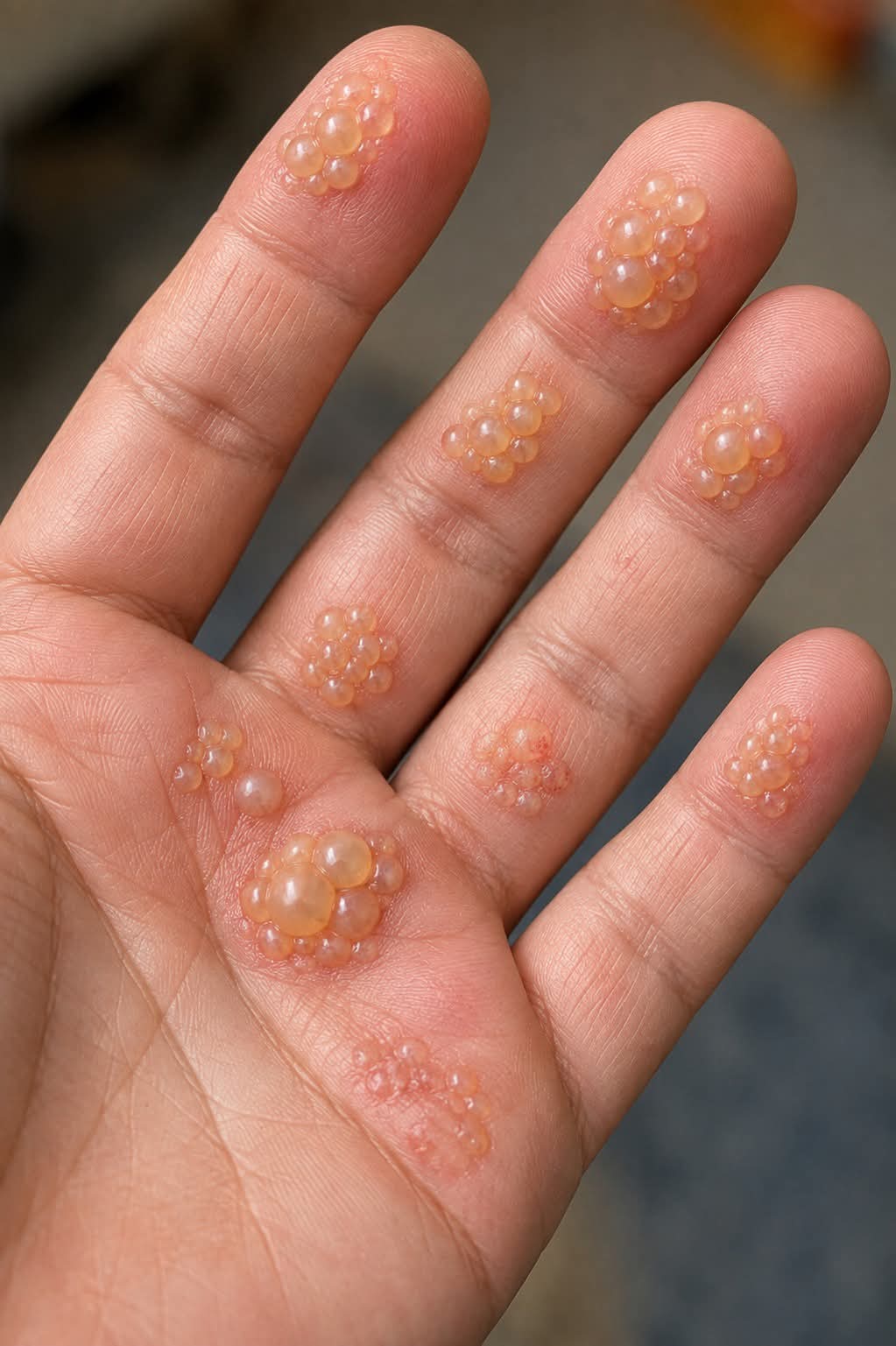
Use Gentle Products
Choose a mild, fragrance-free cleanser instead of harsh soaps.
Moisturize Frequently
Apply a thick, fragrance-free cream or ointment regularly, especially after washing your hands. Keeping the skin barrier moisturized can help reduce dryness and cracking.
Protect Your Hands
If cleaning products or detergents make the symptoms worse, wear appropriate protective gloves. If possible, avoid prolonged contact with water and irritating chemicals.
Avoid Scratching
Scratching can make the skin more damaged and may increase the risk of infection.
When Should You See a Doctor?
Small blisters on the fingers aren’t always dyshidrotic eczema.
Other skin conditions, allergic reactions, infections, and irritant reactions can sometimes look similar. A healthcare professional can examine the skin and determine the most likely cause.
Seek medical advice sooner if the area becomes very painful, increasingly red or swollen, warm, produces pus, develops spreading redness, or you feel unwell.
If the blisters keep coming back, interfere with your work, or don’t improve with gentle skin care, it’s also worth seeing a dermatologist.
The Bottom Line
Those tiny “water blisters” can be surprisingly uncomfortable, but they don’t necessarily mean something serious is happening.
If they are caused by dyshidrotic eczema, identifying triggers, protecting the skin, avoiding irritating products, and keeping the hands well moisturized can all be helpful.
Don’t ignore persistent or worsening symptoms—and don’t rely on a photo alone to diagnose the condition.
Sometimes the smallest bumps can be your skin’s way of telling you that something needs to change.
