
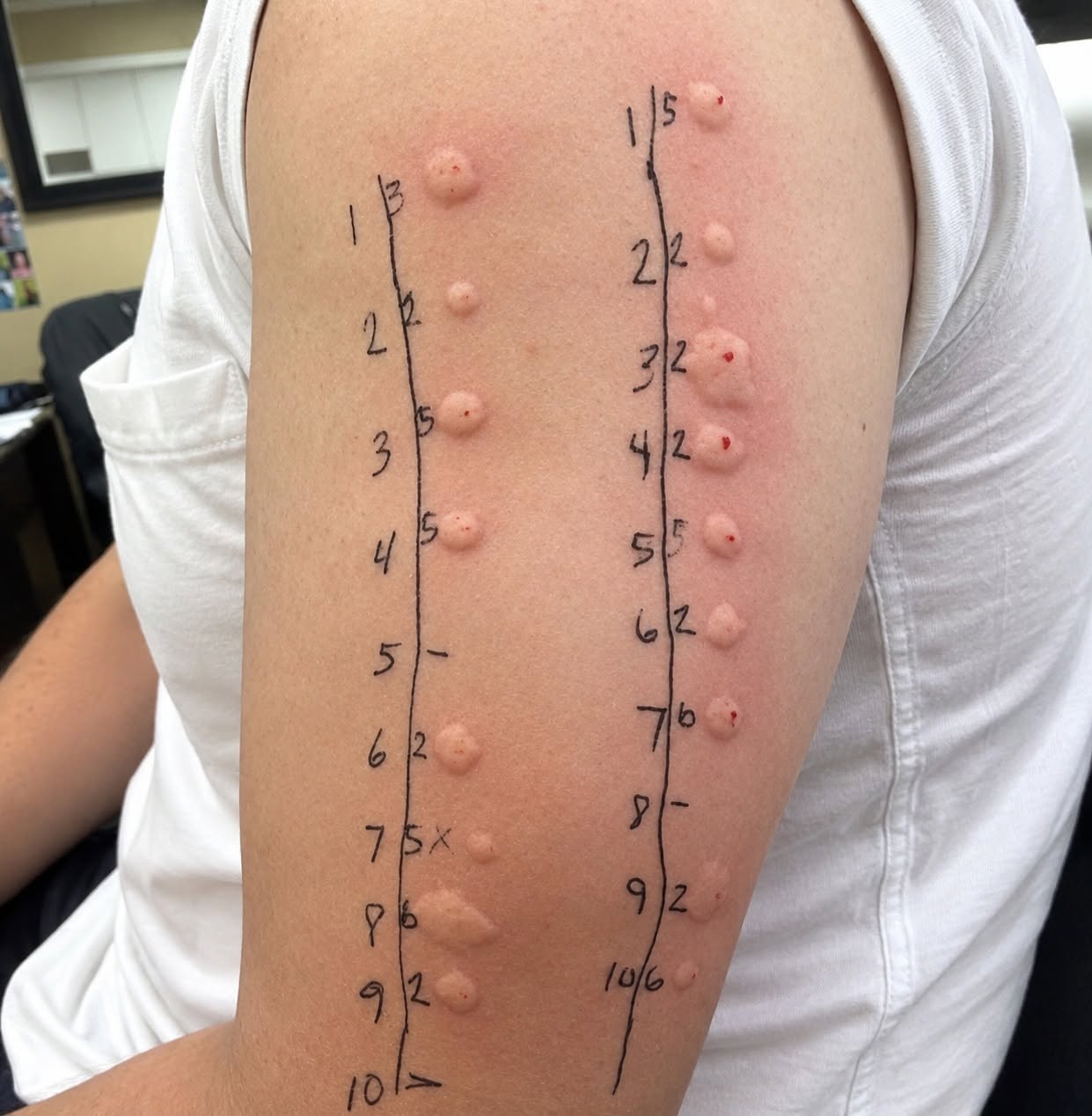
During a skin-prick allergy test, tiny amounts of suspected allergens are introduced into or onto the skin at designated locations.
If the immune system is sensitized to a particular substance, the area may develop a small raised, itchy bump surrounded by redness.
These reactions can look similar to the bumps visible in the photograph.
The numbers written on the skin are simply used to identify the different substances being tested. A healthcare professional then compares the reactions and records their size.
The photograph alone cannot tell us which substance caused a reaction.
That's an important distinction because social-media posts sometimes make it appear that every visible bump represents a confirmed allergy. In reality, allergy testing requires professional interpretation.
The Difference Between Irritation and Allergy
Not every itchy or red area is caused by an allergy.
Skin irritation can result from friction, sweat, heat, soaps, detergents, fragrances, fabrics, or other environmental factors.
An allergic reaction involves the immune system responding to a substance to which the person has become sensitized.
For this reason, someone who develops redness after sleeping in a particular bed may not necessarily have an allergy. It could be irritation caused by detergent, heat, sweat, fabric, or another factor.
Why Symptoms May Be Worse in the Morning
Some people notice that their allergy symptoms are particularly strong immediately after waking up.
One possible explanation is prolonged exposure during the night. If an allergen is present in the bedroom, a person may be exposed continuously while sleeping rather than for only a few minutes.
Pillows and mattresses can be particularly relevant because they remain close to the face and body for hours.
This is one reason healthcare professionals may ask patients when their symptoms appear, where they sleep, whether they have pets, and whether symptoms improve when they spend time away from home.
Simple Steps That May Help
If someone suspects that their sleeping environment is contributing to allergy symptoms, several practical measures may help reduce exposure.
Wash bedding regularly according to the manufacturer's instructions, keep the bedroom well ventilated, and consider measures designed to reduce dust accumulation.
If pets are suspected of triggering symptoms, keeping them out of the bedroom may reduce exposure for some people.
It's also worth paying attention to newly introduced products. A new detergent, perfume, body lotion, fabric softener, mattress, pillow, or bedding material can sometimes cause irritation.
Keeping track of when symptoms appear and what you were exposed to beforehand can make it easier for a healthcare professional to identify a possible pattern.
When Should You See a Doctor?
Occasional mild itching isn't necessarily a sign of a serious condition. But repeated or unexplained reactions deserve attention, especially if they continue despite avoiding suspected triggers.
A healthcare professional may recommend allergy testing when the symptoms and medical history suggest that an allergy could be involved.
And if someone develops difficulty breathing, swelling of the lips or tongue, severe dizziness, fainting, or rapidly worsening symptoms, they should seek emergency medical care because these can be signs of a severe allergic reaction.
The Real Message Behind the Photograph
The dramatic headline “These Are the Consequences of Sleeping With… See More” may make people curious, but the image itself should not be used to claim that sleeping with a particular person or animal caused the reactions.
What the photograph actually illustrates is how skin allergy testing can produce localized raised reactions that are evaluated by a healthcare professional.
Your bedroom and sleeping habits can certainly influence your exposure to allergens and irritants, particularly when you spend many hours in the same environment. But identifying the exact cause requires more than looking at a photograph.
If itching, redness, swelling, sneezing, or other symptoms repeatedly occur after sleeping in a particular environment, the best approach is to look for the specific trigger rather than assume that the sleeping arrangement itself is responsible.
