
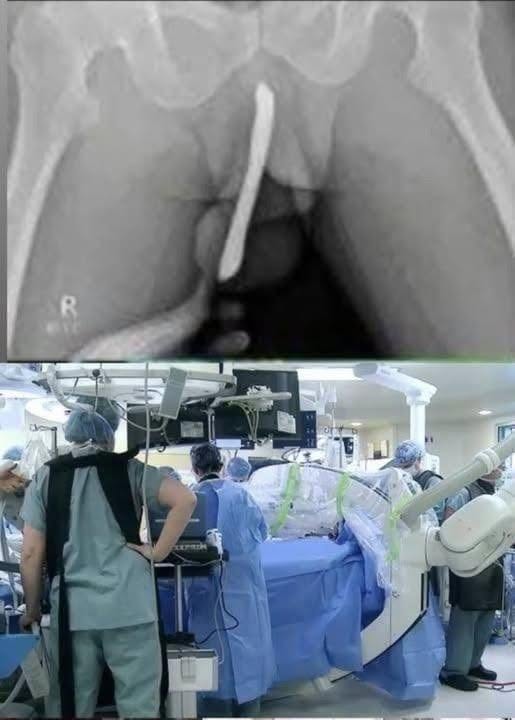
Additional imaging may be performed to confirm that the procedure has achieved its intended objective.
8. Recovery
After the procedure, the patient is monitored for complications and allowed to recover from sedation or anesthesia if these were used.
This workflow demonstrates why image-guided medicine requires both technical skill and careful clinical planning.
Not Every Procedure Is Suitable for Image Guidance
Despite its many advantages, image-guided intervention is not appropriate for every medical problem.
The choice between minimally invasive intervention, conventional surgery, medication, observation, or another treatment depends on numerous factors.
Doctors may consider:
The exact diagnosis
Location and size of the target
Patient anatomy
Previous surgeries
Other medical conditions
Bleeding risk
Infection risk
The availability of appropriate equipment
The expertise of the treating team
Expected benefits and potential complications
Alternative treatment options
Modern medicine is not about choosing the most technologically advanced option simply because it exists. The best treatment is the one that is appropriate for the individual patient.
Possible Risks
Like all invasive medical procedures, image-guided interventions carry potential risks.
These vary significantly depending on the specific procedure but may include bleeding, infection, injury to surrounding structures, allergic or adverse reactions to medications or contrast material, blood-vessel complications, anesthesia-related problems, or failure to achieve the intended treatment goal.
There may also be radiation exposure during procedures that use X-ray-based imaging.
The risk profile must therefore be discussed between the patient and the medical team before treatment.
One advantage of modern procedural medicine is that physicians can often carefully evaluate these risks beforehand and select the most appropriate approach.
Technology Continues to Evolve
The equipment seen in today's procedure rooms represents only one stage in the development of image-guided medicine.
Modern systems increasingly combine imaging with software, navigation tools, three-dimensional visualization, and automated assistance.
Artificial intelligence and computer-assisted image analysis may further improve the ability to identify anatomical structures and assist clinicians with planning.
Three-dimensional imaging can help physicians understand anatomy from multiple perspectives.
Robotic and navigation technologies may also provide additional precision in selected procedures.
These developments do not mean that physicians will become less important. Instead, they may give clinicians better information and tools with which to make decisions.
The future of procedural medicine is likely to involve increasingly sophisticated collaboration between physicians and technology.
From Large Incisions to Tiny Access Points
Perhaps the most remarkable aspect of image-guided medicine is how much treatment can sometimes be accomplished through such a small physical opening.
A patient may enter a hospital for a procedure involving an internal organ or blood vessel, yet the final access point may be only a few millimeters in size.
This represents a major change in surgical philosophy.
For much of medical history, doctors had limited ways of reaching internal structures. Surgery often required physically exposing the area that needed treatment.
Today, physicians can sometimes approach the same structures through natural pathways or tiny access points while relying on imaging to guide their instruments.
The upper image in the supplied photograph is a visual reminder of this transformation. A medical device that would otherwise be invisible from outside the body becomes clearly visible on the imaging screen.
That simple concept has enormous clinical implications.
A Picture of Modern Healthcare
