
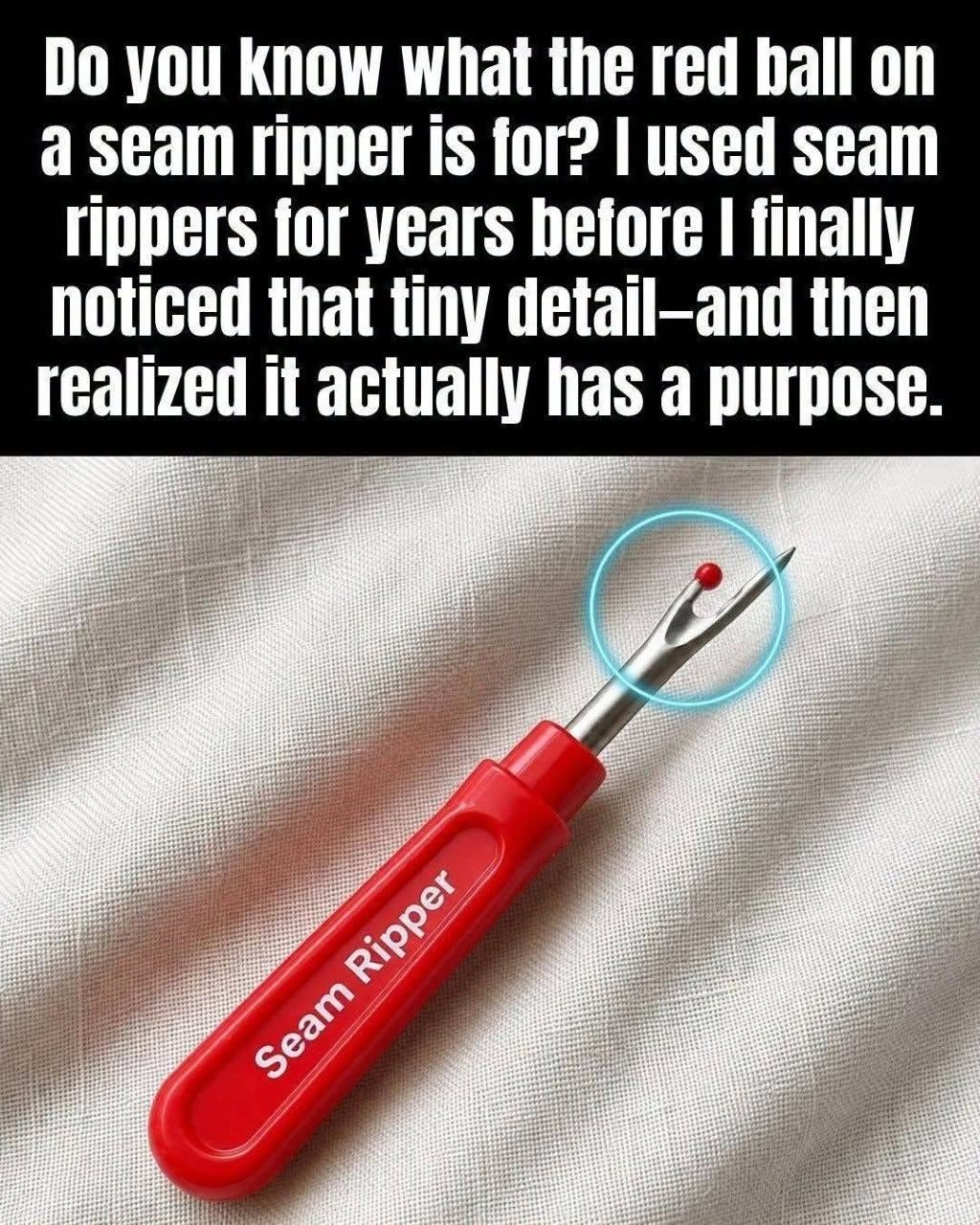
Marking the beginning and end of the area can help prevent unnecessary work.
Step 2: Position the Fabric
Place the fabric on a flat, stable surface.
Good lighting is important because you need to clearly see the individual stitches.
If possible, position the seam so that the thread is easy to access.
Step 3: Slide the Seam Ripper Under a Stitch
Carefully insert the pointed end beneath one stitch.
Try to avoid pushing the blade directly toward the fabric.
Instead, slide the tool between the thread and the material.
This is where gentle handling matters most.
Step 4: Cut the Thread
Once the seam ripper is underneath the stitch, move it slightly so that the cutting edge contacts the thread.
A light motion should be enough to cut it.
For beginners, cutting one stitch at a time is often the safest method.
Step 5: Continue Along the Seam
After cutting one or several stitches, move along the seam.
You do not necessarily need to cut every stitch individually. Depending on the fabric and construction, you may be able to cut several stitches on one side and gently pull the thread free.
However, never rush.
If the thread does not release easily, stop and inspect what is happening.
Step 6: Remove Loose Threads
Once the stitches have been cut, gently pull the loose thread away from the fabric.
Do not yank.
If a thread becomes stuck, use the seam ripper carefully to release it.
Step 7: Inspect the Fabric
After removing the seam, examine the fabric.
Look for:
- Remaining thread
- Tiny holes
- Snags
- Pulled fibers
- Accidental cuts
- Distortion
If everything looks good, you can prepare the fabric for resewing.
Should You Cut Every Stitch?
Not always.
The safest approach depends on the fabric, thread, stitch length, and construction of the garment.
For a short seam, removing stitches individually may be the easiest method.
For a longer seam, you may cut stitches at regular intervals and then gently pull the thread.
For delicate fabric, however, slow and controlled removal is usually better.
The goal is not simply to remove stitches quickly. The goal is to remove them without damaging the material.
