
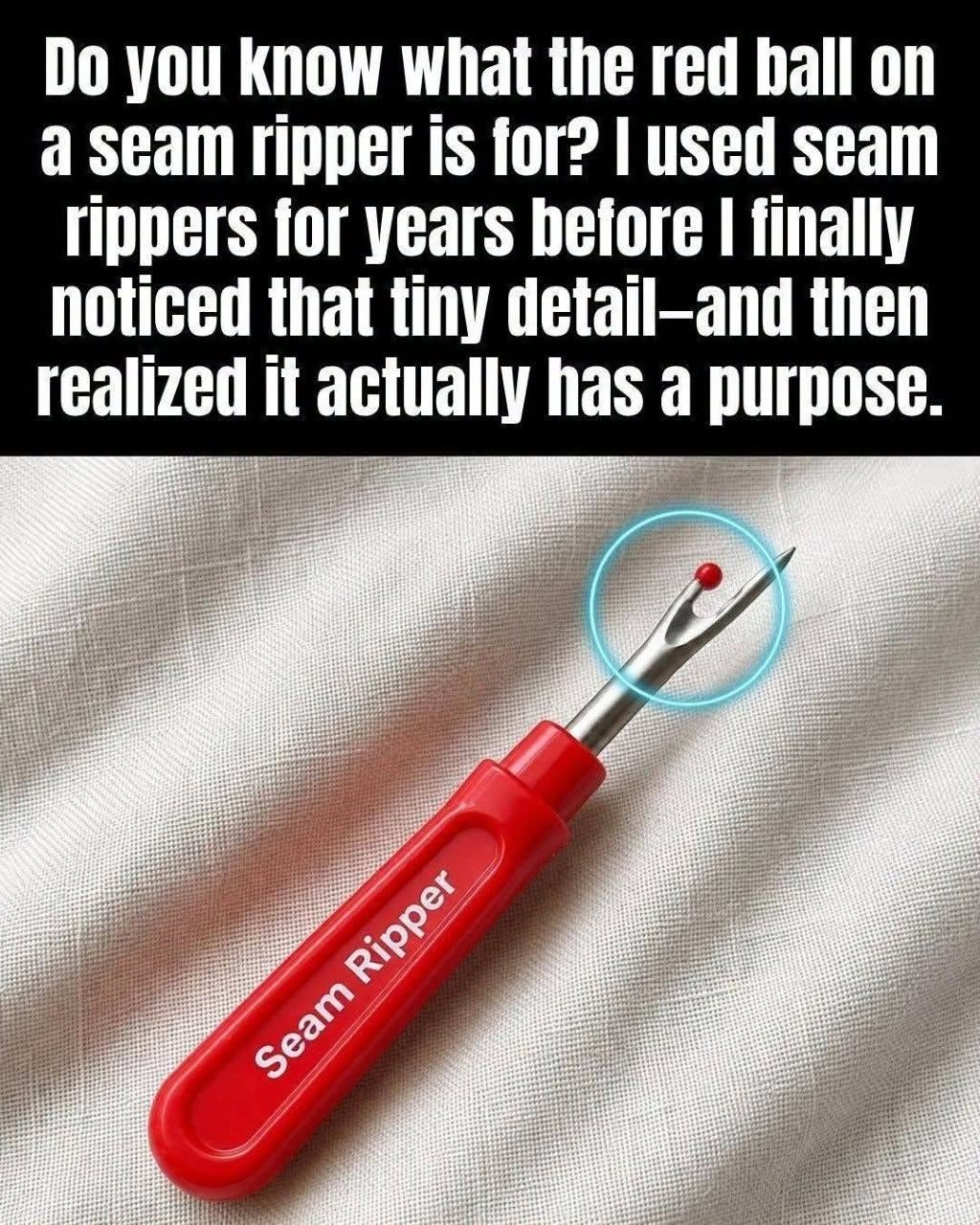
One of the most common uses for a seam ripper is opening a machine-stitched buttonhole.
This requires extra care because the buttonhole is usually stitched very close to the edge.
Place a pin across the buttonhole near one end. The pin acts as a physical stop and helps prevent the seam ripper from accidentally cutting beyond the buttonhole.
Insert the seam ripper carefully into the center of the buttonhole and cut through the threads.
Work gradually toward the other end.
The pin can provide an important layer of protection, especially when you are still learning.
How to Remove a Hem
If you need to change the length of a garment, a seam ripper can help remove the existing hem.
Turn the garment inside out and identify the stitching.
Start at one end and carefully cut the stitches.
Once enough stitches are removed, gently pull the thread.
After opening the hem, press the fabric according to its care instructions before creating the new hem.
Pressing can help remove old fold lines and make the fabric easier to work with.
Using a Seam Ripper on Delicate Fabrics
Delicate fabrics require additional caution.
Materials such as silk, chiffon, lace, satin, and lightweight synthetics can be damaged more easily than heavier fabrics.
When working with delicate material:
- Use bright, even lighting.
- Keep the fabric flat.
- Cut fewer stitches at a time.
- Avoid pulling aggressively.
- Keep the blade away from the fabric surface.
- Check your progress frequently.
If you feel resistance, do not force the tool.
Stop and determine whether the resistance comes from thread, fabric, or another part of the garment.
Common Mistakes to Avoid
Mistake 1: Using Too Much Force
A seam ripper does not require much pressure.
Excessive force can cause accidental cuts.
Mistake 2: Working Too Quickly
Speed may feel efficient, but one accidental cut can create more work than removing the original seam.
Mistake 3: Cutting Toward Yourself
For better control, avoid positioning the sharp tool in a way that could cause injury if it slips.
Work deliberately and keep your fingers out of the path of the cutting edge.
Mistake 4: Ignoring Fabric Tension
If the fabric is tightly stretched while you remove stitches, the tool may behave unpredictably.
Keep the material relaxed and properly supported.
Mistake 5: Removing Too Much
If only five stitches are wrong, there may be no reason to remove fifty.
Target the problem area.
Mistake 6: Pulling Threads Aggressively
Pulling hard can distort the fabric or cause fibers to become damaged.
