
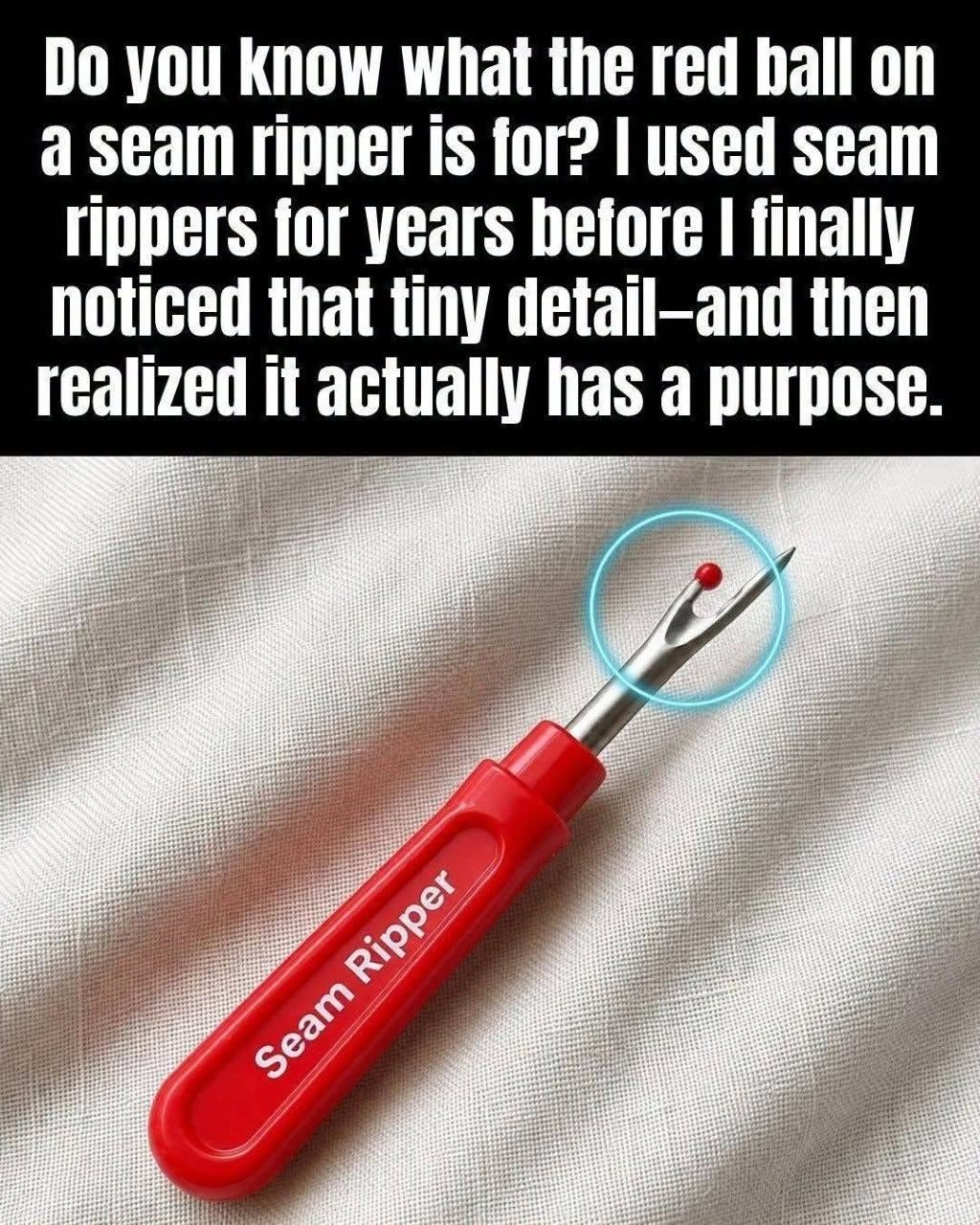
If a thread does not move easily, investigate before continuing.
How to Make Seam Ripping Faster
Once you gain experience, you can become much more efficient.
For sturdy fabrics and ordinary seams, you may be able to cut several stitches at once from the back of the seam.
After loosening the thread, gently pull the longer section out.
Then remove remaining thread pieces.
The key is to combine speed with control.
Experienced sewists often develop a rhythm: cut, loosen, pull, inspect, and repeat.
How to Protect Your Fabric
The best way to protect fabric is to avoid unnecessary contact between the cutting edge and the material.
Always aim the seam ripper toward the thread rather than toward the fabric.
Keep the fabric relatively flat.
If possible, work from the underside of the seam because the thread structure may be easier to see.
You can also use your fingers to gently separate the fabric layers, creating a clearer path for the tool.
Seam Ripper vs. Small Scissors
Both seam rippers and small sewing scissors can remove stitches, but they serve different purposes.
Small scissors can be useful when thread is exposed and easy to reach.
A seam ripper is often more convenient when the thread is tightly secured within a seam.
The pointed tip allows you to reach individual stitches without opening a large section.
Many sewists keep both tools nearby.
What to Do After Removing a Seam
Once the unwanted stitches are gone, do not immediately resew.
Take a moment to inspect the fabric.
Remove all loose threads and gently smooth the material.
If necessary, press the fabric.
Then reconsider the original problem.
Ask yourself:
- Was the seam positioned incorrectly?
- Was the seam allowance wrong?
- Was the fabric placed incorrectly?
- Was the thread tension unsuitable?
- Did the machine settings cause the problem?
Understanding why the mistake happened can help you avoid repeating it.
Caring for Your Seam Ripper
Like other sewing tools, a seam ripper should be kept clean and stored safely.
Avoid leaving it loose in a sewing bag where the sharp edge could damage other tools or your hands.
Some seam rippers come with protective caps. Use the cap whenever possible.
Keep the tool dry and inspect it occasionally.
If the cutting edge becomes damaged or difficult to use, replacing the seam ripper may be better than trying to force it through stitches.
