
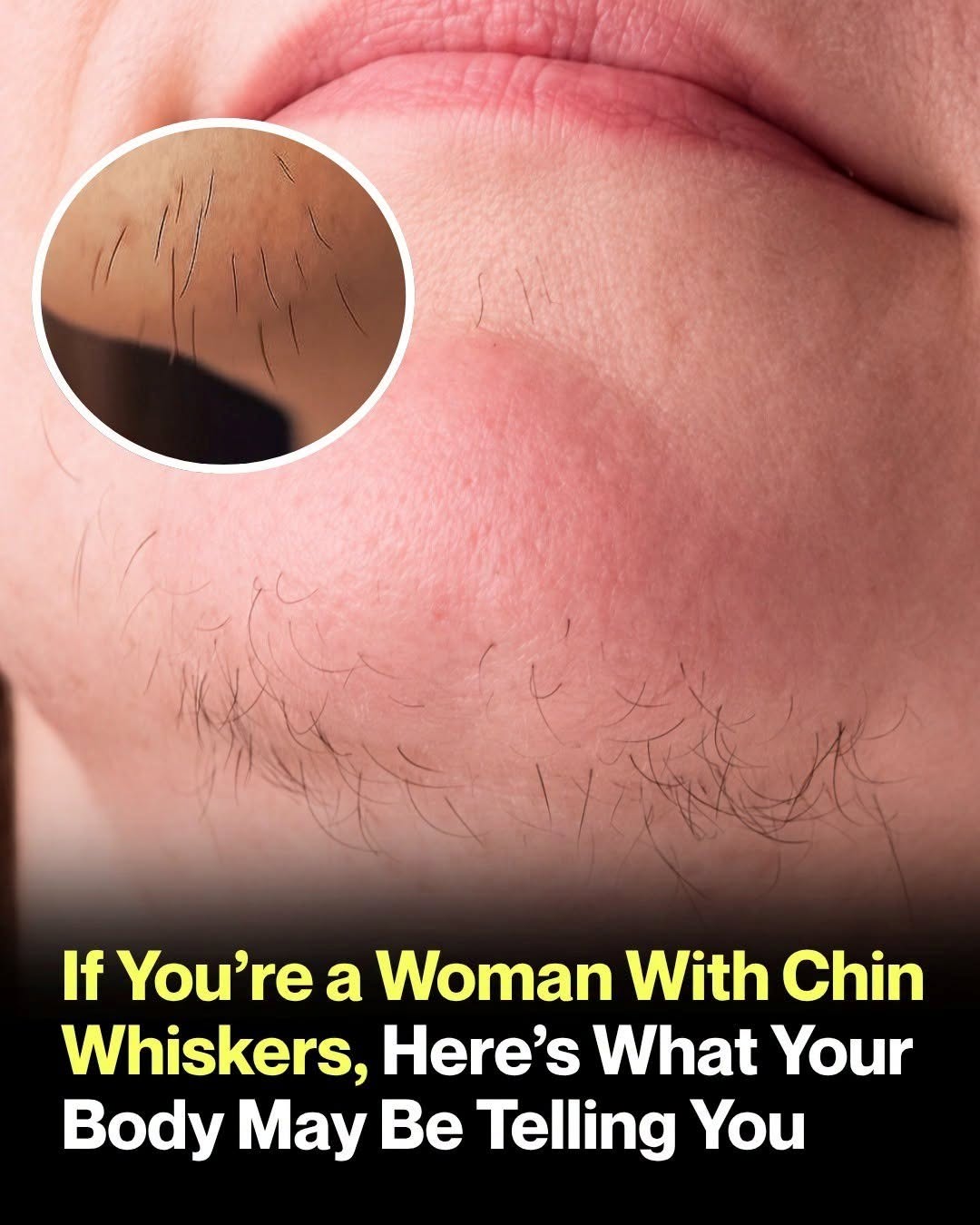
Before assuming there is a medical problem, look at your family.
Does your mother have noticeable chin hair?
What about your sisters, aunts, or grandmother?
Hair-growth patterns are strongly influenced by genetics. Some women naturally develop more coarse facial or body hair than others, even when their hormone levels are within expected ranges.
Family history can also influence the likelihood of conditions associated with hirsutism.
The important distinction is whether the pattern has been relatively stable throughout your adult life or whether something suddenly changed.
If you have always had a few noticeable chin hairs and otherwise feel well, the explanation may be fairly ordinary.
If you suddenly begin growing significantly more facial hair, however, it deserves closer attention.
2. Aging And Menopause Can Make Chin Hair More Noticeable
For many women, chin whiskers seem to appear almost out of nowhere in their 40s, 50s, or beyond.
Hormonal changes associated with perimenopause and menopause may help explain why.
As estrogen levels decline, the balance between estrogen and androgen activity changes. Even without a dramatic increase in testosterone, androgen effects may become relatively more noticeable.
The result can be an interesting contrast: hair on the scalp may become thinner while a few coarse hairs begin appearing around the chin or upper lip.
Cleveland Clinic notes that new or increasing chin hair can occur during the menopause transition as estrogen declines and testosterone has a relatively stronger effect.
So if you are approaching or have gone through menopause and have gradually developed a few chin hairs, this can be a common age-related change.
Again, gradual is an important word.
Rapid or extensive facial-hair growth should not automatically be blamed on menopause.
3. PCOS Is One Of The Most Common Hormonal Causes
When significant facial hair occurs alongside other symptoms, healthcare providers often consider polycystic ovary syndrome, commonly known as PCOS.
PCOS is associated with increased androgen activity and can produce several symptoms in addition to unwanted facial hair.
Possible signs include:
- Irregular or infrequent periods
- Acne
- Difficulty becoming pregnant
- Increased facial or body hair
- Thinning hair on the scalp
- Metabolic problems in some people
PCOS is one of the most common causes of hirsutism.
But having a few chin hairs does not mean that you have PCOS.
The combination of symptoms matters much more.
