
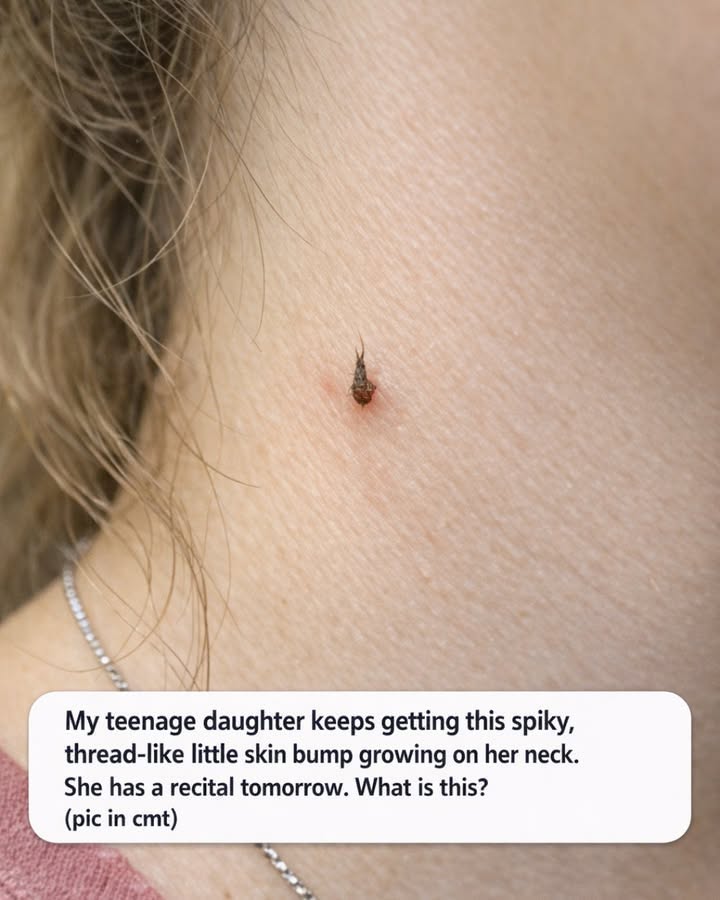
When somebody you love notices a little spiky bump on the neck the day before an important event, it can feel like the whole house stops for a minute. I’ve had my share of last-minute worries before church suppers, graduation photos, and holiday concerts, and skin surprises always seem to show up on the busiest weeks. A thin, thread-like bump on the neck is often something simple, but because it sits right out where collars, jewelry, and stage lights draw attention, it can suddenly feel much bigger than it is.
From the description in your headline, one common possibility is a filiform wart—a narrow, finger-like wart that tends to grow on the face, eyelids, lips, and neck. I’m going to walk through what that means, how to tell it apart from a skin tag or pimple, what you can safely do the night before a recital, what not to do, and when it’s worth calling a doctor or dermatologist instead of guessing.
1. What a filiform wart usually looks like
A filiform wart is a small growth caused by certain strains of human papillomavirus, or HPV. Unlike the flatter warts many of us remember from fingers or knees, these are slender and often look like a tiny thread, spine, brush bristle, or soft little spike sticking up from the skin. They may be only 1 to 5 millimeters wide at the base but can project 2 to 10 millimeters outward, which is why they catch the eye so quickly.
Color can vary. Some are flesh-colored, some are a little pink, tan, or slightly darker than the surrounding skin. On the neck, they may stand alone or appear in a small cluster of 2 or 3. The surface can be smooth-ish at first, then a bit rougher as they grow. They usually do not fill with fluid and do not behave like a fresh acne bump.
2. Why the neck is a common spot
The neck is one of those places that gets rubbed and nicked more than we realize. Shirt collars, costume necklines, scarves, backpack straps, necklace chains, and even frequent shaving around the hairline can create tiny breaks in the skin. That gives the virus an easy doorway in.
In teenagers, dance, choir, theater, and sports all add a little more friction and sweat to the mix. I’ve seen plenty of harmless little skin issues show up after weeks of rehearsals in synthetic costumes and costume jewelry. Friction does not cause the wart by itself, but it can make an existing one more noticeable and sometimes a bit irritated.
3. How it differs from a skin tag
This is one of the easiest mix-ups. A skin tag is usually soft, smooth, and hangs from the skin on a tiny stalk. It often looks like a little teardrop or deflated bead. A filiform wart, on the other hand, tends to look more pointed, frayed, narrow, or brush-like.
