
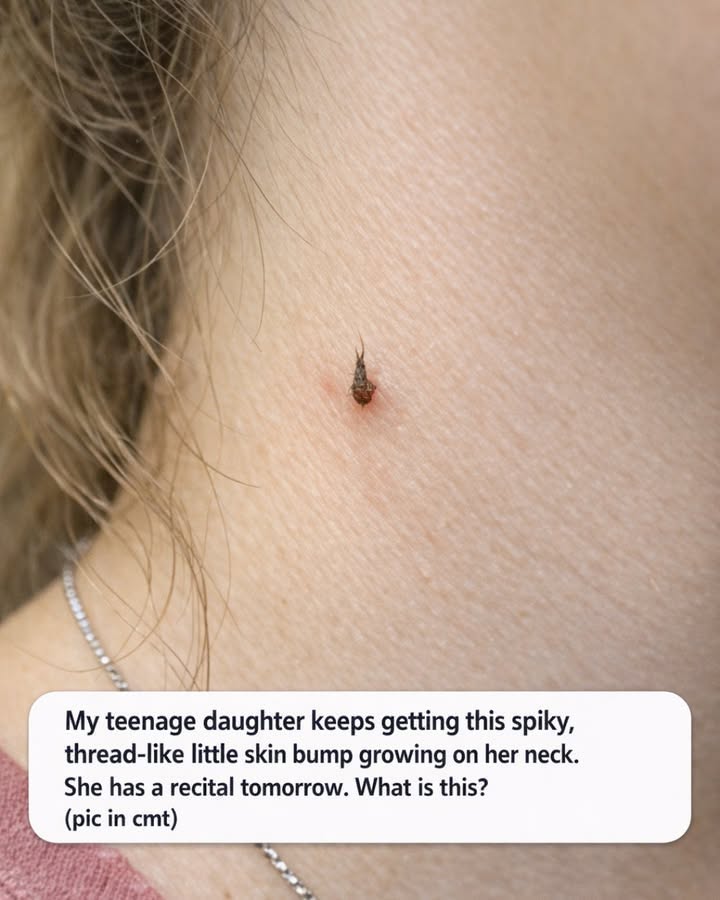
Sometimes a wart appears weeks or even months after exposure. That delay is why families often can’t figure out where it came from. Good hygiene is still wise—washing hands, not picking, not sharing razors or face towels—but this is not a sign she did something wrong.
6. What to do tonight if the recital is tomorrow
The short answer is: keep it calm and leave it alone. Do not cut it, tie floss around it, burn it, scrape it with a nail tool, or try a strong acid treatment the night before an event. Those home attempts can make a tiny wart look 10 times worse by morning through swelling, redness, bleeding, or a scab.
Wash the area gently with lukewarm water and a mild cleanser, pat dry, and avoid rubbing. If a necklace or costume collar hits the spot, try adjusting the clothing line if possible. If she wears makeup for stage performance, don’t paint directly over the bump with heavy product. Instead, apply makeup around it lightly and use a clean applicator so you’re not irritating the area.
7. Whether it can be covered for photos or stage
If the bump is tiny—say 2 to 3 millimeters—you may be able to reduce how noticeable it looks under bright lights by evening out the surrounding skin tone rather than trying to bury the wart itself. A thin layer of non-irritating concealer around the neck, dabbed gently, often looks better than caking product directly onto a raised growth.
If she must wear stage makeup, use clean hands or a fresh sponge, and remove it gently afterward. Avoid adhesive bandages on the neck unless the wart is getting rubbed constantly, because some adhesives can leave the skin redder than the wart did. For a recital, comfort and minimal fuss are usually the winning approach.
8. What not to do before a big event
I would firmly skip drugstore wart removers on the neck the night before. Many over-the-counter products contain salicylic acid in strengths intended for thicker skin like hands or feet. Neck skin is thinner and easier to irritate. The same goes for freeze-at-home kits; used near the face or neck, they can leave blistering, discoloration, or a sore patch.
Also avoid picking at it in front of the mirror. I know that temptation. I’ve stood under a bathroom light more than once thinking, “Maybe just a little trim.” But if it is a wart, picking can spread viral material to nearby skin and cause pinpoint bleeding. A small wart is easier to hide than a fresh wound.
9. How doctors usually confirm it
In many cases, a primary care clinician or dermatologist can identify a filiform wart just by looking at it. The shape, location, and texture are often enough. The visit is usually quick—often 10 to 15 minutes—and no major testing is needed.
If the growth has an unusual color, irregular border, rapid recent change, or repeated bleeding without being bumped, a dermatologist may take a closer look with magnification. Rarely, if the diagnosis is uncertain, they might remove a small lesion for examination. That is more about being thorough than alarming.
10. Common treatment options after the recital
Treatment depends on the exact location and size. In a doctor’s office, common options include carefully applied liquid nitrogen freezing, snipping the lesion after numbing, electrosurgery, or a prescription topical treatment. For a small filiform wart on the neck, removal can sometimes be done in just a few minutes.
Healing time varies. After freezing, the area may redden for 1 to 3 days and sometimes form a small crust or blister. After a simple snip removal, there may be a tiny sore spot for several days. Many people do well with basic aftercare: gentle cleansing, petroleum jelly, and keeping the area from rubbing. Exact instructions should come from the treating clinician.
